




How to Raise Chickens: A Practical Beginner’s Guide
Here is the thing nobody tells you about raising chickens: it is one of the most quietly life-changing decisions you will ever make on a farm. One week in and you will be watching your flock the way other people watch Netflix. Three weeks in and you will have given all of them names. Six weeks in and you will be seriously reconsidering your relationship with store-bought eggs.
This guide covers everything you actually need to know about how to raise chickens — without the fluff, without the overwhelm, and with total honesty about what’s hard and what’s remarkably easy.
Start Here: Why Raise Chickens at All?
Fresh eggs are the obvious answer, and they are genuinely extraordinary compared to anything from a grocery store. The yolks are deeper yellow, the whites are firmer, and the flavor difference is real and immediate. Once you’ve eaten eggs from your own hens, the supermarket carton feels like a fundamentally different product.
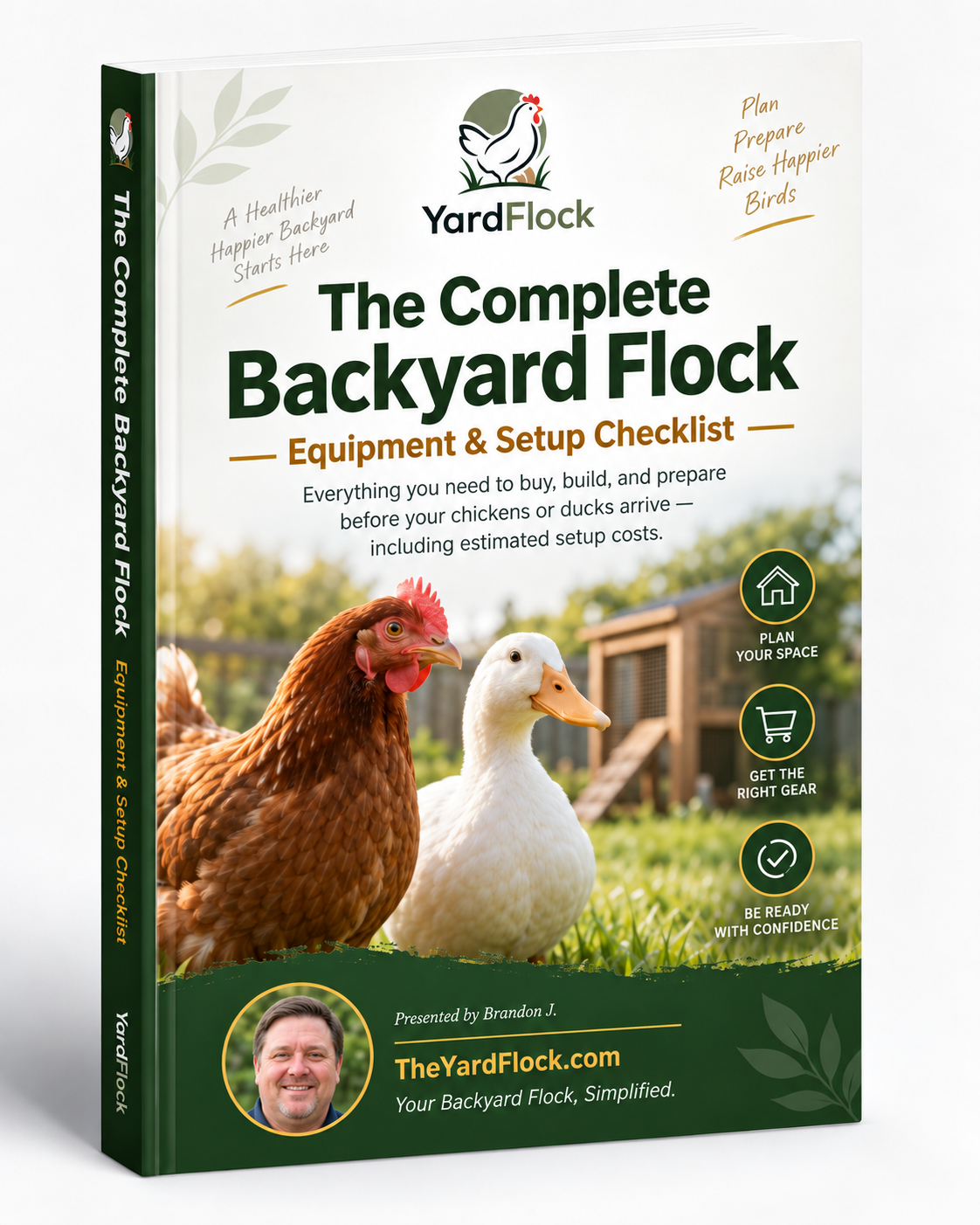
Free Backyard Flock Checklist
Planning the rest of your flock setup?
Turn your coop-size estimate into a complete setup plan with our free equipment and preparation checklist.
But people who raise chickens consistently report that the eggs become secondary quickly. The real reward is the rhythm — the daily routine of feeding, observing, and caring for a small flock that has personalities, hierarchies, and an entirely disproportionate amount of charm for a bird.
Farm life with chickens adds a structure to daily routine that many people find genuinely grounding. It is, in the most literal sense, something living that depends on you — and that turns out to matter more than most people expect.
Step 1: Choose Your Breed
This is the first decision, and it matters more than most beginners realize. Different chicken breeds have meaningfully different personalities, egg production rates, cold-hardiness, and maintenance needs.
For beginners who want reliable egg production and gentle temperaments, these are the consistently recommended starting breeds:
Rhode Island Reds are arguably the gold standard for beginner flocks — hardy, calm, excellent layers of brown eggs, and adaptable to almost any climate or coop setup. If you want one breed that does everything well, this is it.
Buff Orpingtons are the golden retrievers of the chicken world. Friendly, calm, good with children, cold-hardy, and decent layers. Their fluffy appearance and gentle nature make them a favorite for farm-life content.
Plymouth Rocks (Barred Rocks) are bold, curious, and excellent foragers. They lay consistently and handle both cold winters and warm summers without complaint.
Easter Eggers are not technically a breed but a hybrid type that lays blue, green, and sometimes pink eggs. The novelty of colored eggs never gets old, and they are typically friendly and easy to manage.
Australorps hold the world record for egg production in their breed class and are exceptionally calm. If maximum eggs are the goal, this is your bird.
For your first flock, starting with four to six hens of one or two breeds is the standard recommendation. It keeps management simple while you learn what farm life with chickens actually involves day-to-day.
Step 2: Decide Between Chicks, Pullets, or Laying Hens
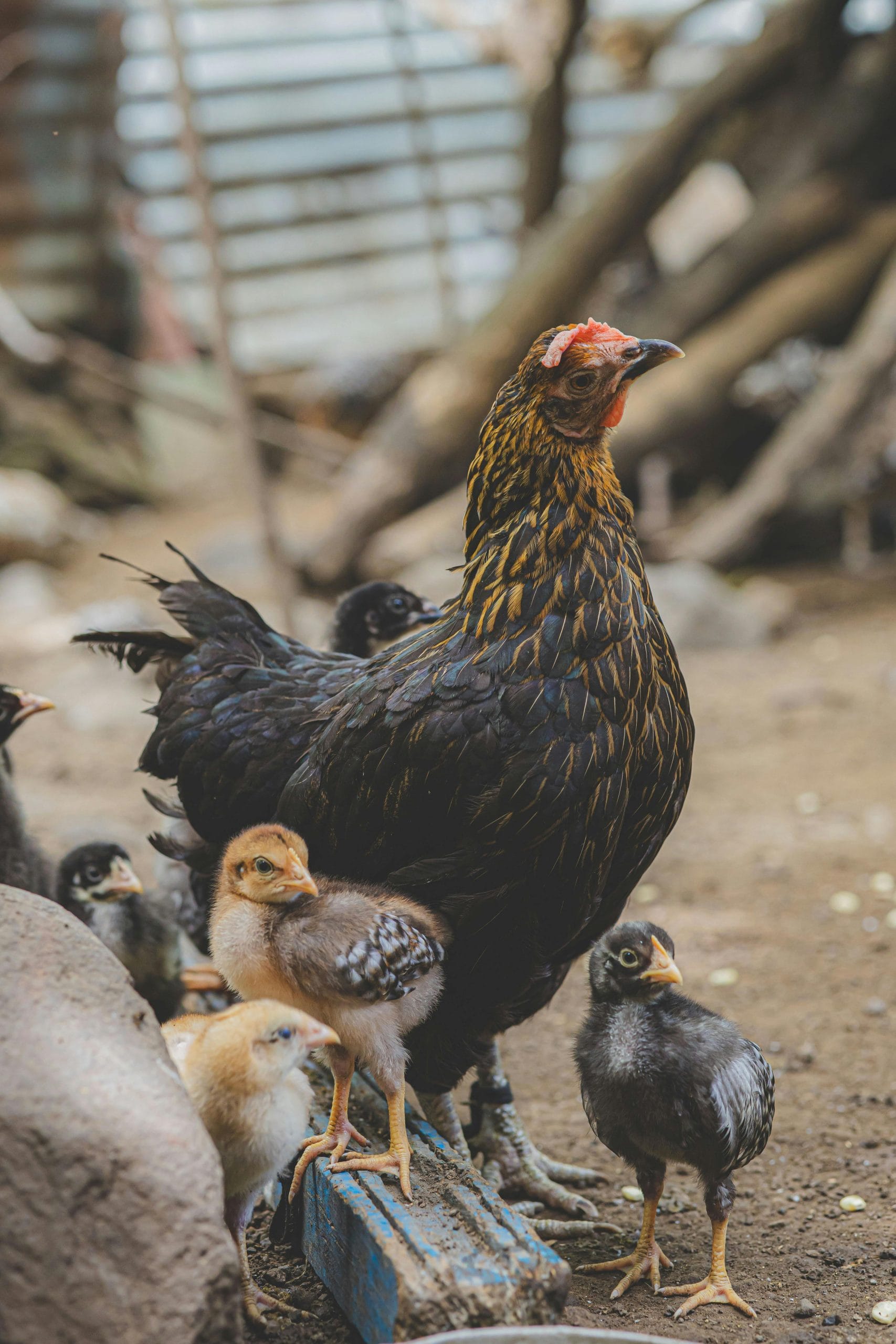
This decision has a bigger impact on your early experience than people expect.
Day-old chicks require a brooder — a warm, enclosed space with a heat lamp or heating plate — for the first six to eight weeks of their lives. They need close monitoring, are fragile, and won’t lay eggs for roughly five to six months. They are, however, deeply adorable and allow you to raise birds that are entirely accustomed to human interaction from day one.
Pullets are young hens, typically between 8 and 20 weeks old, that have already passed the brooder phase but haven’t started laying yet. They are easier to manage than chicks and will begin laying within weeks to a few months of arrival.
Point-of-lay hens are typically 18 to 20 weeks old and just beginning to lay. You get eggs almost immediately with no brooder phase at all. If you want results quickly, this is the practical choice.
For most beginners, starting with pullets or point-of-lay hens avoids the brooder learning curve and gets you to the rewarding part of chicken keeping faster.
Step 3: Set Up the Chicken Coop Properly
The chicken house is where your flock will sleep, lay their eggs, and shelter from weather and predators. Getting this right from the beginning prevents most of the common problems new chicken keepers encounter.
Space is the first consideration. The standard recommendation is four square feet of inside coop space per chicken and ten square feet of run space per bird. Overcrowding is the single most common mistake in beginner setups and leads directly to health problems, feather picking, and stress in the flock.
Ventilation comes next. Chickens produce significant moisture and ammonia through their droppings, and a poorly ventilated chicken coop creates respiratory problems quickly. Vents near the roofline — positioned to allow airflow without creating drafts directly on the birds — are essential.
The roost bars are where chickens sleep. They should be placed higher than the nesting boxes (chickens always want to sleep at the highest available point), be wide enough for chickens to comfortably grip (a two-by-four on its wide side is the standard), and provide eight to ten inches of space per bird.
Nesting boxes for egg laying should be approximately one for every three to four hens, positioned lower than the roost bars, and kept filled with clean nesting material. Chickens are particular about their nesting spaces and will lay far more reliably in comfortable, clean, dark boxes.
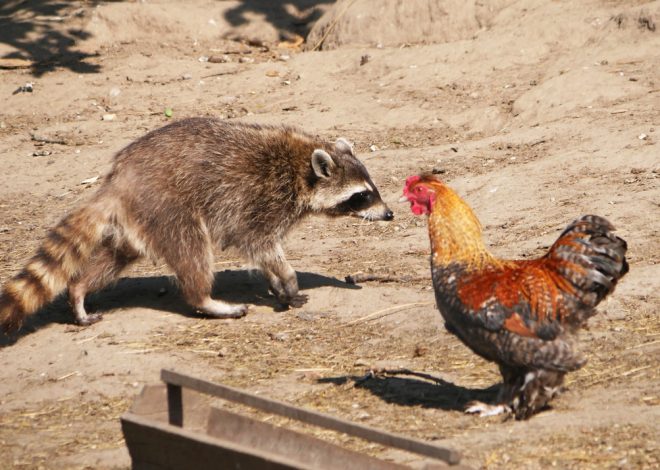
Predator protection is non-negotiable. Hardware cloth — not chicken wire, which predators can reach through or tear apart — should cover all openings. A solid latch on every door. Apron wire is buried at least twelve inches underground around the perimeter to stop diggers. Take this more seriously than any other aspect of coop construction.
Step 4: Feeding Your Flock
Chickens need a complete layer feed as their primary diet — a commercially balanced pellet or crumble formulated specifically for laying hens, containing the protein, calcium, and nutrients they need for health and egg production. Layer feed should be available to them throughout the day.
Supplement with fresh vegetables, fruit scraps, and kitchen leftovers freely — chickens will eat almost anything and benefit significantly from dietary variety. Avoid avocado, onions, raw beans, chocolate, and anything heavily salted or processed.
Calcium supplementation is important for laying hens. Crushed oyster shell offered free-choice in a small container allows hens to regulate their own calcium intake, which directly impacts eggshell quality.
Grit — small pieces of rock or commercial insoluble grit — must be available to chickens that eat anything beyond processed feed. Chickens have no teeth; grit in their gizzard grinds food for digestion. Free-ranging birds pick this up naturally. Confined birds need it provided.
Fresh, clean water must always be available. In winter, a heated waterer prevents freezing and is genuinely necessary in colder climates. Chickens that go without water, even briefly, in warm weather will show an immediate drop in egg production.
Step 5: Daily and Weekly Routines
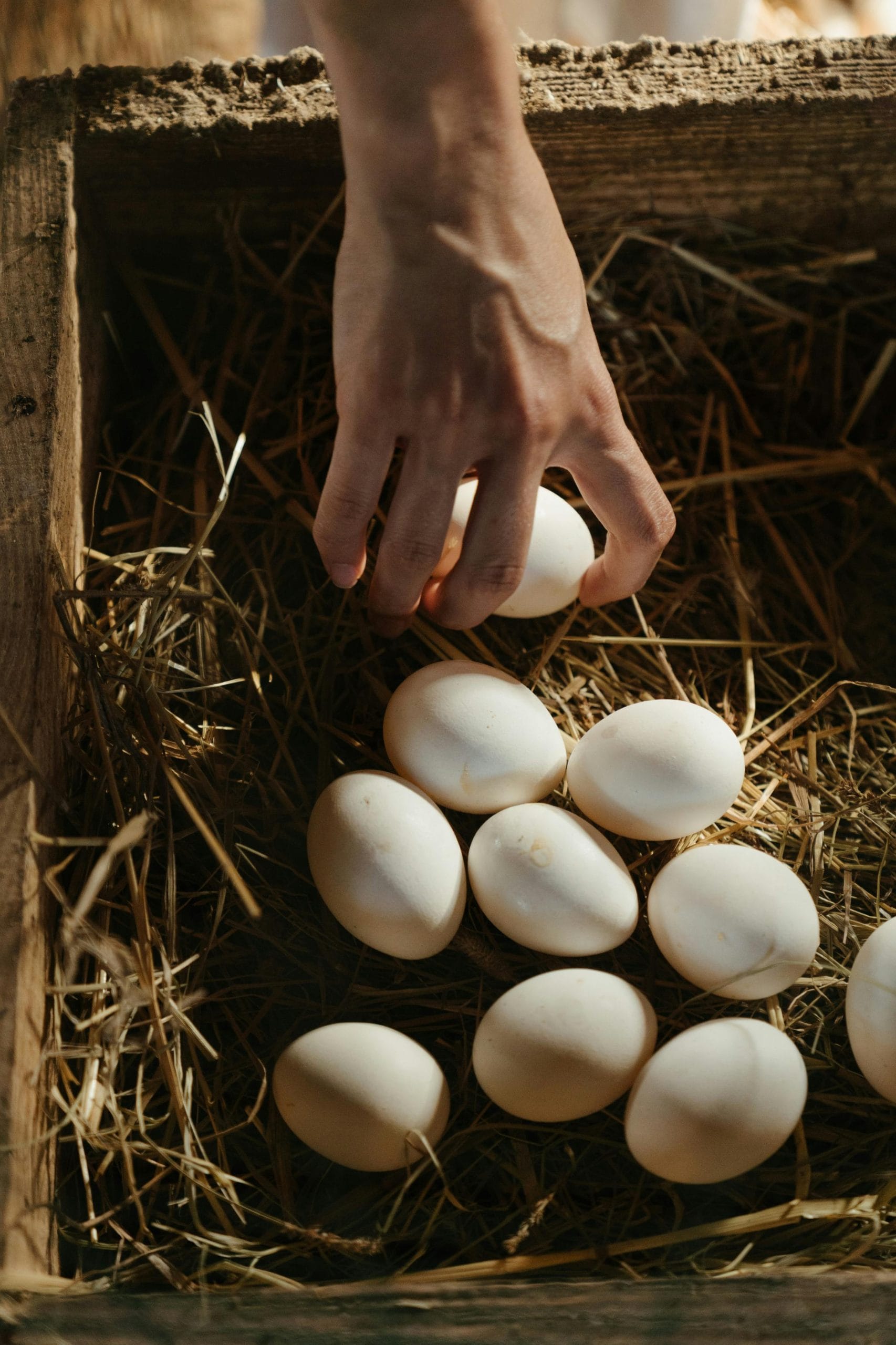
This is where farm life with chickens reveals its rhythm, and it’s more manageable than most beginners expect.
Daily: Open the coop in the morning and close it at dusk (predators are most active at night). Check feeders and waterers. Collect eggs — collected daily, stay fresher, and hens are more likely to continue using the nesting boxes consistently.
Weekly: Spot-clean the coop floor by removing wet spots and droppings from beneath the roosts. Top up nesting material as needed. Check all birds for any visible health issues during this time — it takes only a few minutes once you know what you’re looking for.
Monthly: Full coop clean-out, replacing all bedding, scrubbing feeders and waterers, checking hardware and latches, inspecting the structure for any damage or wear.
Seasonally: Adjust for weather. In summer, ensure adequate shade, fresh cool water, and ventilation. In winter, check that roost bars keep birds off freezing floors, water isn’t freezing, and ventilation remains open even in cold temperatures.
Step 6: What Farm Life with Chickens Actually Teaches You
After the practical steps, there is something harder to quantify that every experienced chicken keeper will tell you about: the way a small flock changes your relationship with daily routine and seasonal time.
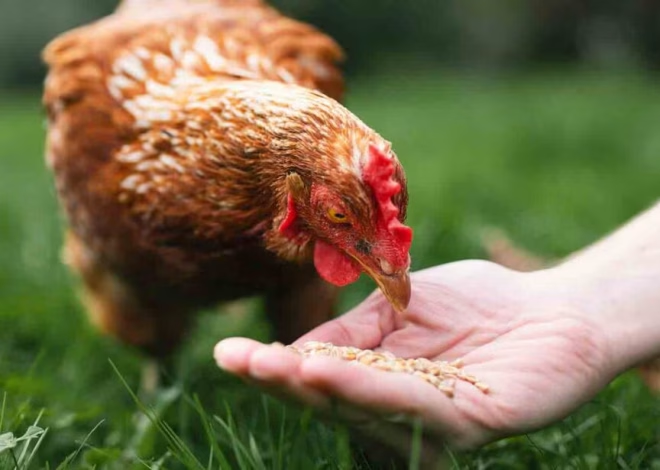
Chickens are anchoring. They are there every morning. They require your attention regardless of how the rest of the day is going. They are genuinely funny and have distinct personalities that emerge quickly and reliably. The dominant hen, the quiet one who always lays in the same spot, the one who runs to you faster than all the others when you arrive with kitchen scraps — you will know all of them within weeks.
Farm life with chickens is not complicated. But it is consistent, and consistency is what makes it meaningful.
Final Thoughts
The best time to start raising chickens was probably a year ago. The second-best time is now. If this guide helped clear the path, share it with anyone who’s been thinking about it — because the only thing standing between most people and their first flock is just not quite knowing where to begin.
Now they do.
Start with local, reliable support
Before bringing birds home, identify a poultry-capable veterinarian, review local ordinances, and choose a complete feed labeled for the birds’ age and purpose. Provide clean water at all times, secure nighttime housing, weather-appropriate ventilation, and enough feeder and roost access to limit competition. Keep new or returning birds separate before flock introduction and ask a veterinarian about a biosecurity plan for your area.
Sources and further reading
- University of Minnesota Extension: Raising chickens for eggs
- CDC: Backyard Poultry and Public Health
- Utah State University Extension: Poultry resources
Continue Exploring Your Backyard Flock
Use these closely related guides to plan your next steps:
24 thoughts on “How to Raise Chickens: A Practical Beginner’s Guide”
Comments are closed.