

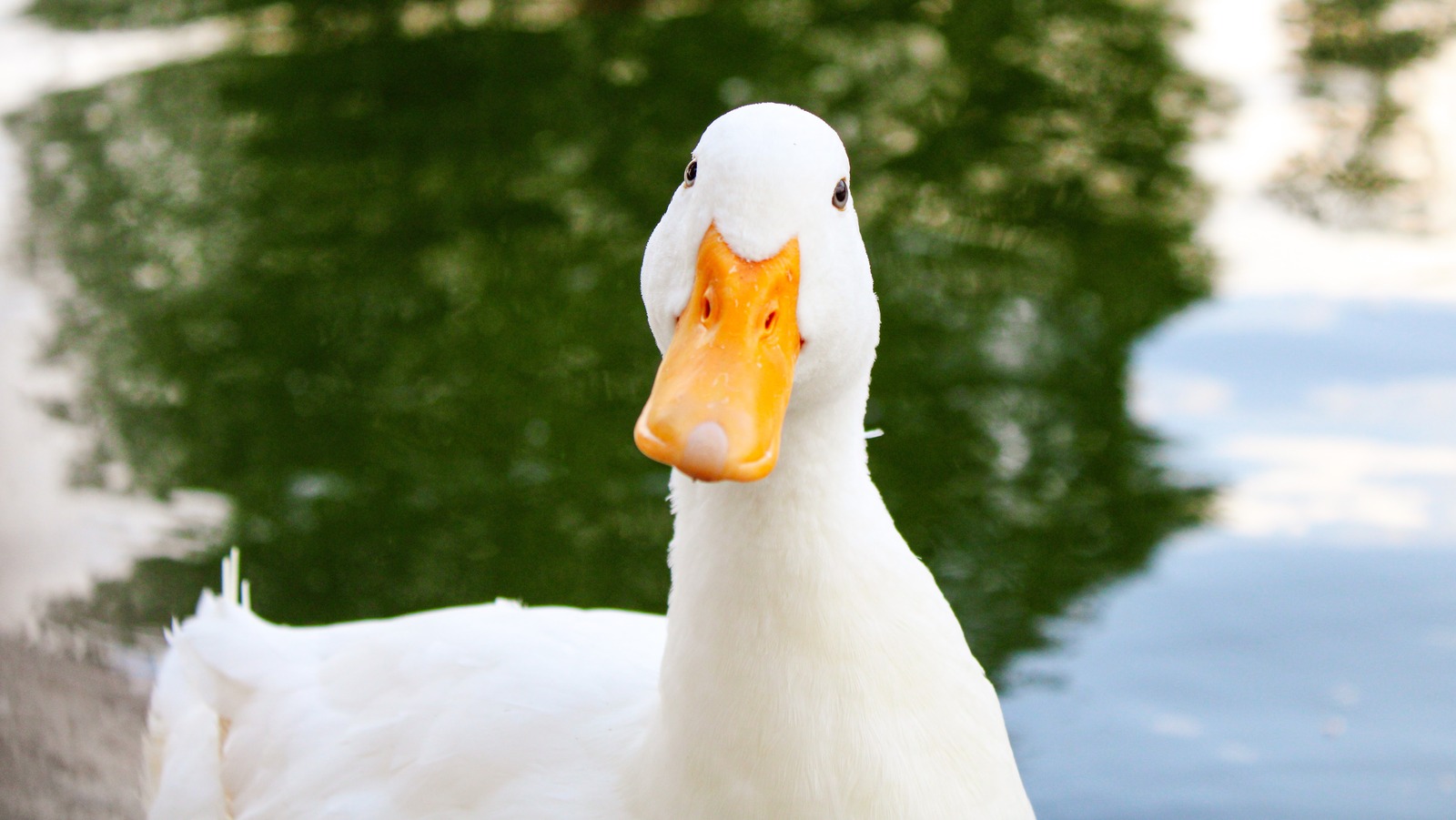
10 Safe Duck Enrichment Ideas for a More Engaging Flock
Ducks naturally spend time exploring, foraging, preening, bathing, resting, and interacting with their flock. A well-designed enclosure should give them safe opportunities to perform those behaviors.
Enrichment does not need to be expensive, but it does need to be clean, stable, appropriately sized, and easy for every duck to leave. Introduce one change at a time, supervise the first sessions, and remove anything that causes fear, guarding, entanglement, slipping, contamination, or ingestion of non-food material.
These ten ideas are flexible options rather than a required schedule. Choose activities that suit the birds, weather, flooring, space, and your ability to clean and supervise them.
Free Backyard Flock Checklist
Planning the rest of your flock setup?
Turn your coop-size estimate into a complete setup plan with our free equipment and preparation checklist.
Idea 1: The Foraging Scatter — Daily Practice That Changes Everything
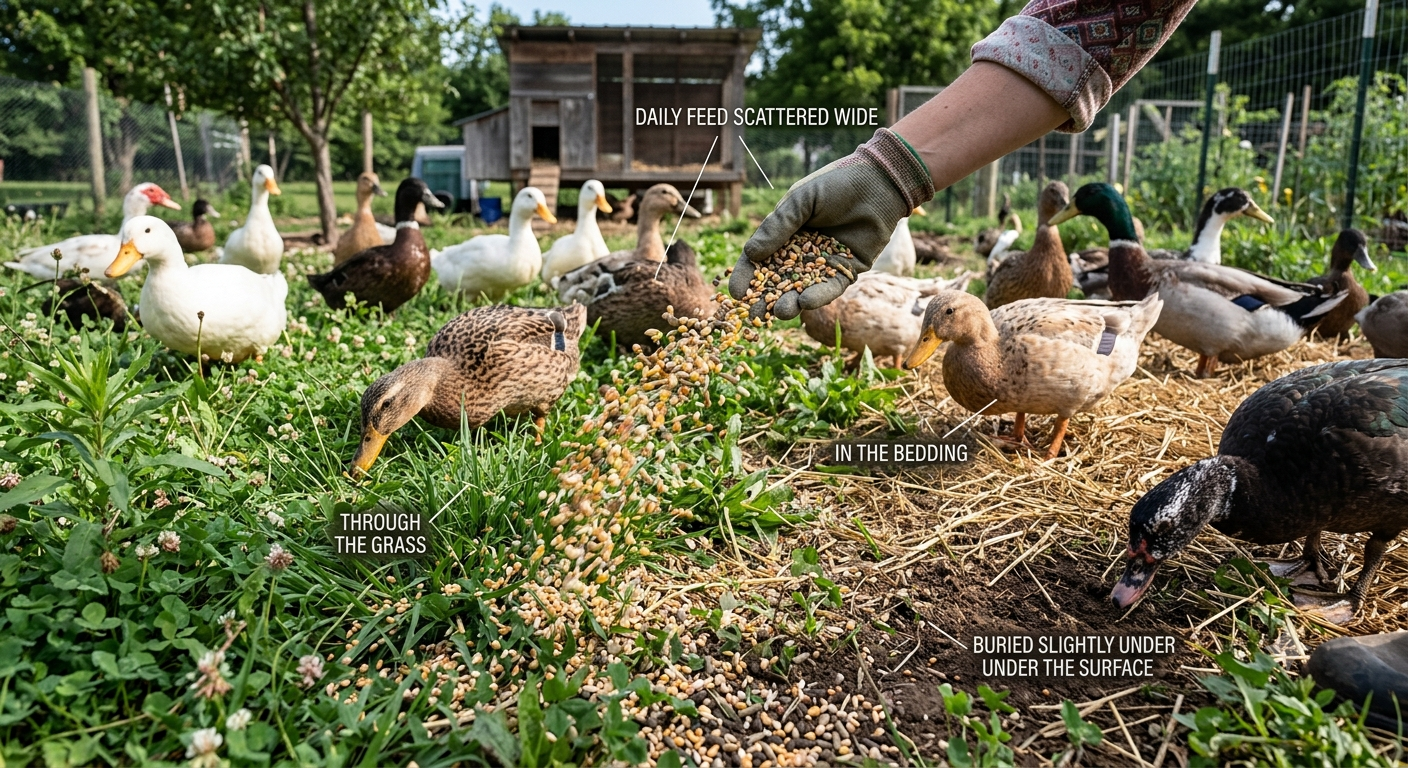
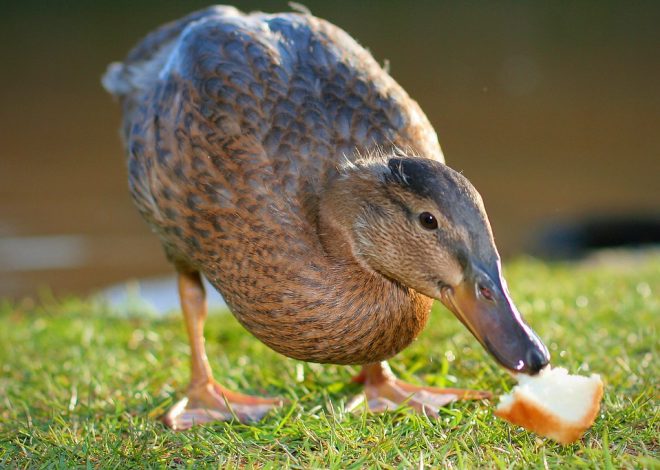
Scatter a small portion of the flock’s appropriate feed across a clean, dry, uncontaminated surface so ducks can search and probe. Keep the main ration in a feeder where intake can be monitored.
Do not bury feed in wet bedding, mud, feces, compost, or treated soil. Scatter only what the flock will find promptly, supply drinking water beside all feeding activities, and clean up leftovers before they attract rodents or become moldy.
Idea 2: The Frozen Pea Bowl
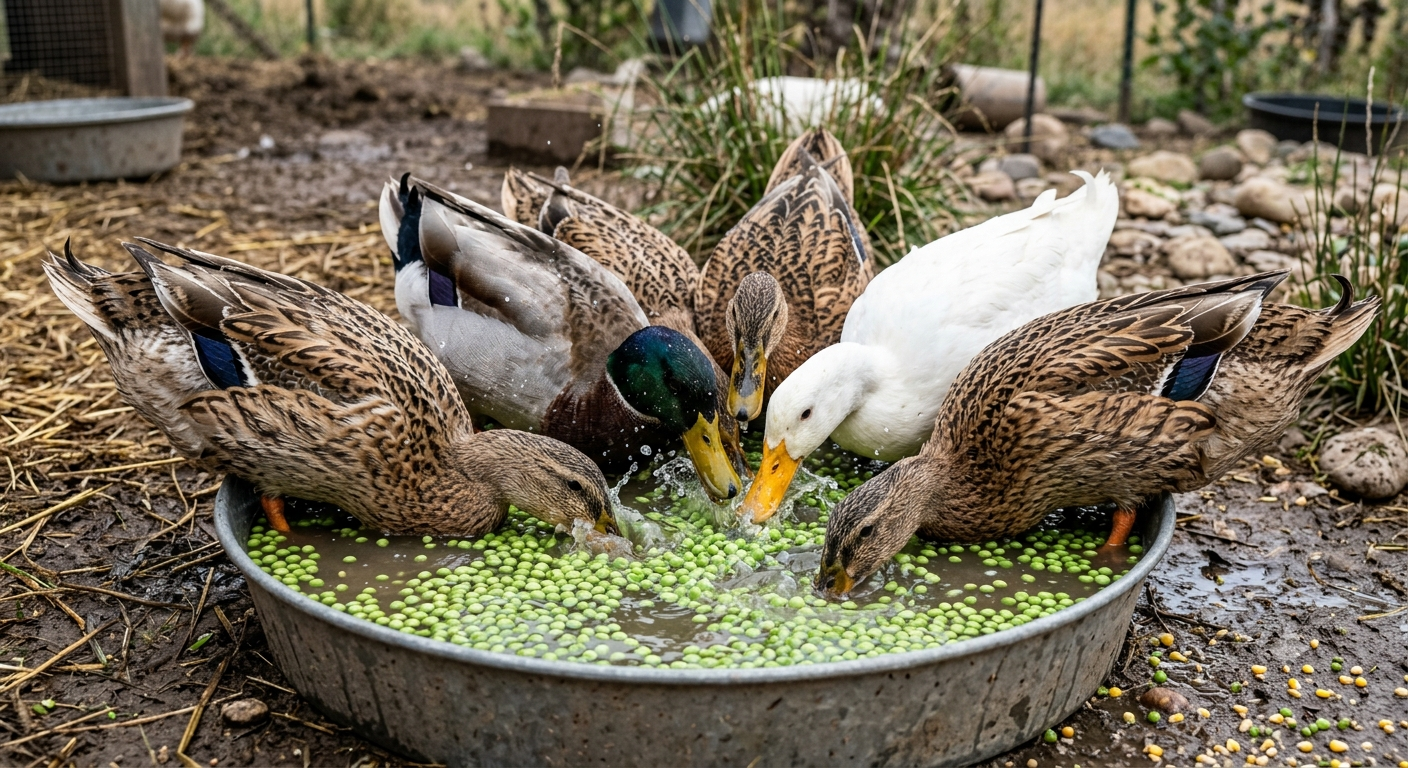
Plain thawed peas floating in clean water can encourage dabbling and searching. Peas are a treat rather than a complete food, and frozen pieces should be thawed before serving.
Use a stable, shallow container that cannot trap a bird and provide enough access points that subordinate ducks are not crowded away. Change the water and remove leftovers promptly; this activity is enrichment, not a cooling treatment.
Idea 3: The Dig Box — Give Them Something Legal to Excavate
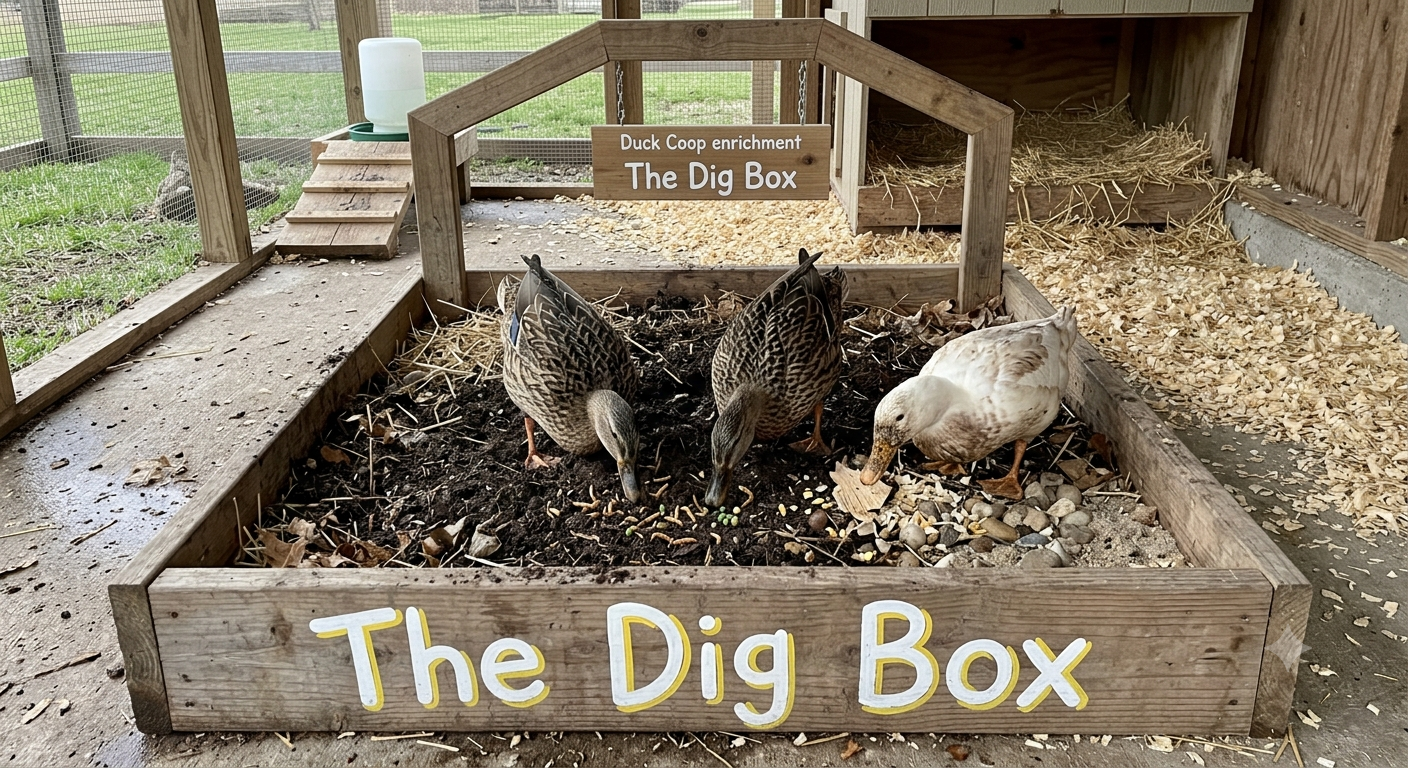
Ducks love to excavate. They do not care whether the excavation is happening in a designated area or in the area under the fence that will eventually compromise the perimeter. They are going to dig. The question is where.
A low-sided tray of clean, pesticide-free soil or washed sand can provide a supervised probing area. Do not use active compost, manure, moldy material, sharp stones, fertilizer, cocoa mulch, or soil that may contain chemicals or harmful plants. Avoid burying food where it can become contaminated.
Container choice: Use a smooth, stable tray with no sharp edge and an easy step-out height. Avoid tires and deep-sided containers, which can retain dirty water or create trapping and sanitation problems.
Replace the substrate whenever it becomes fouled, wet, moldy, or difficult to clean—rather than relying on a monthly schedule.
Idea 4: Water Toys — The Engagement Level They Actually Want
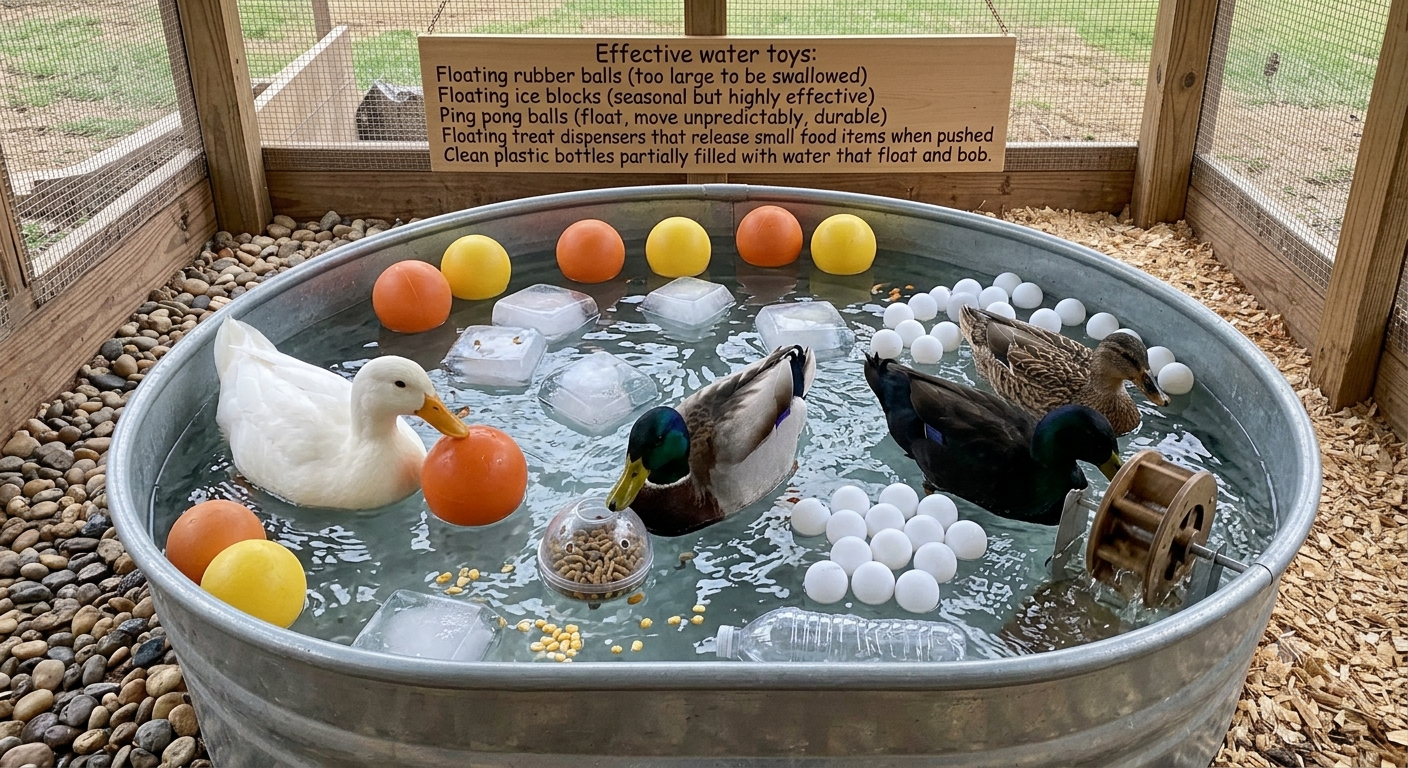
Ducks interact with their water in ways that far exceed simple bathing and drinking. Floating objects — any buoyant, safe object that moves unpredictably when the duck touches it — provide the stimulus that engages their investigative and play behavior at the highest level.
Effective water toys:
- One-piece, food-safe floating objects much larger than a duck’s bill
- A purpose-made floating poultry treat dispenser with no removable parts
- Floating leafy greens that are already safe for the flock
Avoid ping-pong balls, bottle caps, thin or brittle plastic, foam, painted items, strings, loops, and anything that can splinter, leak, trap a bill, or be swallowed. Supervise new objects, inspect them before every use, and remove damaged items immediately. Rotation may sustain interest, but safety matters more than novelty.
Idea 5: The Mealworm Scatter in Bedding
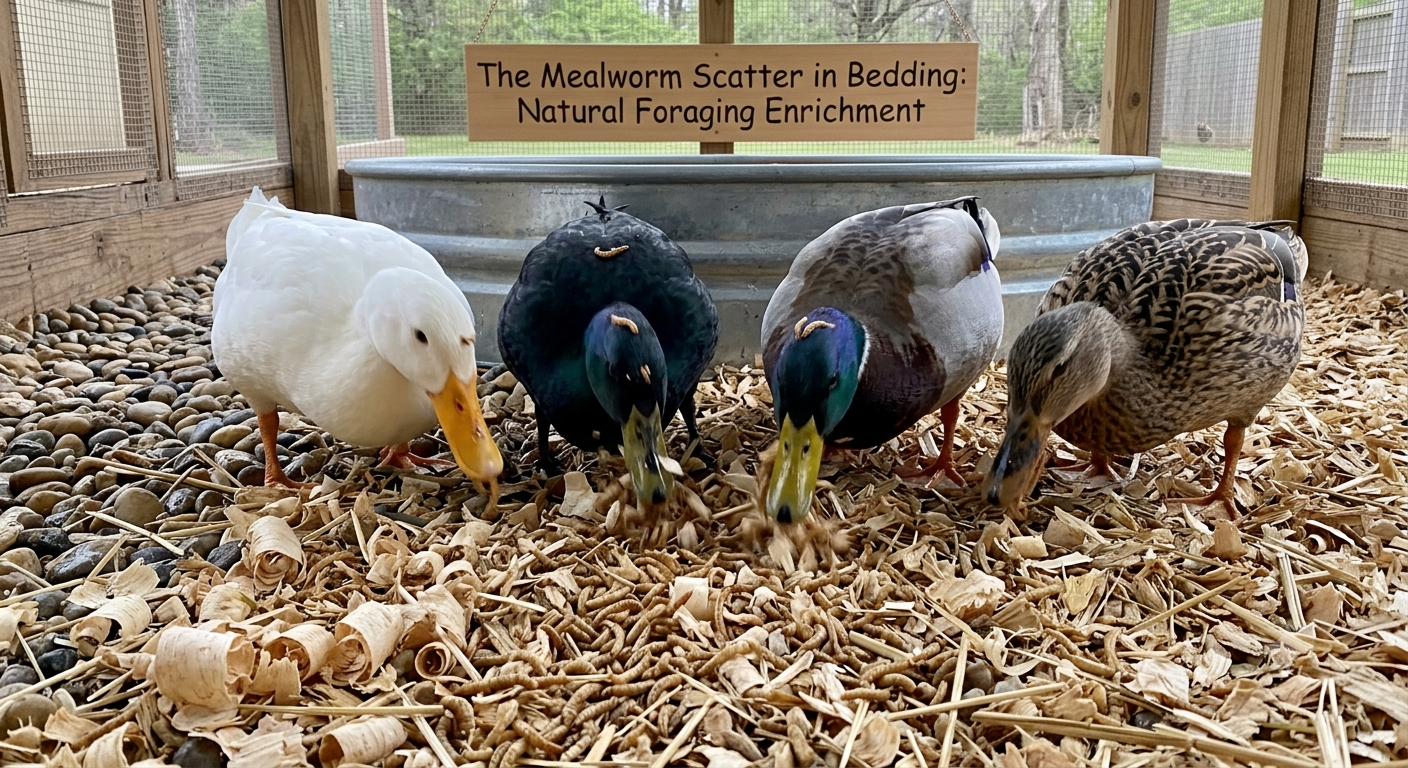
Instead of hiding mealworms in coop bedding, scatter a very small amount across a clean, dry enrichment tray or safe grassy area. Bedding may contain feces and moisture, and encouraging ducks to eat from it can increase contamination and make intake difficult to monitor.
Use feed-grade insects as limited treats, provide drinking water, and remove leftovers. The activity can encourage probing without turning the sleeping area into a feeding site.
Idea 6: The Vegetable Hanging Attraction
Place a small portion of a safe leafy vegetable in a rigid, purpose-made holder secured at a comfortable bill height. Do not suspend food with loose string, wire loops, open hooks, net bags, or elastic material, which can entangle feet, wings, necks, or bills.
Supervise the first use and prevent dominant birds from guarding the only access point. Remove the vegetable the same day, sooner in hot weather, and clean the holder before reuse.
Idea 7: Novel Objects Introduced Regularly
Ducks investigate novel objects with an enthusiasm that appears to involve genuine curiosity — the object is approached cautiously, touched with the bill, turned over if possible, walked around, and assessed from multiple angles before being either integrated into the environment as background or continued to be investigated as something interesting.
Novel objects that work for duck enrichment:
- A stable low platform with a non-slip surface and no trapping gap
- A sturdy one-piece object designed for large animals and too large to swallow
- A fresh tray of clean soil or safe turf for supervised investigation
Do not import unknown leaves, mushrooms, pinecones, treated wood, sharp rocks, or yard debris that may carry pesticides, mold, parasites, or toxic plants. Mirrors can distress or provoke some birds, so introduce one only under close supervision and remove it if behavior changes negatively.
Idea 8: The Water Spray Misting Session
A garden hose or misting system directed across the run during a keeper visit — not at the ducks directly, but creating a fine mist they can choose to walk through or interact with.
Some ducks choose to investigate a gentle mist, while others avoid it. Offer choice and never spray a bird’s face or force participation. Misting is least useful in humid weather and should not leave bedding, feed, electrical equipment, or the run persistently wet.
Supervise the session, maintain drainage, and stop if birds show fear, slipping, crowding, or respiratory distress. Calm proximity can support habituation to a keeper, but mist and treats do not guarantee trust.
Idea 9: The Paddling Pool Upgrade — Depth and Interest
The standard kiddie pool provides basic water access. A pool upgraded for enrichment provides a genuinely engaging water environment:
Safe access: Use a stable pool with non-slip entry and exit points that every bird can manage. Water must be shallow enough for the ducks present, and young, ill, disabled, or unfamiliar birds require closer supervision.
Keep it clean: A smooth, drainable pool is easier to sanitize than one filled with gravel. Avoid loose stones, foam, improvised floating platforms, and trapping gaps. Empty and refresh fouled water frequently and position the pool where overflow will not saturate housing.
Optional forage: A few thawed peas or safe floating greens can encourage dabbling. Remove leftovers and count them within the flock’s total treats.
Idea 10: The Rotation Schedule — Managing All of the Above
The most sophisticated duck enrichment strategy is not any single enrichment idea — it is the rotation schedule that cycles through multiple enrichment types to maintain novelty while delivering consistent behavioral benefit.
Rotate only a few safe options at a time and keep notes on what the flock actually uses. Ducks also need uninterrupted time to rest, preen, and avoid dominant flockmates; constant novelty is not a welfare requirement.
Enrichment may encourage activity and species-typical behavior, but it does not guarantee better immunity, health, or social harmony. Persistent aggression, feather damage, fear, or abnormal inactivity requires assessment of space, flock composition, nutrition, pain, illness, and housing—not simply another toy.
Start with one low-risk activity, supervise it, and keep the ideas that are safe, clean, and genuinely used by your ducks.
Sources and Further Reading
- RSPCA: Creating a Suitable Outdoor Environment for Ducks and Geese
- Cornell Duck Research Laboratory: Duck Housing and Management
2 thoughts on “10 Safe Duck Enrichment Ideas for a More Engaging Flock”
Comments are closed.