
10 Protein-Rich Foods for Chickens—and How to Offer Them Safely
Reduced laying can have many causes, including season, molt, age, stress, illness, parasites, water intake, total energy intake, or an unbalanced ration. Protein deficiency is one possibility, but an unexplained or persistent drop deserves a broader flock assessment rather than automatic supplementation.
This article explains ten protein-rich foods that can be used as limited supplements to a complete, age-appropriate ration. Their nutrient content varies, and none is guaranteed to increase laying in a hen whose diet is already balanced.
The Biology Behind Protein for Laying Hens
Protein supplies amino acids used throughout the body, including for maintenance, feathers, and egg formation. Albumen contains substantial protein, while the yolk contains protein and fat. Many layer feeds are formulated near 16% crude protein, but the correct ration depends on the bird and the entire nutrient profile—not a universal number or one supplemental food.
Free Backyard Flock Checklist
Planning the rest of your flock setup?
Turn your coop-size estimate into a complete setup plan with our free equipment and preparation checklist.
Many layer feeds contain roughly 16% protein, but requirements vary with strain, age, feed intake, energy density, amino-acid balance, environment, and production stage. One percentage point on a label does not by itself diagnose the cause of reduced laying.
Methionine is an essential amino acid that poultry must obtain from the diet, but lysine and other amino acids matter too. A crude-protein percentage does not reveal whether those amino acids are present in suitable amounts or are digestible. Molt and seasonal laying changes are normal biological processes and should not be treated by adding one amino-acid source without professional formulation.
Adequate protein and essential amino acids support normal maintenance, feather growth, and egg formation. More is not automatically better: once requirements are met, extra protein does not guarantee more eggs, and overall ration balance remains more important than a single nutrient.
A Critical Note Before You Supplement
Every protein source in this guide should remain a limited supplement to a quality complete layer feed—not replace or routinely dilute it. If egg production drops, first check season, molt, age, water, body condition, parasites, illness, and whether the flock is actually consuming a complete ration. Keep all treats and supplements modest unless a poultry nutritionist or veterinarian recommends otherwise.
Source 1 — Dried Mealworms
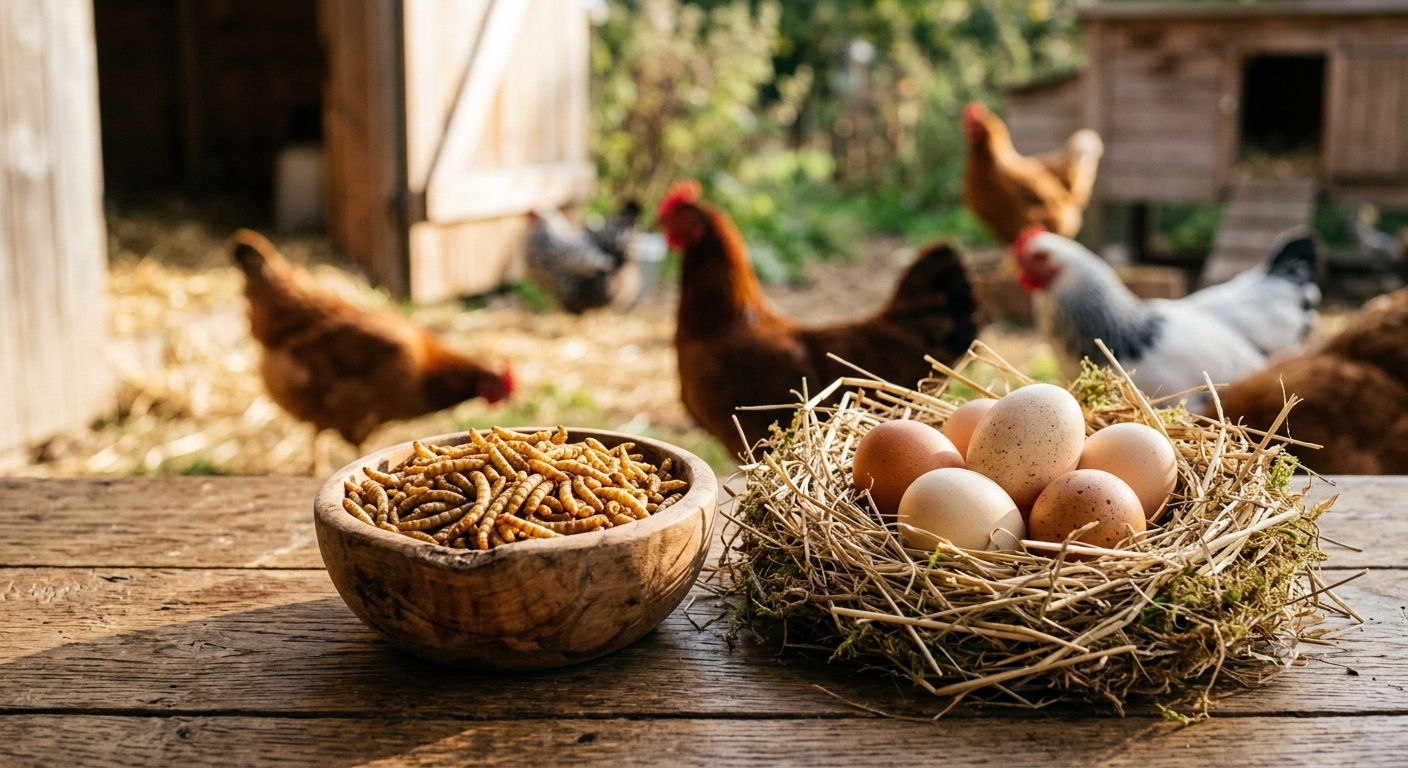
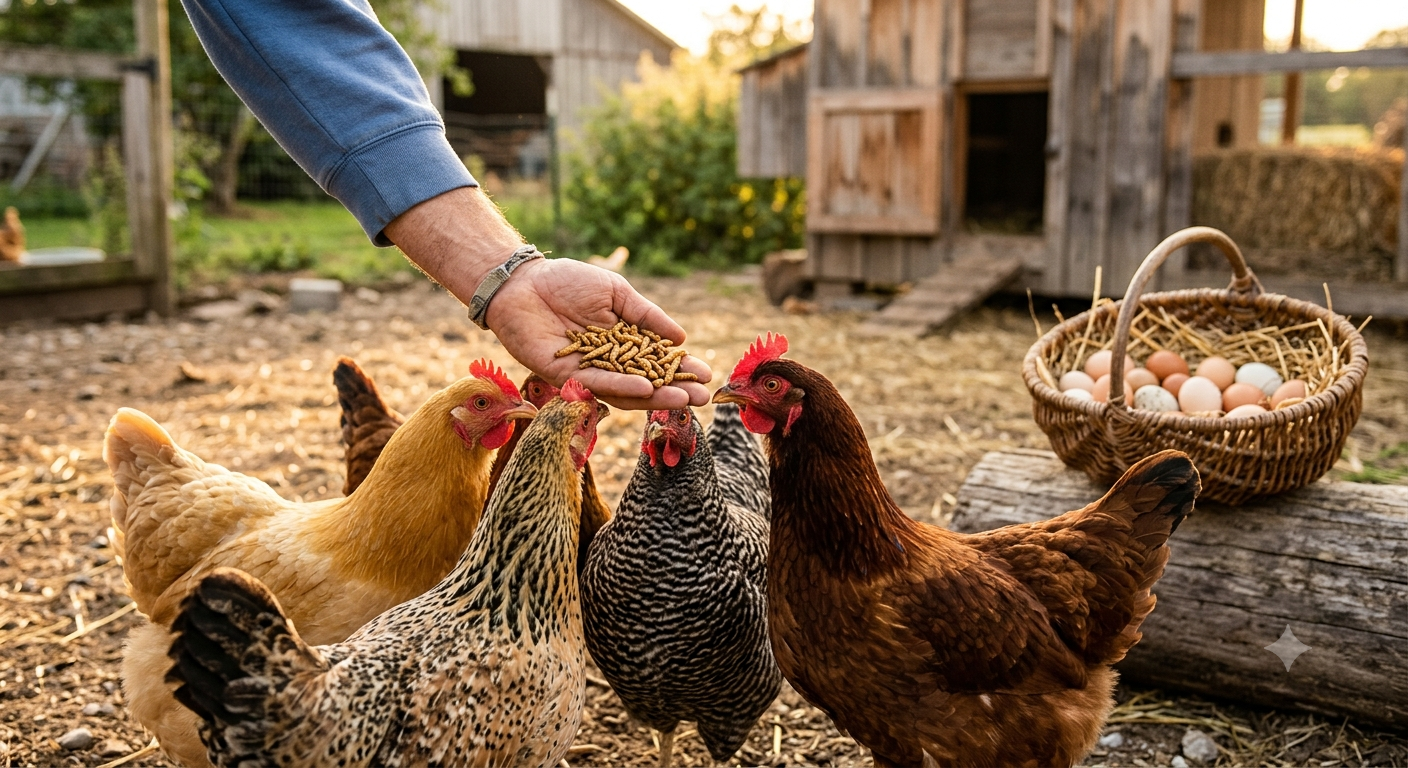
Dried mealworms are protein-rich, but nutrient values vary by product and processing. Comparing their crude-protein percentage directly with complete layer feed is misleading because complete feed also supplies balanced energy, amino acids, vitamins, and minerals.
Use mealworms sparingly as enrichment or a treat, and follow any applicable feed rules in your country. They should not become a daily strategy for correcting suspected deficiency without reviewing the complete diet.
Mealworms are concentrated treats, so portion them conservatively and count them within the flock’s total extras. They can provide enrichment during molt, but daily supplementation has not been established here as a guaranteed way to shorten the molt or restore laying.
Buy products labeled for animal feed from a traceable supplier and store them dry and protected from pests. If raising insects at home, use clean substrates that are safe for feed and check local regulations; home production is not automatically cheaper or contamination-free.
Source 2 — Black Soldier Fly Larvae
Black soldier fly larvae can contain substantial protein and more calcium than mealworms, but the values vary with substrate, life stage, and processing. A treat label should not be treated as a complete nutrient specification.
Research on insect meals generally evaluates carefully formulated diets at controlled inclusion rates. It does not establish that freely adding larvae to an already complete backyard ration will improve eggshells, albumen, feed efficiency, or laying. Offer a feed-grade product modestly, and continue providing the complete ration and any separately recommended calcium source.
Source 3 — Scrambled or Hard-Boiled Eggs: The Protein That Comes From Your Flock
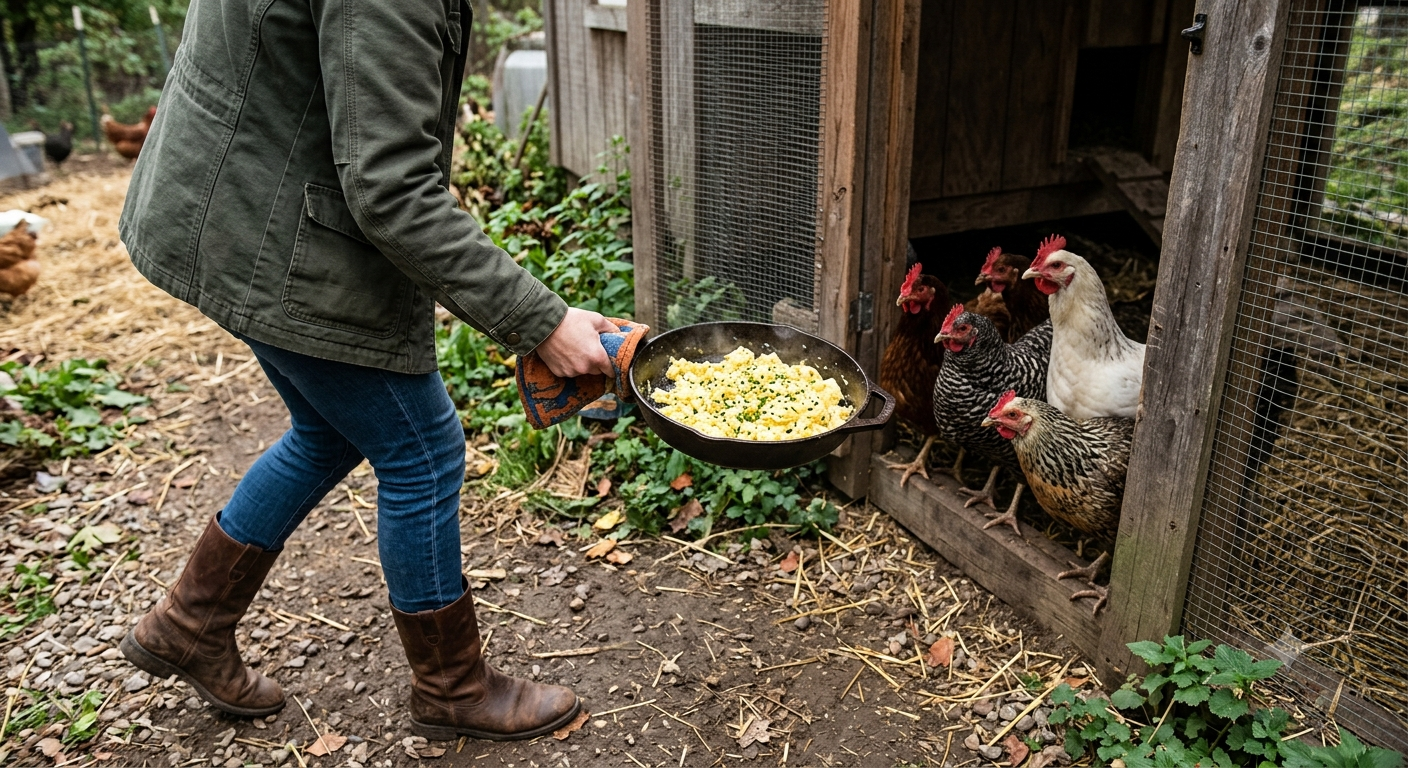
Plain, thoroughly cooked egg can be offered occasionally, but it is still a treat and is not a direct route to producing more eggs. Do not use spoiled eggs or eggs from birds suspected of infectious disease.
Avoid added salt, butter, or seasoning, serve only an amount the flock will finish promptly, and clean up leftovers. Claims that cooked egg reliably prevents egg-eating behavior or produces an immediate behavioral benefit are not well established; preventing broken eggs, crowding, and delayed collection is more relevant to nest-box egg eating.
Source 4 — Legumes: The Plant-Based Protein Worth Growing Yourself
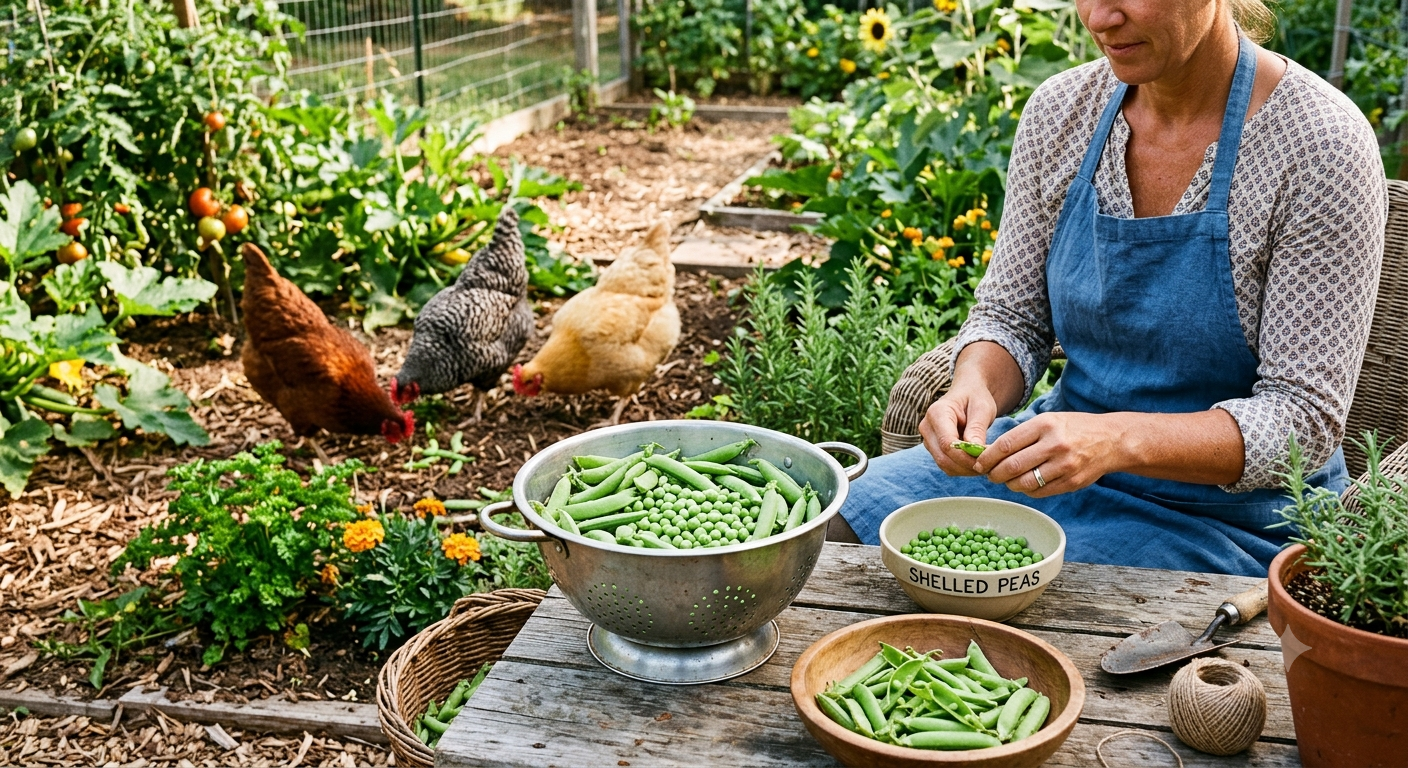
Legumes such as peas, lentils, and chickpeas are valuable sources of protein and other nutrients for chickens. The legume family is the plant kingdom’s most productive protein source, and for chicken keepers interested in reducing commercial feed dependency, growing legumes specifically for flock supplementation is one of the most cost-effective things they can do with a garden space.
Legume protein and antinutritional factors vary by species and processing. Soaking or sprouting does not make every raw dried bean safe for poultry, and household beans are not interchangeable with processed feed-grade legumes. Use a known safe food only as a modest extra, or have a poultry nutritionist formulate processed legumes into the ration.
Garden yield varies too widely to promise that a fixed plot will supply a flock for a season. Home-grown peas can provide occasional enrichment, but they do not replace complete feed.
Source 5 — Black Oil Sunflower Seeds:
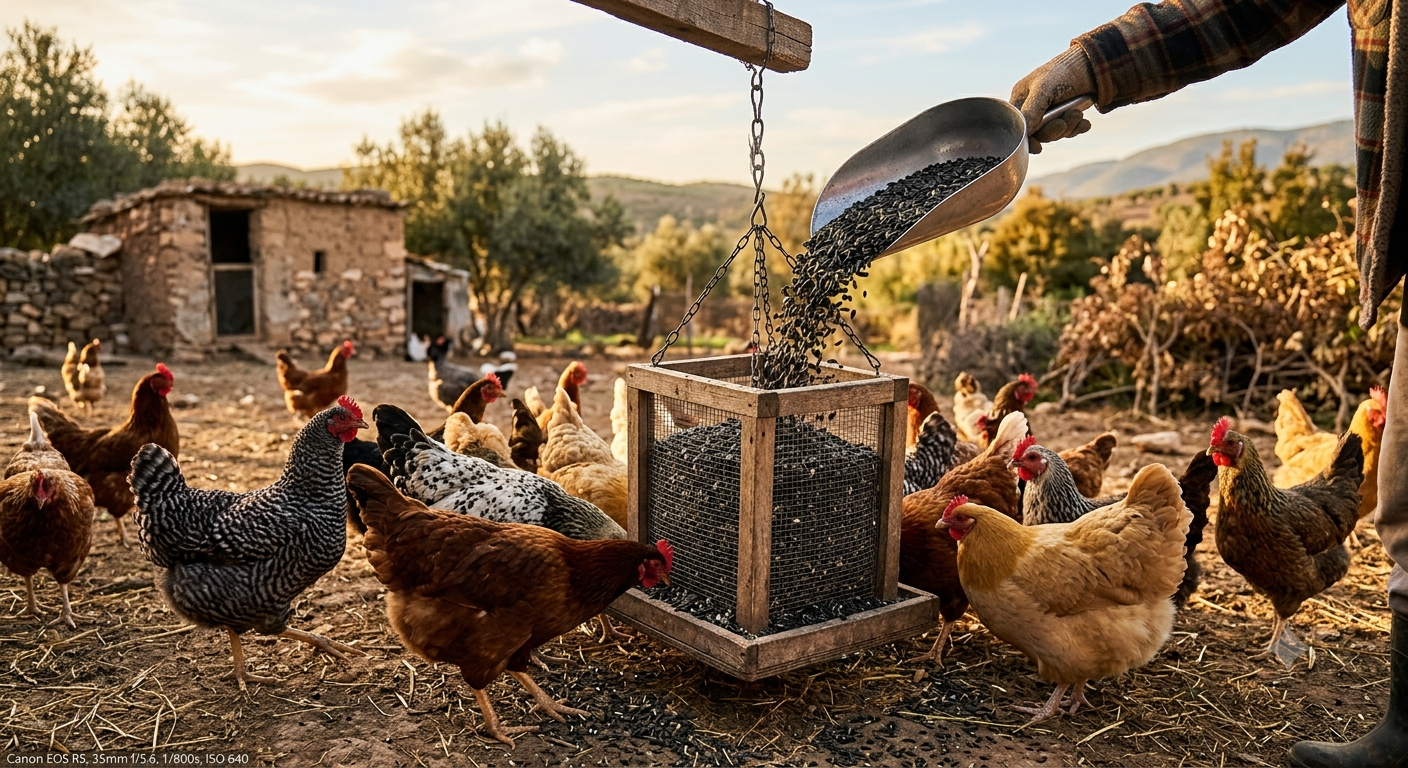
Black oil sunflower seeds contribute protein and fat, but their nutrient values vary and their high energy density makes portion control important. They do not reliably increase egg production, improve feathers within a set time, or maintain winter laying.
Cold-weather energy needs are best addressed through an appropriate complete ration and good housing management. Extra seeds can dilute the vitamins, minerals, and amino-acid balance of that ration even when the seeds contain useful nutrients.
Black oil sunflower seeds can be offered sparingly as an energy-dense treat. They should not replace a balanced layer ration, and feeding them daily does not guarantee better cold tolerance or continued winter production.
A complete layer feed is intentionally formulated to provide a consistent nutrient profile; it is not nutritionally inferior because it is uniform. Variety can be enriching, but a rotating collection of seeds, legumes, and insects is not automatically more balanced.
Source 6 — Fish Meal and Tinned Fish: Oceanic Protein With Complete Amino Acids
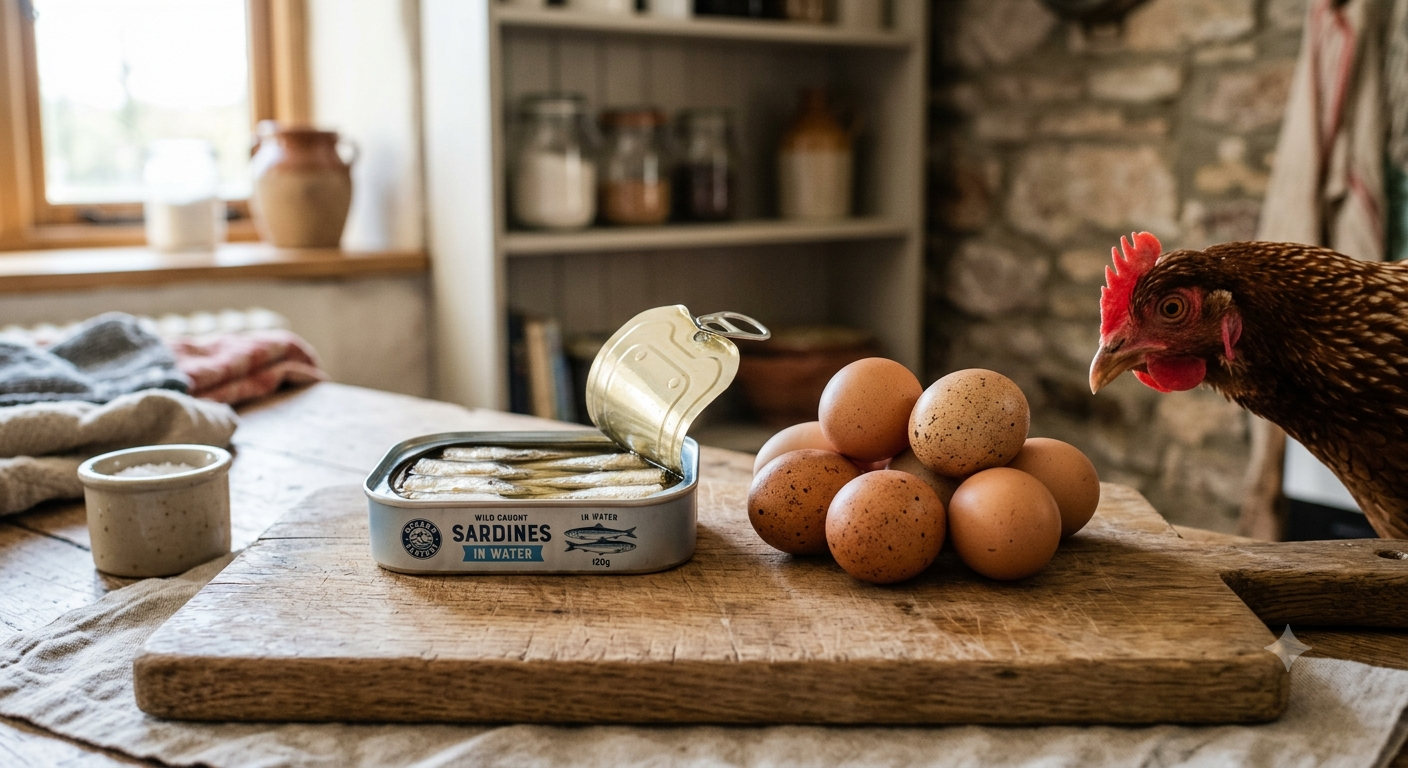
Feed-grade fish meal can contribute protein and essential amino acids when a poultry ration is professionally formulated. Tinned fish is not nutritionally equivalent: sodium, oil, processing, bones, and nutrient concentration vary by product.
If offering plain cooked or tinned fish as an occasional treat, choose a low-sodium product without seasoning, drain it, remove unsafe packaging or hard pieces, and keep the portion small. Do not use fish as an informal method for producing omega-3-enriched eggs; commercial enrichment depends on controlled, complete diet formulation and can affect egg flavor and nutrient balance.
Source 7 — Fermented Layer Feed:
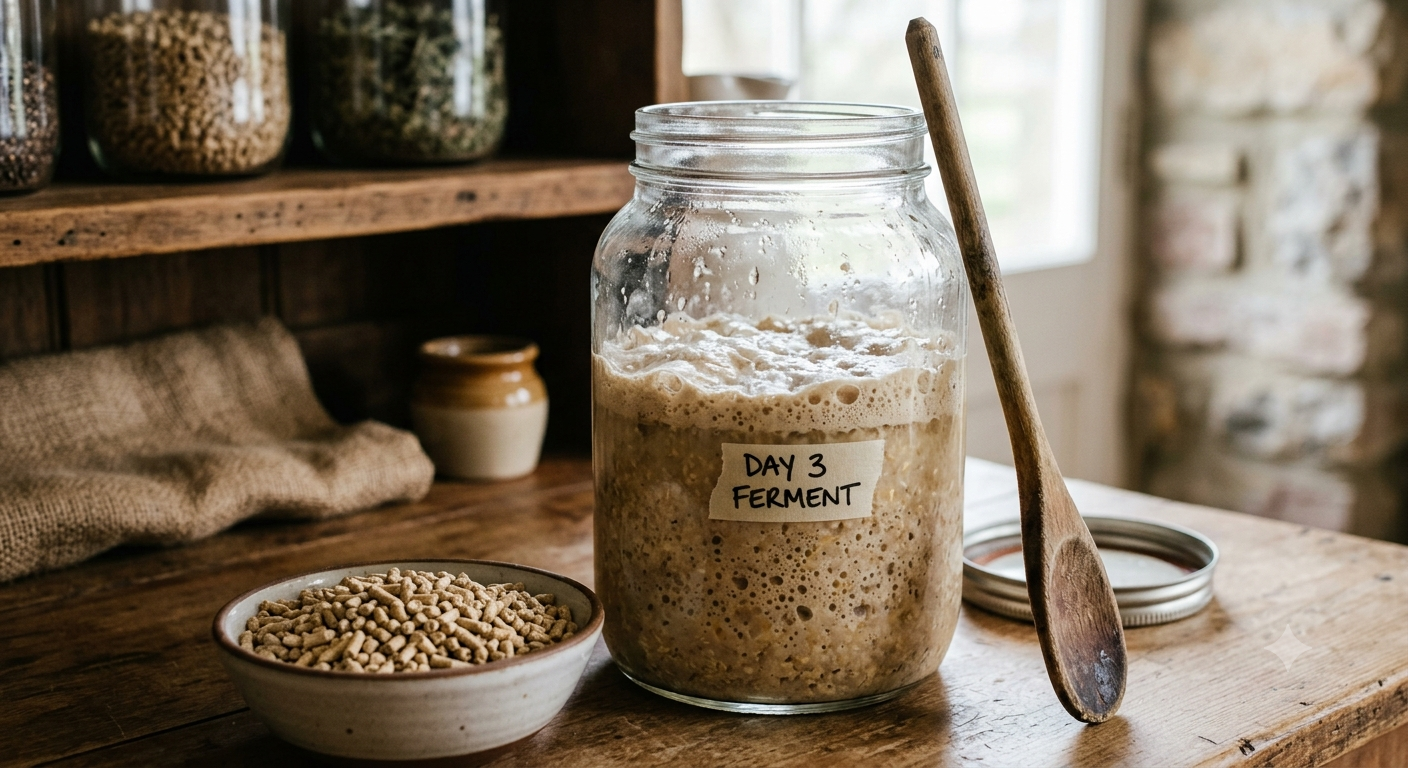
Fermenting feed changes its moisture, palatability, and microbial profile, but it should not be described as a guaranteed way to improve egg production, shorten molt, or correct an unbalanced ration.
Controlled fermentation can change acidity, microbes, palatability, and some antinutritional factors, but results depend on the feed, organisms, temperature, time, and hygiene. An uncontrolled backyard batch cannot be assumed to contain beneficial probiotics or to improve nutrient availability, feathers, yolk color, or production.
Fermentation requires careful hygiene and process control. Use a reputable poultry-specific method, prepare manageable quantities, keep the feed appropriately submerged, and discard any batch with mold, putrid odor, or abnormal discoloration. Wet feed spoils quickly and should not be left where it can become contaminated.
Do not replace a fixed portion of dry feed or add mealworms, raw legumes, or soybean meal to a ferment based on this article. If you choose to ferment, begin with an already complete feed, follow qualified guidance, and ensure the bird still receives the intended daily nutrients.
Source 8 — Alfalfa: The High-Protein Green That Works All Year
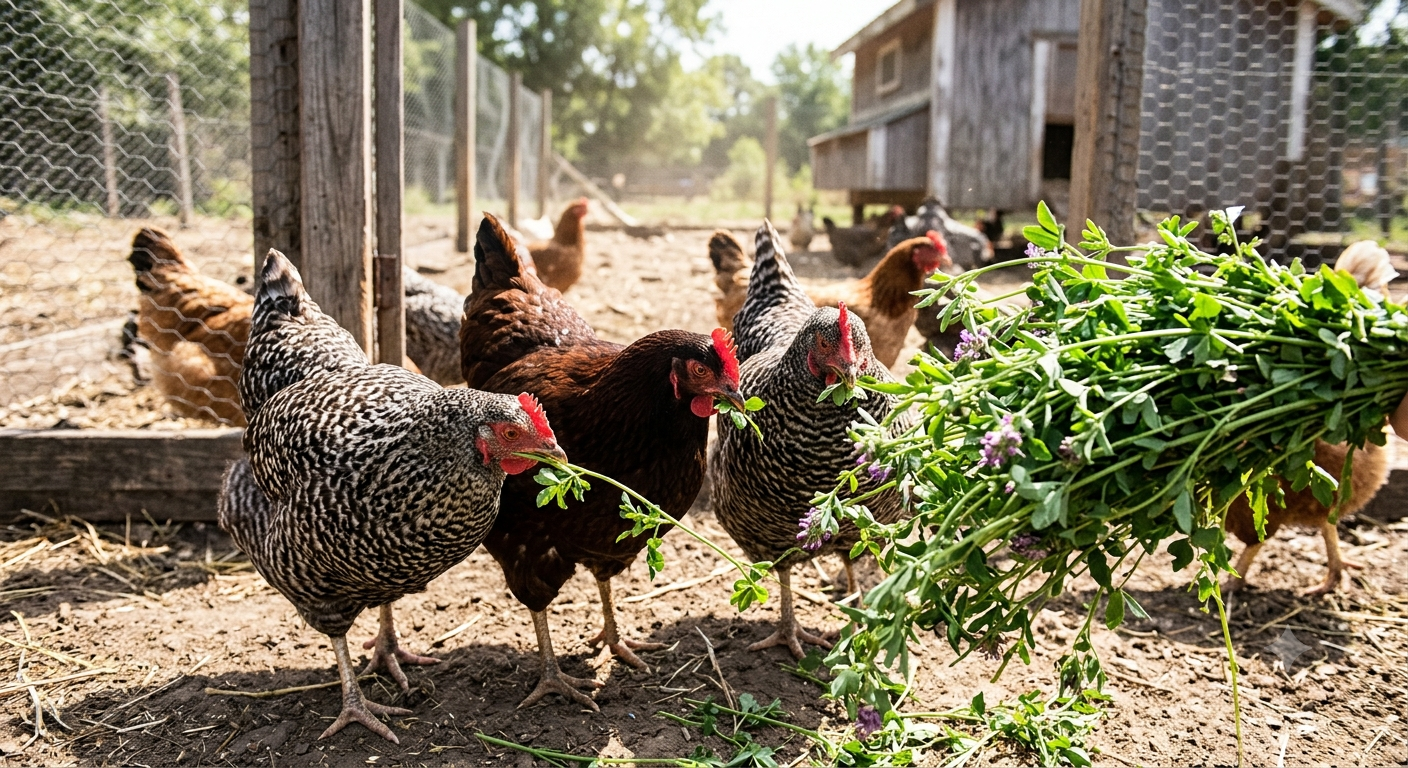
Fresh or dried forages such as alfalfa may be included to add fiber and nutrients to the feed. Among forage plants, alfalfa is exceptional for its protein content — most forages provide 10 to 14% protein, while alfalfa provides 18 to 22% protein in dried form, making it significantly more nutritious per unit of dry matter than virtually any other green.
Alfalfa meal is sometimes used in formulated poultry diets and its pigments can deepen yolk color, but darker color is not proof of a nutritionally superior egg. Pellets sold for other livestock may differ in grind, additives, and suitability, so do not add a fixed daily amount to layer feed without checking the product and overall ration.
Fresh safe forage can provide enrichment, but chickens should not be expected to balance their own protein needs from alfalfa or clover. Protect the chicken run from toxic plants, pesticides, mold, and contaminated clippings.
Source 9 — Sunflower Meal and Pumpkin Seeds: The Overlooked Oil Seed Proteins
Sunflower meal is an oil-extraction byproduct used in some formulated feeds, but its protein, fiber, and remaining oil vary with processing. Do not mix it into layer feed at a fixed percentage without recalculating the entire ration.
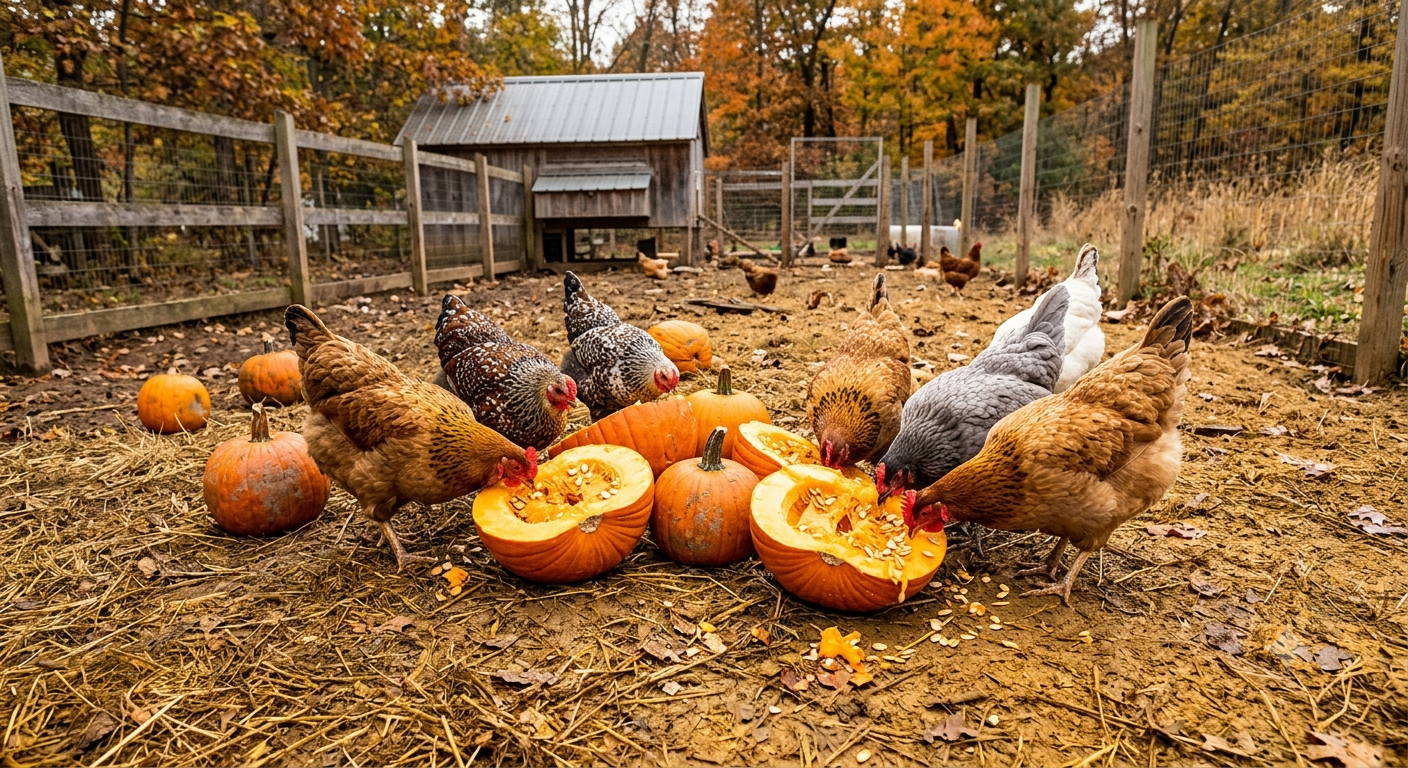
Pumpkin flesh and seeds can be offered as occasional foods, but they are not a reliable parasite treatment. Suspected worms require proper identification and advice from a poultry-experienced veterinarian.
Plain pumpkin flesh and seeds may be offered occasionally for enrichment, but claims of a predictable nutritional improvement in eggs are not justified without controlled diet analysis. Keep oilseeds and seeds modest because they are energy-dense and can displace complete feed.
Source 10 — Earthworms and Live Forage Insects: The Protein Nature Built for This Purpose
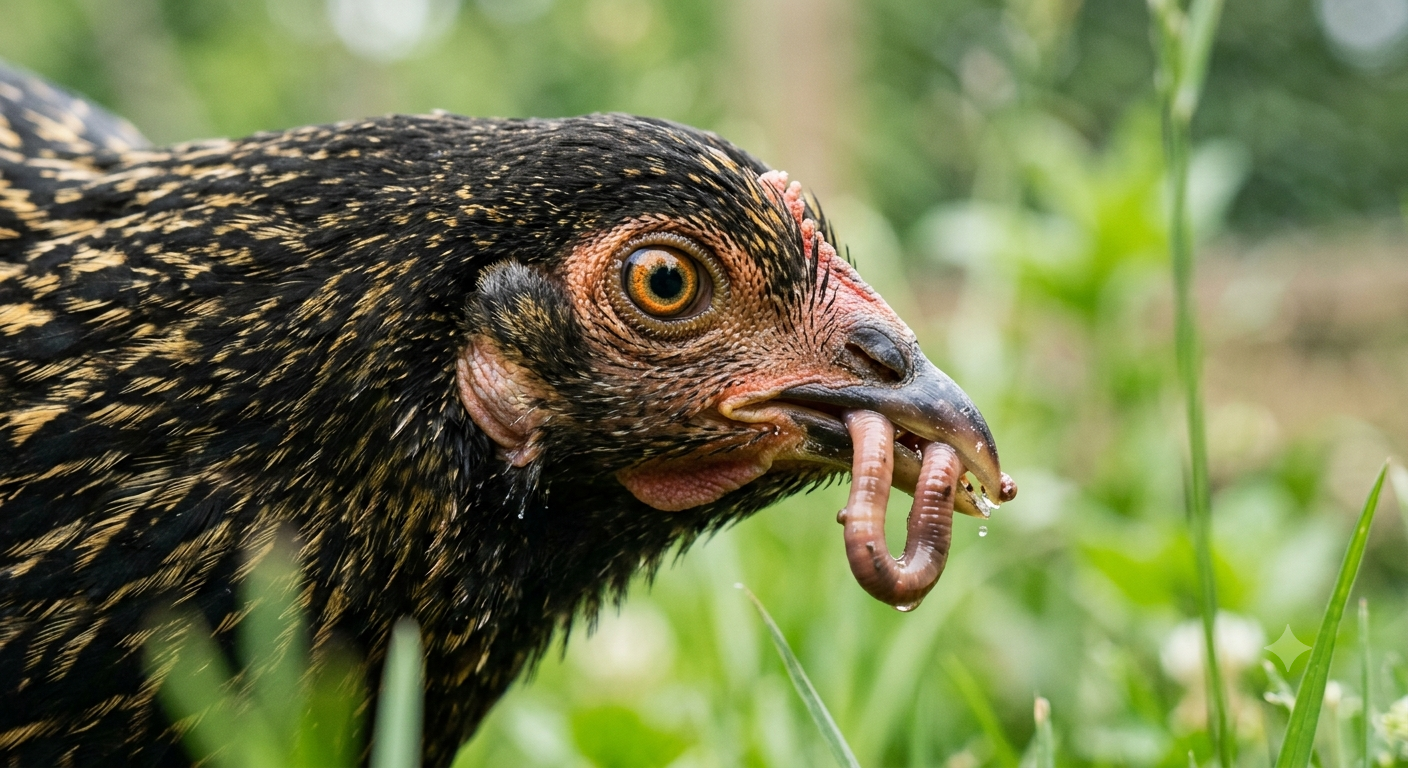
Free-ranging chickens naturally eat some invertebrates, but wild earthworms and insects can also carry parasites, pesticides, or other contaminants. Their nutrient composition is variable, and there is no basis here for calling earthworm protein more bioavailable than nearly every processed source.
Home insect culture requires clean, feed-safe substrate, moisture control, escape prevention, and attention to local rules. Do not raise feed insects on moldy material, manure, or questionable waste. Live insects may encourage foraging behavior, but use them as limited enrichment rather than a daily ration component.
Putting It All Together Without Diluting the Ration
These ten foods are options, not a schedule and not ten ingredients that should be combined. For most healthy laying hens, the complete age-appropriate ration should remain the clear nutritional foundation. Keep all extras together to a small share of intake; “10%” is a commonly used upper guideline, not a target that every flock should reach.
Avoid fixed tablespoon-per-bird schedules because products differ and birds do not divide shared treats evenly. Do not replace half the ration with fermented feed, increase fish before molt, or offer high-energy seeds continuously based on this article. If the flock may need a dietary adjustment, review the feed label, actual consumption, body condition, life stage, and health with a poultry professional.
During molt, prioritize a complete ration appropriate for the flock and keep protein-rich treats modest. Supplements may add variety, but they do not guarantee a faster molt or quicker return to full production.
An Empty Nesting Box Has Many Possible Causes
A decline in laying can reflect shorter days, molt, age, broodiness, stress, inadequate water, an unbalanced ration, parasites, or illness. Do not assume protein is the cause simply because a food is marketed as protein-rich.
Use these foods as optional, limited additions—not as a treatment plan. If production remains low or birds show weight loss, weakness, abnormal droppings, respiratory signs, or poor feather condition, review the complete diet and seek professional advice.
Sources and Further Reading
- Pacific Northwest Extension: How to Feed Your Laying Hens
- University of Georgia Extension: Feeding Poultry Right
- University of Idaho Extension: How to Feed Your Laying Hens
Continue Exploring Your Backyard Flock
Use these closely related guides to plan your next steps:
10 thoughts on “10 Protein-Rich Foods for Chickens—and How to Offer Them Safely”
Comments are closed.