
Foods Chickens Should Avoid: A Practical Safety Guide
Chickens investigate food with their beaks, but that does not make every kitchen scrap suitable for them. Some items contain compounds known to harm birds; others are mainly a problem because large or frequent servings dilute a balanced ration. This guide separates clear hazards from foods that simply require moderation and explains when veterinary advice is warranted.
The Difference Between Toxic Foods and Poor Treat Choices
Toxicity depends on the substance, dose, bird, and timing. Avoid known hazards, but do not assume that one accidental peck guarantees poisoning. If a chicken eats a questionable item, remove access, note what and roughly how much was eaten, watch for weakness, breathing difficulty, tremors, diarrhea, or loss of coordination, and contact an avian veterinarian or animal poison service promptly if symptoms appear.
Avocado — Best Kept Away From Chickens
Free Backyard Flock Checklist
Planning the rest of your flock setup?
Turn your coop-size estimate into a complete setup plan with our free equipment and preparation checklist.
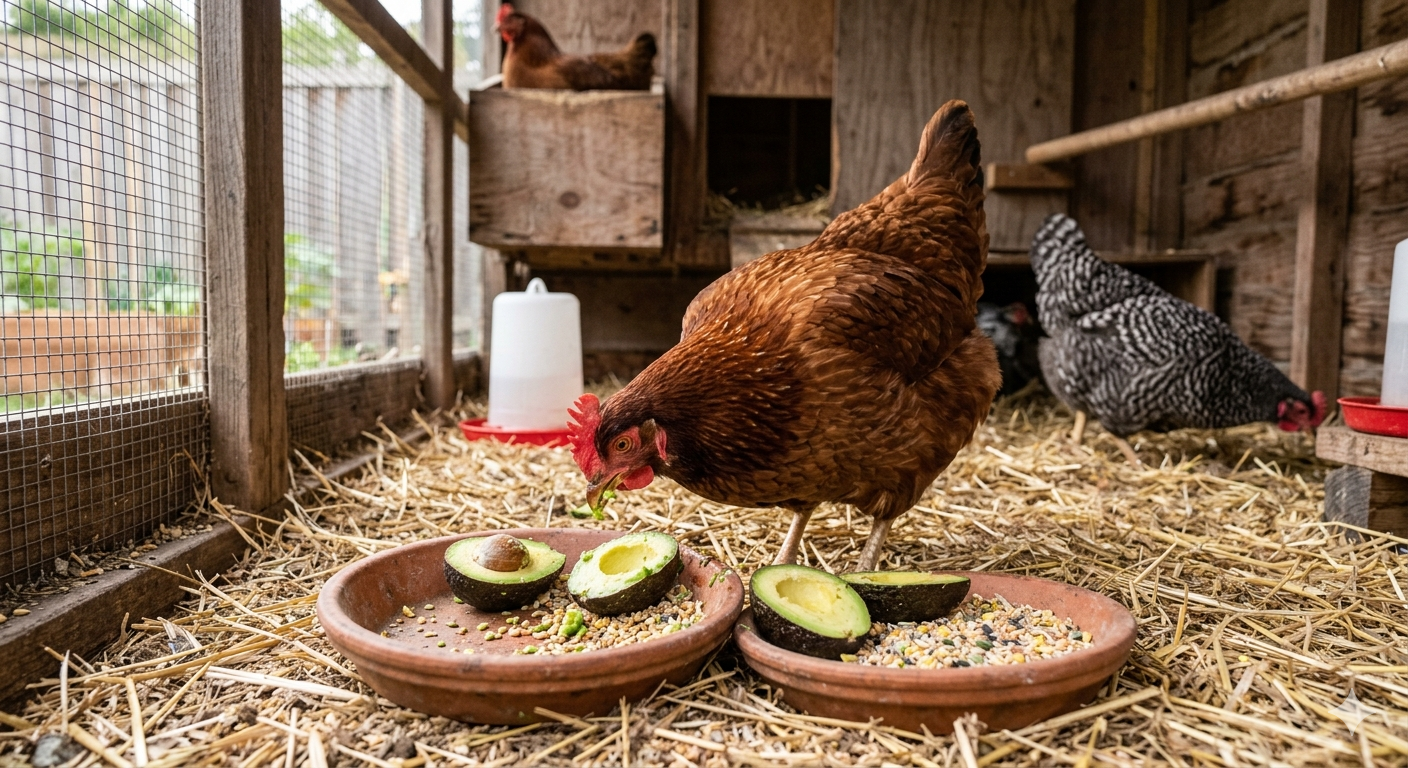
Avocado plants contain persin, and birds are considered particularly sensitive to avocado exposure. Leaves, bark, skin, and pits are especially concerning; because the persin content varies by variety and plant part, the safest backyard rule is to keep the whole avocado and plant trimmings away from chickens.
Possible signs include weakness, breathing difficulty, swelling or fluid accumulation, and sudden decline. The onset and severity cannot be predicted reliably from a backyard exposure.
Do not offer avocado intentionally. If a bird steals a small piece, remove the remainder and monitor it rather than attempting a home remedy; call a veterinarian if any abnormal signs develop.
Raw or Undercooked Dried Beans — Avoid
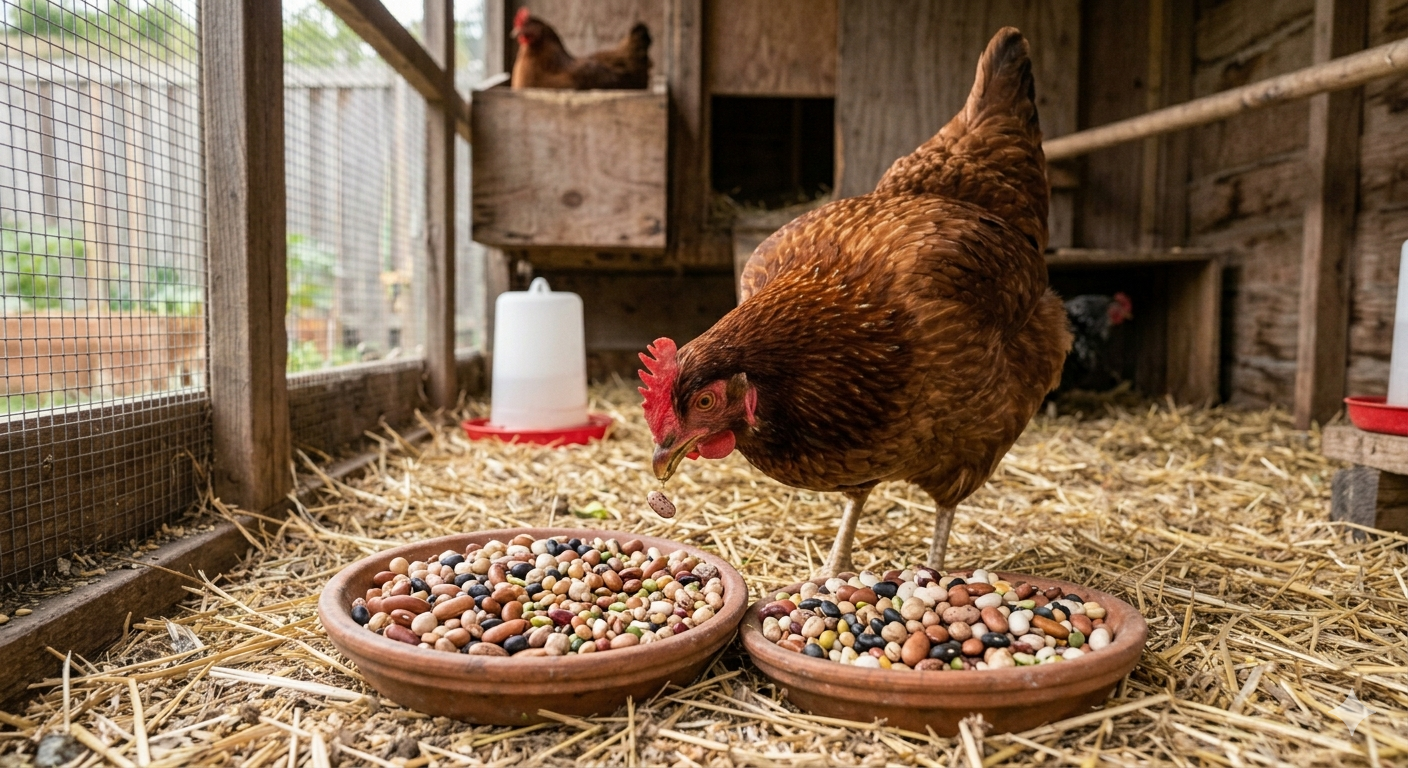
Raw beans contain a toxin called lectin that can cause digestive upset, diarrhea, and other health problems in chickens. The toxin is destroyed by cooking, so if you want to feed your chickens beans, it is essential to cook them first.
Raw and inadequately cooked dried beans contain lectins that can irritate the digestive tract and cause illness. Toxicity varies among bean types and with preparation, so do not estimate a “safe” raw amount. Store dried beans securely and only offer plain beans that have been thoroughly cooked; canned beans may be too salty to use as a routine treat.
Chocolate — Keep It Out of the Flock
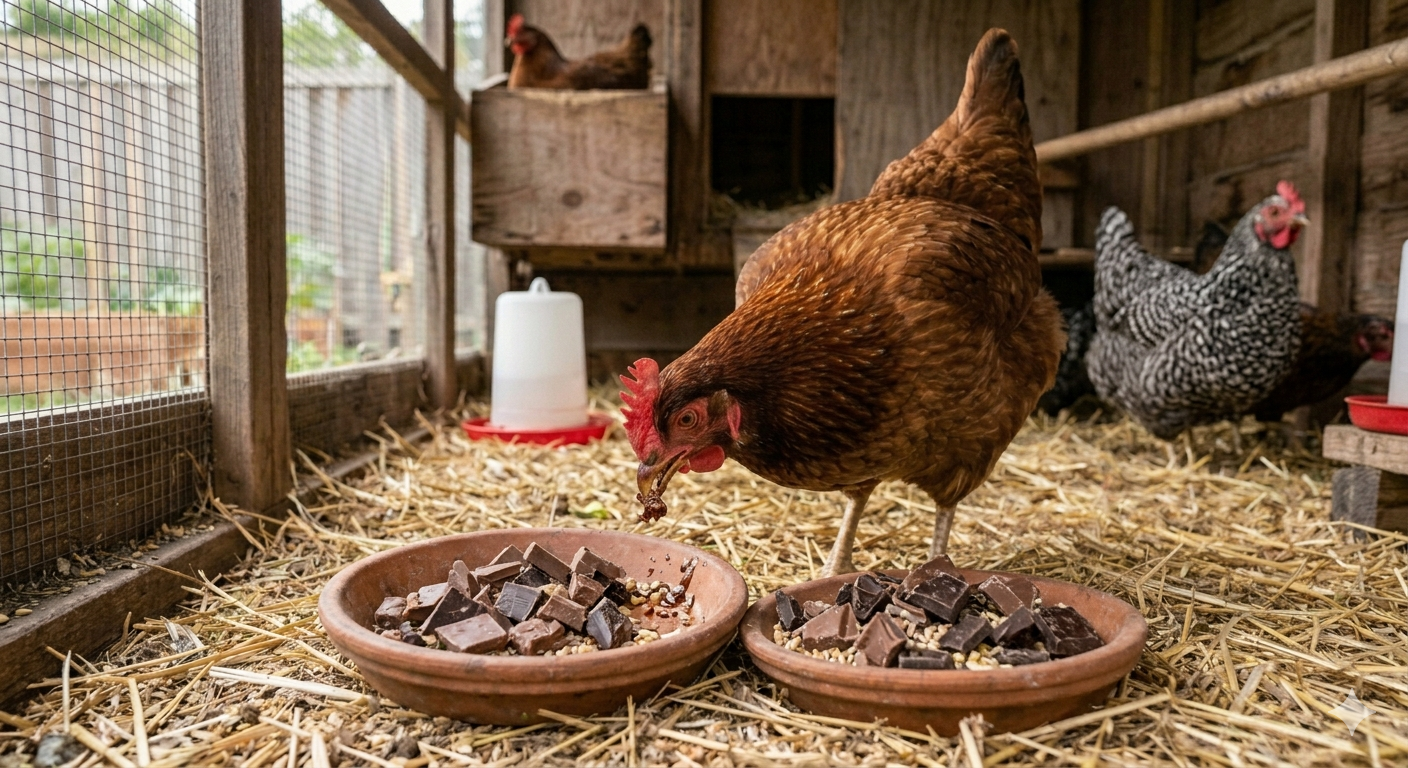
Chocolate contains methylxanthines, including theobromine and caffeine. Birds can be harmed by these compounds, with risk influenced by the type of chocolate and amount eaten. Dark and baking chocolate are more concentrated than milk chocolate.
Do not feed chocolate. After an accidental exposure, seek veterinary or poison-control guidance instead of waiting for severe signs such as agitation, tremors, abnormal heart rhythm, or seizures.
Stone-Fruit Pits and Large Quantities of Crushed Seeds
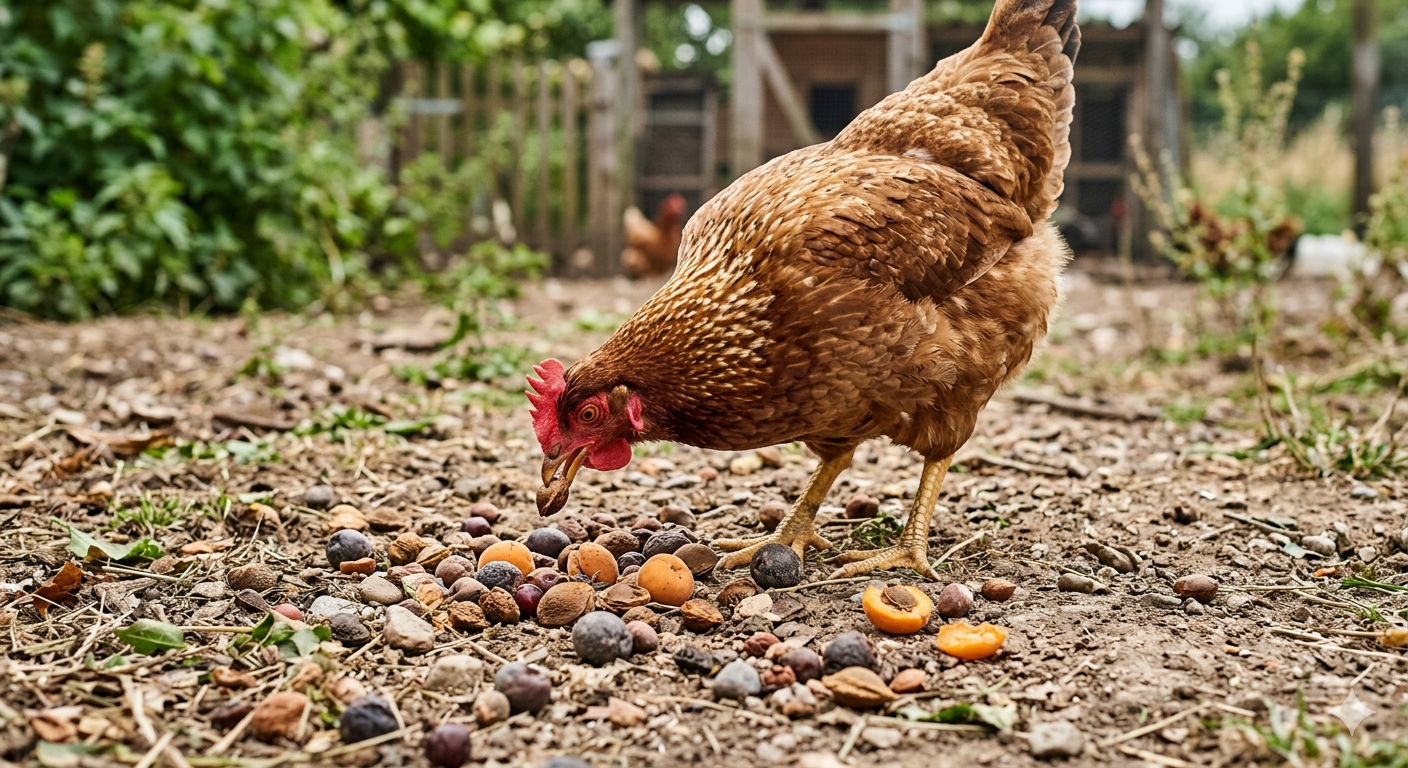
Pits and kernels from several Prunus fruits—including apricots, cherries, nectarines, peaches, and plums—contain cyanogenic compounds. The intact hard pit limits access, but cracked or ground kernels present more risk. Keep pits out of treats and remove fallen, damaged pits from areas where birds forage.
Plain flesh from ripe stone fruit can be offered in small portions after the pit is removed. Fallen fruit should also be cleared before it becomes moldy or attracts pests.
Apple seeds also contain cyanogenic compounds, but a few intact seeds in an occasional apple core are not equivalent to a concentrated dose of crushed seeds. Removing the core and seeds is a simple precaution; avoid presenting tiny accidental exposures as certain emergencies.
Onions and Garlic — Limit, Rather Than Panic
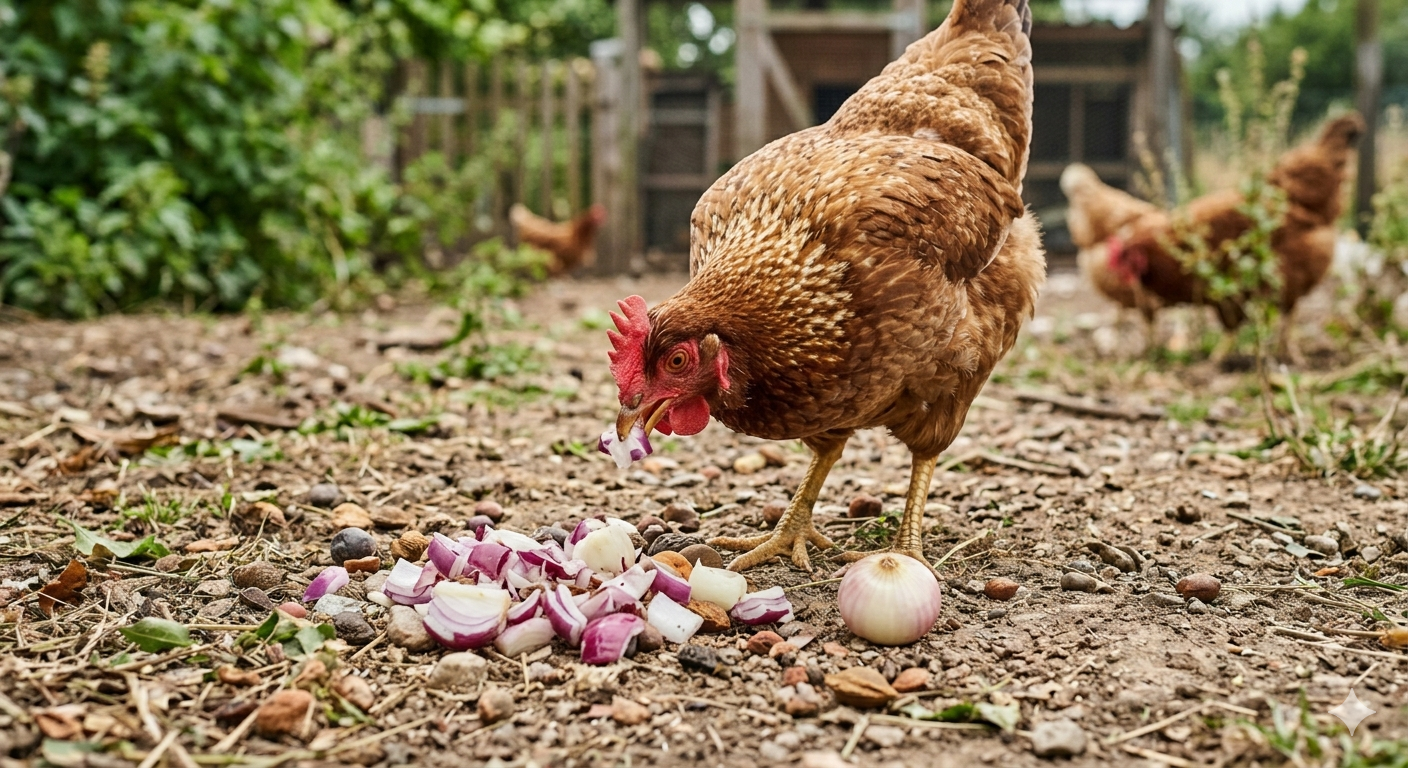
Large amounts of Allium plants can damage red blood cells in several animal species, but poultry-specific dose information for ordinary kitchen exposure is limited. Do not make onions a regular or substantial part of the ration. A small accidental amount in mixed scraps is not a reason to assume poisoning.
Garlic is sometimes promoted as a flock supplement, but it does not replace vaccination, parasite control, sanitation, or veterinary treatment. Keep both onion and garlic portions modest and prioritize a complete poultry feed.
Rhubarb Leaves — Keep Them Out of Reach
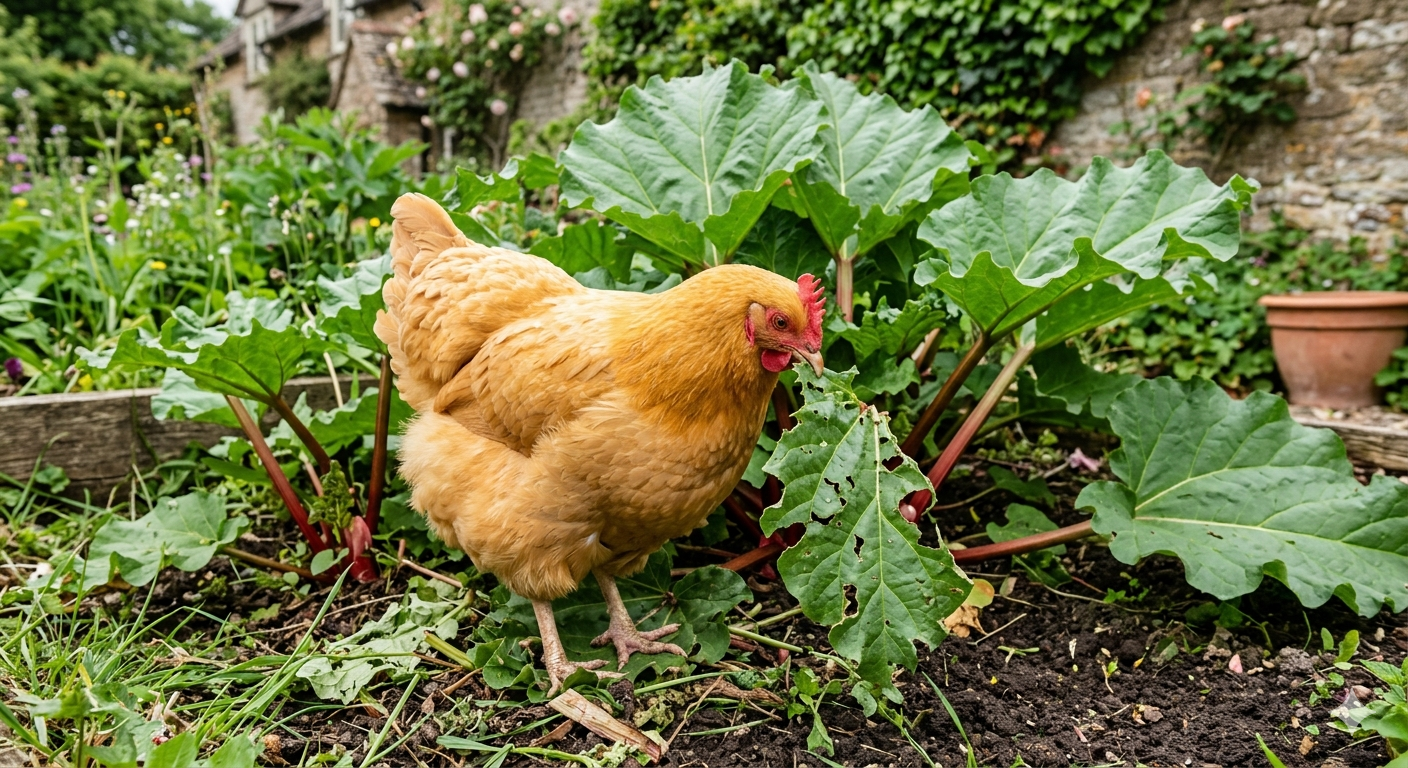
Rhubarb leaves contain oxalates and should not be offered to chickens. If you grow rhubarb where birds range, fence the plants or remove discarded leaves. Do not infer kidney failure or egg binding from a single peck; the amount eaten and the bird’s condition matter. Call a veterinarian if substantial ingestion is suspected or the bird becomes weak, trembles, has diarrhea, or stops eating.
Green Potatoes and Nightshade Plant Foliage
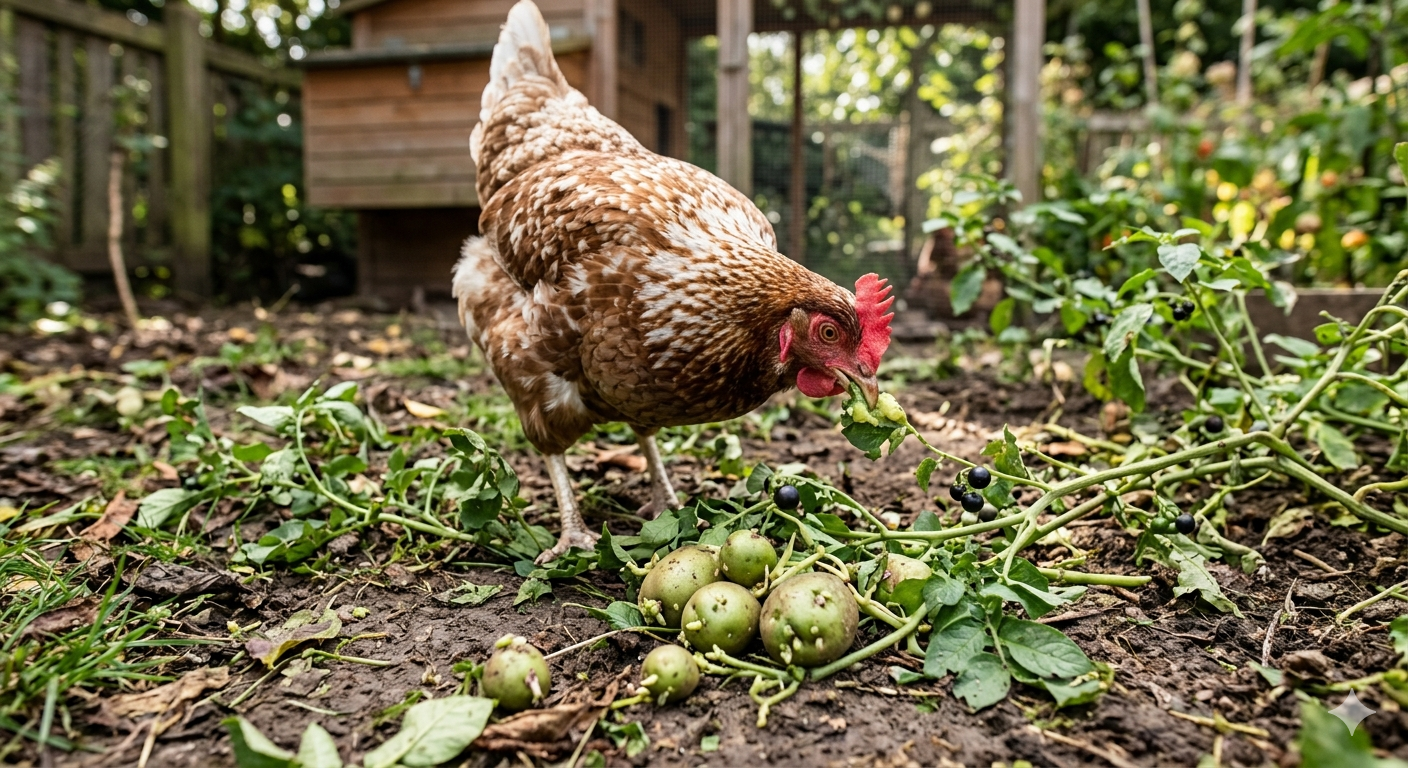
Green or sprouted potatoes can contain elevated glycoalkaloids, and foliage from potato and tomato plants should not be used as feed. Plain, non-green cooked potato can be an occasional treat, but it should not displace the balanced ration. Inspect peelings carefully and discard any green or sprouted portions.
Spinach — A Treat, Not a Staple
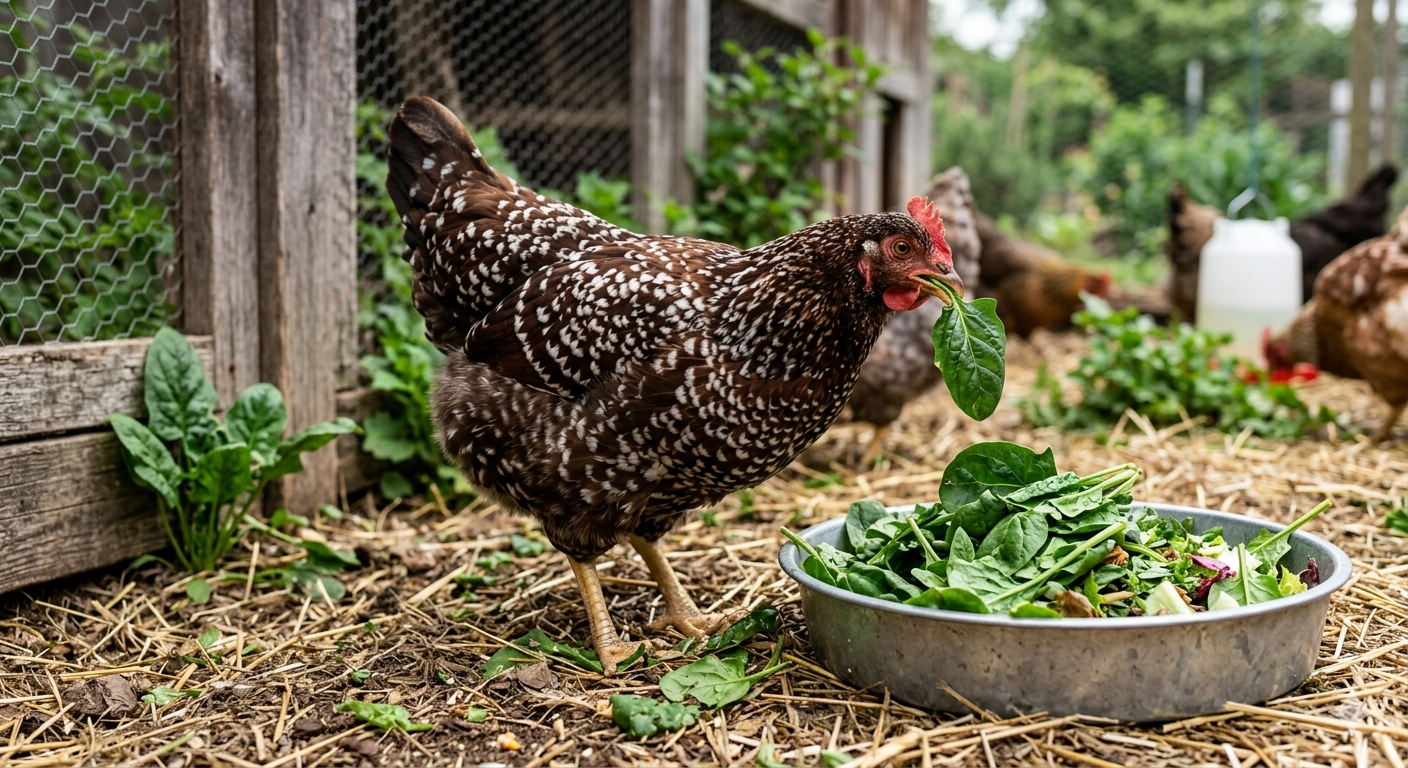
Spinach contains oxalates, which can bind some minerals, but an occasional small serving is not expected to strip a healthy hen of calcium or cause egg binding. Problems are more plausible when treats repeatedly displace a nutritionally complete layer ration.
Offer spinach only as one of many occasional greens, and keep all treats limited so the balanced feed remains the main diet. Note that Swiss chard also contains oxalates, so it should not be presented as an oxalate-free substitute. Persistent soft shells or laying trouble deserves a broader review of diet, age, stress, and health.
Moldy or Spoiled Food — The Mycotoxin Problem Every Keeper Underestimates
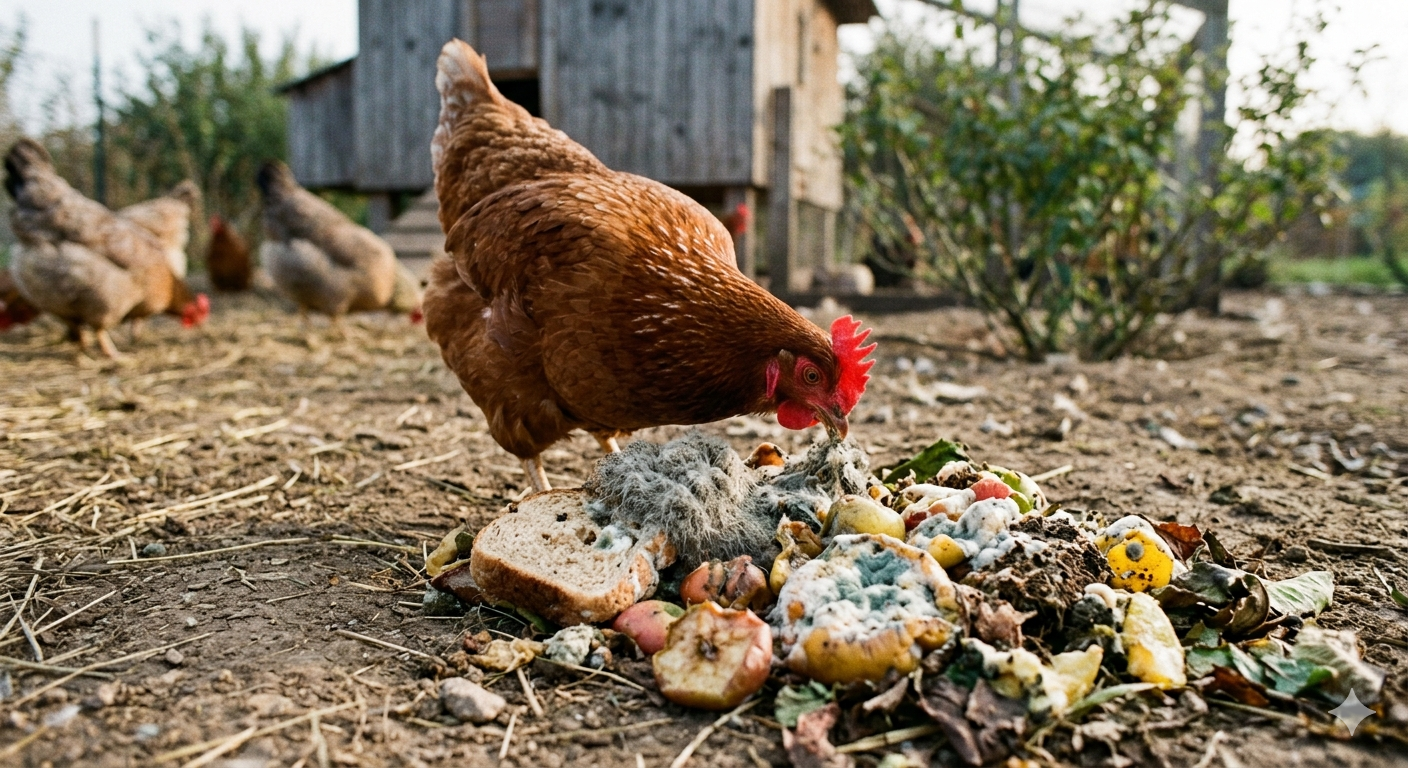
Moldy or spoiled food should always be avoided, as it can lead to poisoning. Mold produces mycotoxins — toxic compounds that cause liver damage, immune suppression, reduced egg production, and neurological symptoms depending on the type and quantity. The problem with moldy feed is that the toxins are present throughout the affected material, not just in the visible mold spots. Cutting away visibly moldy portions and feeding the rest is not safe — discard any food that shows mold without exception. This includes moldy bread, overripe fruit with mold growth, and most critically, any layer feed that has gotten damp and developed mold in the bag or feeder. Regularly clean feeders and check for moisture intrusion that could be causing mold in feed that looks normal on the surface.
A Safer Rule for Kitchen Scraps
Use a balanced, age-appropriate poultry ration as the foundation of the diet, with clean water always available. The University of Minnesota Extension notes that scratch grains and scraps do not supply every nutrient and should be treats in moderation. When you are unsure about a food, leave it out until you can verify it through an extension service or avian veterinarian.
Sources and further reading
- University of Minnesota Extension: Raising chickens for eggs
- Merck Veterinary Manual: Tremorgenic mycotoxicosis and moldy foods
Continue Exploring Your Backyard Flock
Use these closely related guides to plan your next steps:
4 thoughts on “Foods Chickens Should Avoid: A Practical Safety Guide”
Comments are closed.