






Everything You Need to Know About Duck Eggs
Duck eggs are less common in mainstream U.S. grocery stores than chicken eggs, but they are available from some farms, specialty markets, and backyard flocks. They are usually larger, have a higher yolk-to-white ratio, and can produce noticeably rich results in cooking and baking. Nutrient values and recipe behavior depend on egg size, the individual flock, and how the eggs are used, so comparisons should avoid treating every duck egg as identical.
If you keep ducks, you already have access to something most people will never think to try. If you are considering keeping ducks, understanding what their eggs offer is a meaningful part of the case for adding them to your flock. And if you have simply arrived here, curious about the large, waxy-shelled egg you found at the farmers’ market, this is everything you need.
The First Thing You Notice — Size and Appearance

Free Backyard Flock Checklist
Planning the rest of your flock setup?
Turn your coop-size estimate into a complete setup plan with our free equipment and preparation checklist.
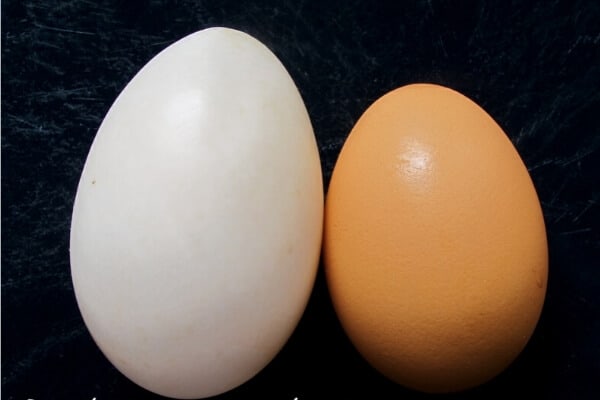
Size is often the first noticeable difference. Many duck eggs are larger than the large chicken eggs used in standard nutrition labels and recipes, although size varies by breed and individual bird. Compare eggs by weight when nutrition or recipe precision matters rather than assuming every duck egg equals one-and-a-half or two chicken eggs.
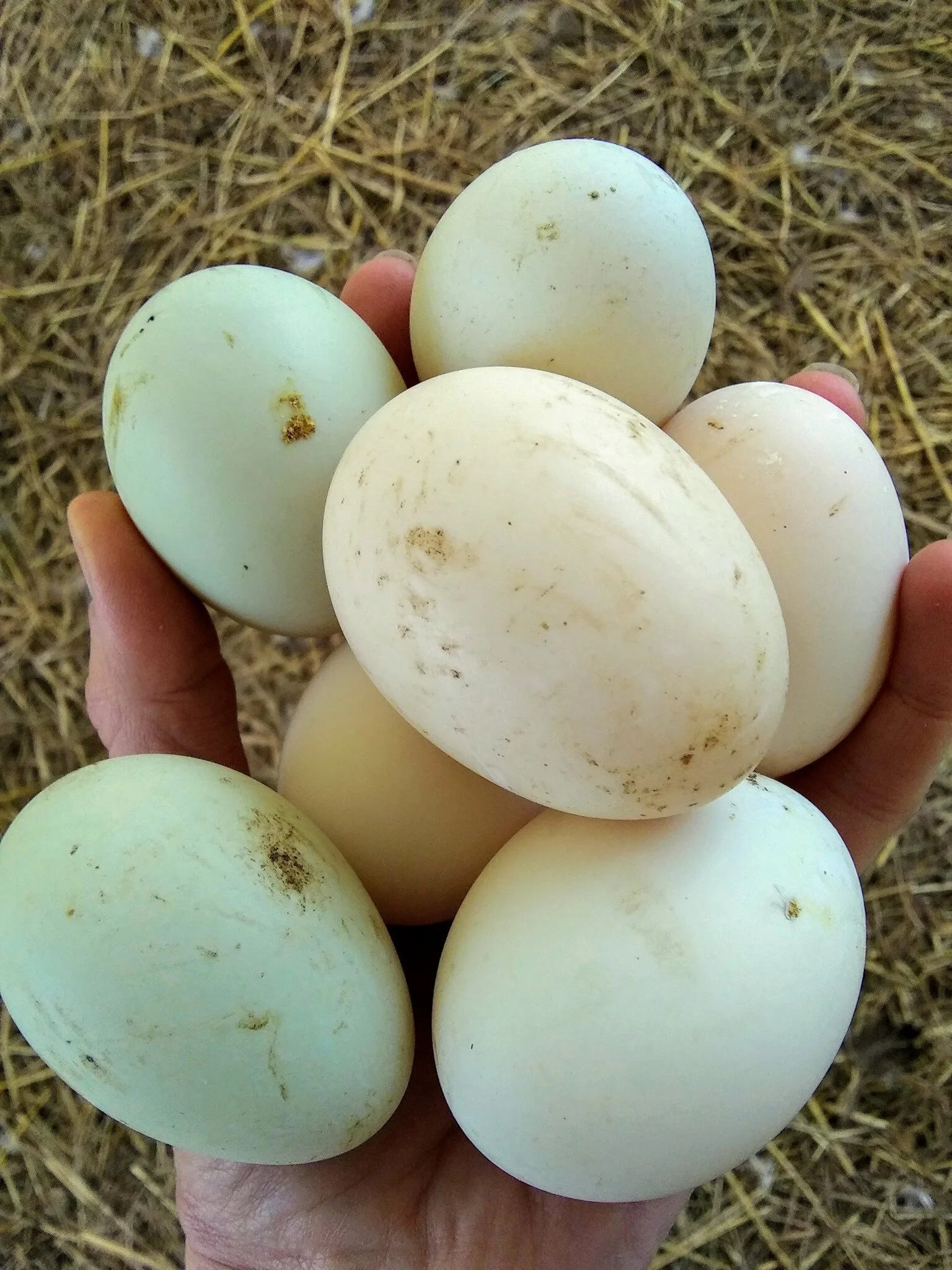
Duck eggs often feel smoother or waxier and may have a thicker shell than a typical chicken egg, but shell characteristics vary. A thicker shell does not make an egg sterile or guarantee a longer safe refrigerator life; cleanliness, prompt refrigeration, temperature control, and shell integrity remain essential.
The waxier, thicker shell is the first physical signal that something different is inside. The shell of duck eggs is thicker than that of chicken eggs, so it takes a little more force to crack them. Duck eggs contain less water than chicken eggs, so they are easy to overcook. If you are cooking them on the stovetop, take them off the heat as soon as they are cooked through.
Shell colors vary by breed: Khaki Campbells lay white to pale blue eggs, Welsh Harlequins lay white or tinted eggs, Cayuga ducks lay dark charcoal-black eggs at the beginning of the season that gradually lighten to grey and then white as the season progresses — a color shift that is itself one of the most fascinating phenomena in backyard egg production.
The Nutritional Profile — Compare Like With Like
Duck eggs provide protein, fat, choline, selenium, iron, and several vitamins. A whole duck egg commonly contains more of many nutrients than one large chicken egg largely because the duck egg is bigger. For a responsible comparison, use equal weights or clearly state the serving sizes.
Nutrient content also varies with egg size, breed, diet, and the database entry used. Consult USDA FoodData Central for current serving and weight-based values rather than treating figures such as 9 grams of protein, 60% of a daily value, or a particular omega-3 amount as universal.
Yolk color is influenced strongly by pigments in the bird’s diet. A darker orange yolk may contain more carotenoid pigment, but color alone does not prove that a particular egg has more omega-3 fat, more total antioxidants, or a fixed percentage more vitamin A than another egg.
The Cholesterol Reality
Duck-egg yolks are high in dietary cholesterol, and one large duck egg can contain substantially more cholesterol than one large chicken egg because of its size and yolk proportion. Exact values vary. The former blanket daily cholesterol limit is not the right way to describe risk for every person; overall dietary pattern and individual health status matter.
Duck eggs also generally provide more total fat and saturated fat per egg than a large chicken egg. Readers managing cardiovascular disease, diabetes, lipid disorders, or another medical condition should follow advice from their clinician or registered dietitian rather than treating duck eggs as automatically beneficial or harmful.
For everyone else, portion size and the rest of the meal remain more useful considerations than calling a single food a “net positive.” Duck eggs can fit into a varied diet, but this article does not provide individualized medical or dietary advice.
The Flavor Difference — What Richer Actually Means
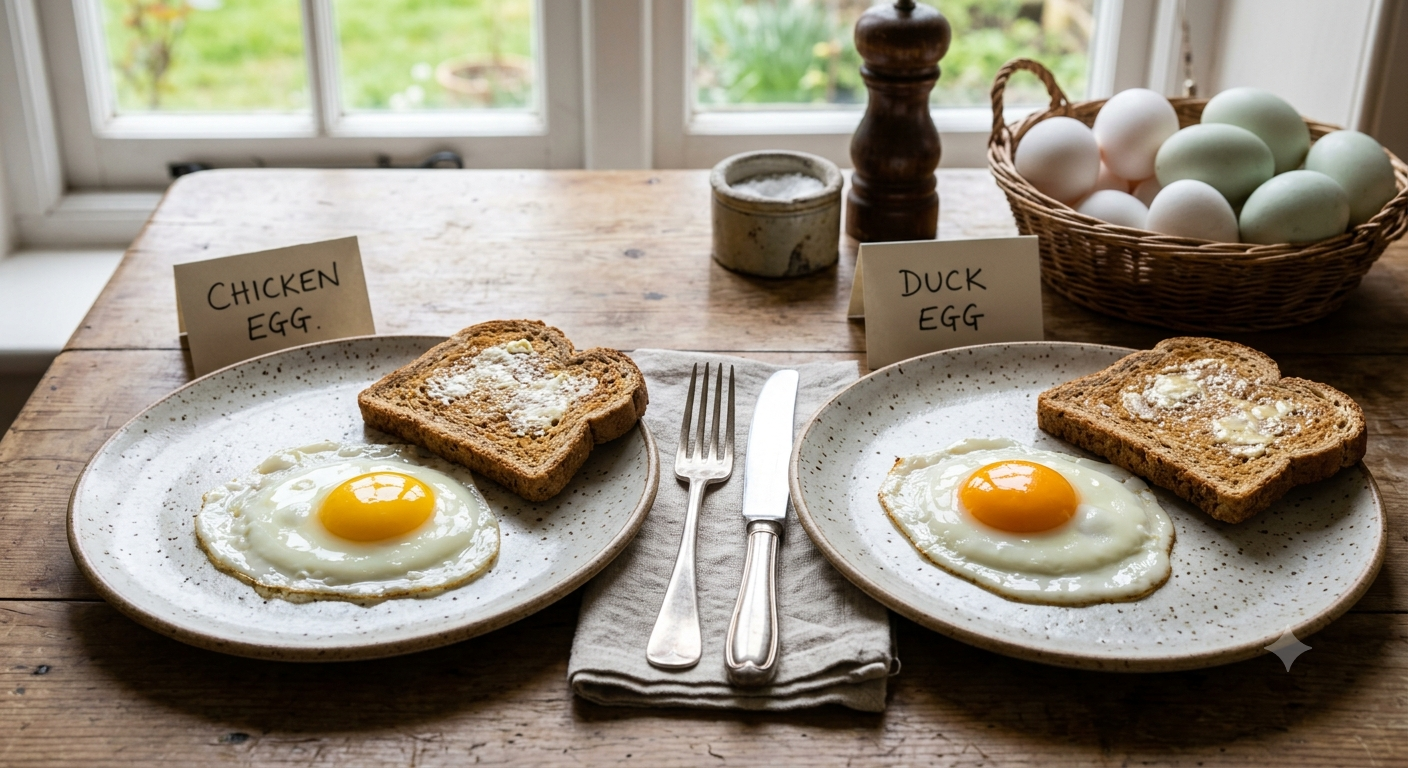
Overall, duck eggs and chicken eggs taste similar. However, the flavor of duck eggs may be more intense than that of chicken eggs.
You can cook duck eggs just like chicken eggs and will find that they have a creamier, richer taste. Some people prefer them deviled or in omelets or quiches, as they have a stronger flavor than chicken eggs when eaten plain.
The richness comes from the higher fat content — specifically the larger yolk and its higher concentration of fat-soluble flavor compounds. A scrambled duck egg has a quality that is difficult to describe without using the word “luxurious” — the texture is creamier, the flavor has more depth, and the experience of eating it is noticeably different from the most thoroughly produced chicken egg. People who have tasted both and prefer duck eggs tend to prefer them specifically for plain preparations — scrambled, fried, deviled — where the flavor can be experienced directly rather than absorbed into a complex recipe.
The Baking Secret — Why Professional Pastry Chefs Seek Them Out

Many bakers value duck eggs for their large yolks and abundant whites, which can add richness and structure to some recipes. Results are recipe-dependent: substituting by egg count can change the liquid, fat, and protein balance, so duck eggs do not automatically make every cake fluffier or every meringue higher.
Egg whites create foams through their proteins, while yolks contribute fat and emulsifiers. The precise composition varies, and technique, ingredient ratios, oven conditions, and egg freshness can matter as much as species. Treat claims about superior foam stability or guaranteed lift as recipe observations rather than universal scientific outcomes.
Substitution: Weigh the contents when accuracy matters. Two large chicken eggs are often close to 100 grams out of the shell, but duck eggs vary widely. Match the recipe’s required egg weight and adjust only after testing; replacing two eggs with one duck egg and automatically cutting a half-cup of oil to a quarter-cup can seriously unbalance a recipe.
The Allergy Question
A person with chicken-egg allergy should not assume that duck eggs are safe. Proteins in eggs from different bird species can cross-react, and duck egg itself can cause an allergic reaction. The American Academy of Allergy, Asthma & Immunology notes demonstrated immunologic cross-reactivity between hen and duck egg, while published evidence remains limited regarding how consistently that becomes a clinical reaction.
Do not test duck egg at home after a previous egg reaction. An allergist can assess the history and decide whether testing or a medically supervised food challenge is appropriate. The reverse also matters: tolerance of chicken egg does not guarantee tolerance of duck egg.
Storing, Handling, and Food Safety
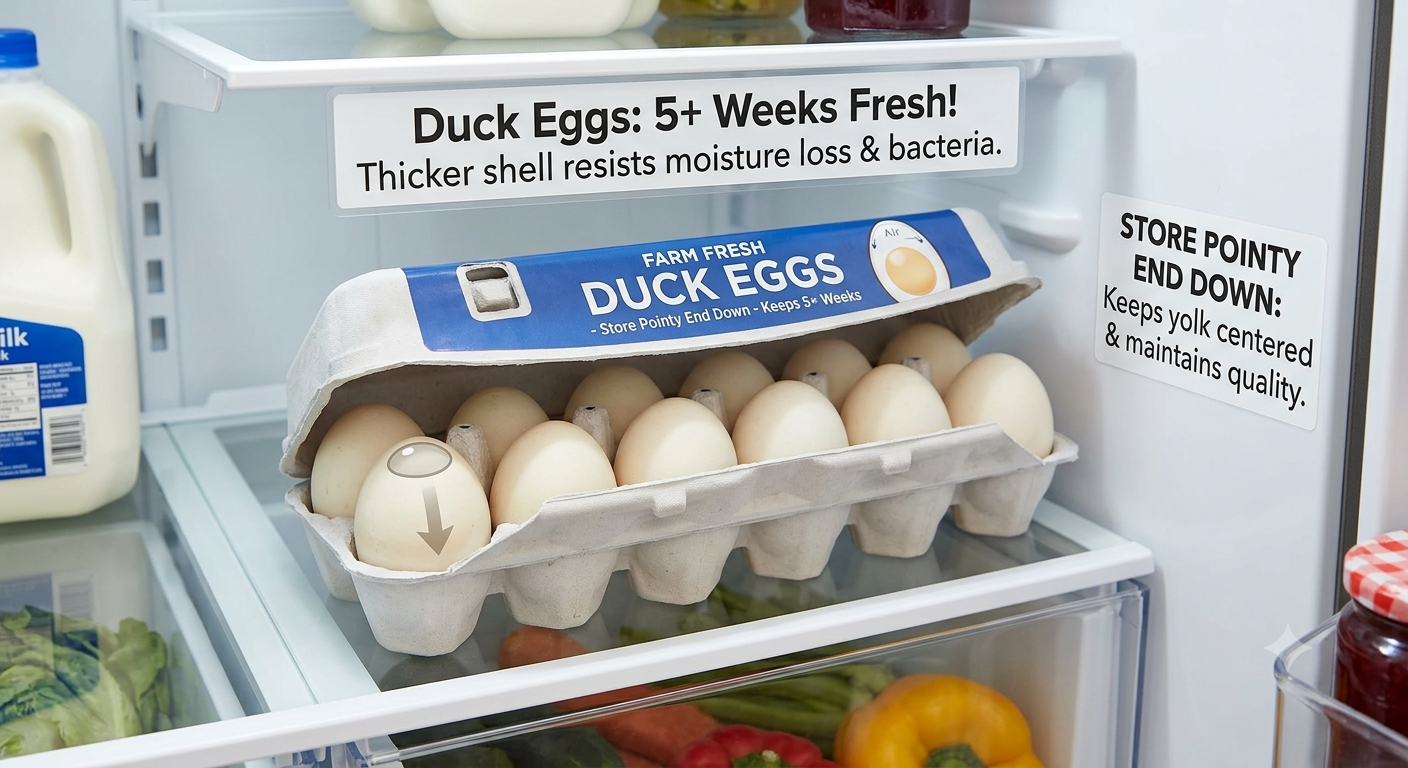
Refrigerate clean, intact duck eggs promptly at 40°F (4°C) or below and keep them in a covered carton rather than loose in the refrigerator door. Do not claim that a thicker shell creates a shelf-life advantage. USDA shell-egg guidance lists 3 to 5 weeks of refrigerated storage for raw shell eggs; local regulations and handling practices may impose additional requirements.
Discard cracked or leaking eggs and prevent shell contents from contacting dirty nesting material or equipment. Wash hands, utensils, and work surfaces after handling raw egg. Cook eggs until the white and yolk are firm, and cook egg dishes to 160°F (71°C), unless using pasteurized eggs in a preparation that will remain raw or undercooked.
One practical handling note: because duck eggs contain less water than chicken eggs, they are easy to overcook. If you are cooking them on the stovetop, take them off the heat as soon as they are cooked through. A duck egg scrambled to the same visual doneness as a chicken egg will be slightly overcooked — pull it a moment earlier than you think is necessary, and the texture will be exactly right.
Continue Exploring Your Backyard Flock
Use these closely related guides to plan your next steps:


5 thoughts on “Everything You Need to Know About Duck Eggs”
Comments are closed.