




Bali Duck Guide: Appearance, Care, Eggs, and Crest Genetics
There are duck breeds that are popular. There are practical duck breeds. And then there is the Bali duck — a breed that is neither of these things in the conventional sense, but that occupies a completely different category: the duck that stops people who know nothing about ducks, who have never considered keeping ducks, who simply happen to see one, and makes them stand completely still.
They are mainly an ornamental breed due to their unique, eye-catching appearance, but they can be productive layers as well. Bali ducks belong to a long-established Indonesian duck tradition; historical accounts often connect upright Indonesian ducks with old temple carvings, although those carvings do not by themselves identify the modern crested Bali breed.
That long history matters. Upright ducks have deep roots in Indonesian agriculture and culture, and Bali ducks remain closely associated with the island whose name they carry. They represent the intersection of the practical and the distinctive in a culture where ducks have long had agricultural importance.

Free Backyard Flock Checklist
Planning the rest of your flock setup?
Turn your coop-size estimate into a complete setup plan with our free equipment and preparation checklist.
Bali ducks are active foragers, and many keepers value their upright, bowling-pin-like appearance. Temperament varies by individual, handling, breeding line, and environment, so friendliness should not be assumed.
This is the complete guide to the Bali duck — the history, the appearance, the genetics, the care requirements, the challenges, and the honest assessment of whether this extraordinary breed is right for your specific situation.
History and Indonesian Origins
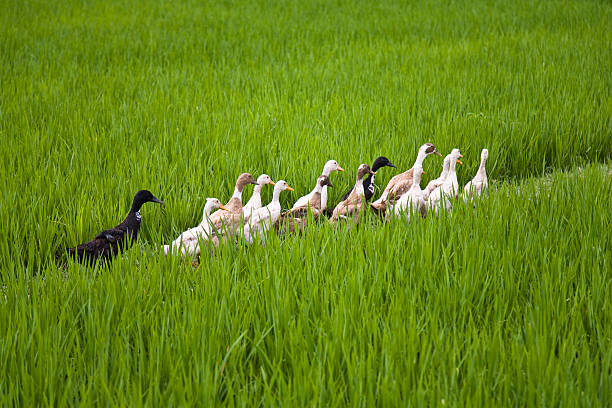
Historical accounts connect upright Indonesian ducks with old temple carvings, while breed histories commonly report that Bali ducks reached the United Kingdom in the 1920s and were later standardized there. They remain uncommon outside Indonesia.
The Bali duck developed on the Indonesian island of Bali, where local ducks have long been integrated into farming systems and cultural traditions. Their practical value includes egg production and foraging in agricultural environments, while particular colors and types have also been associated with local ceremonial use.
Outside Indonesia, Bali ducks are uncommon and may be difficult to source. Published descriptions report blue-green to white eggs, but laying rate and egg color vary. Their Indonesian origin does not remove the need for shade, ventilation, clean water, and active heat-stress monitoring in hot weather. Prospective keepers may need to contact established waterfowl breeders, conservation groups, or poultry associations and verify health, parentage, and breeding practices before buying.
Appearance: An Upright, Crested Silhouette
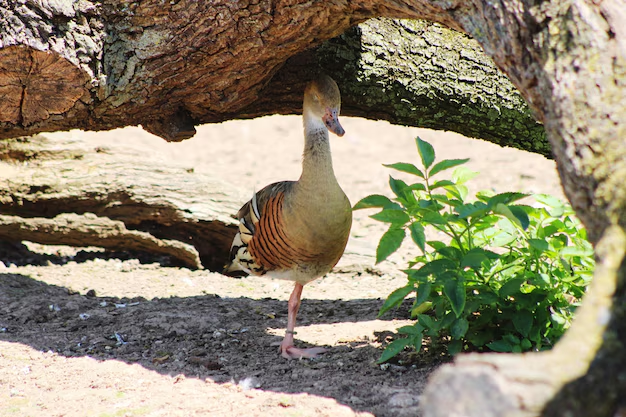
Two features are especially associated with the Bali duck:
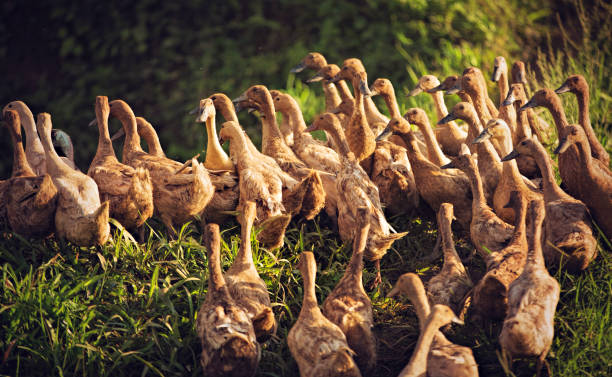
The upright carriage: Bali ducks typically carry themselves at a pronounced upright angle, often described as roughly 60 to 70 degrees above horizontal. Individual posture can vary.
The Bali duck shares the striking upright, Runner-type silhouette associated with Indonesian ducks. Its nearly vertical carriage makes the living bird immediately recognizable and genuinely fun to watch with its bowling pin-like body.
The crest: A rounded group of feathers on the crown is the principal feature used to distinguish the Bali duck from the non-crested Indian Runner, although other crested duck populations also exist.
Breeding the Bali duck is difficult. For one thing, it’s hard to breed birds with a correctly positioned crest. Many individuals have crests that are too large, not round, not centered, or too far down the neck.
Breed descriptions favor a round, centered crest, but appearance should never take priority over sound movement, neurological health, and responsible mating decisions.
Colour: Brown, Wild Mallard and White. Most Bali ducks are white — the coloration that produces the maximum visual contrast with the distinctive crest. Most Bali ducks are white, although brown and Mallard-type coloring also exists.
Size: Drake: 2.3 Kg, Duck: 1.8 Kg. A light breed, slightly heavier than the Indian Runner but significantly lighter than the Pekin or Rouen.
The Genetics: The Beautiful and the Difficult
The Bali duck’s most extraordinary feature — the crest — is also its most genetically challenging one.
The crest is associated with altered cranial development, and crested ducks can experience skull, balance, or neurological abnormalities. Modern genomic research has identified a mutation associated with crest formation, making this more than a cosmetic trait and an important consideration for responsible breeding.
This is the critical piece of Bali duck biology that every prospective keeper and breeder should understand. Traditional breeding guidance avoids pairing two crested birds because inheriting the crest-associated trait from both parents is linked with severe developmental problems and increased embryo mortality.
Responsible breeding guidance commonly favors pairing a crested bird with a non-crested bird rather than pairing two crested birds. Under the usual single-gene model, a crested-to-non-crested pairing has an expected—not guaranteed—ratio of roughly half crested and half non-crested offspring. Pairing two crested birds can produce embryos carrying two copies of the crest-associated variant, which is linked with severe developmental abnormalities and increased embryo mortality.
This is the reason Bali ducks are difficult to breed consistently and why their numbers outside Bali remain small. The genetics require deliberate management to produce healthy birds.
Egg Production: Published Data and Individual Variation
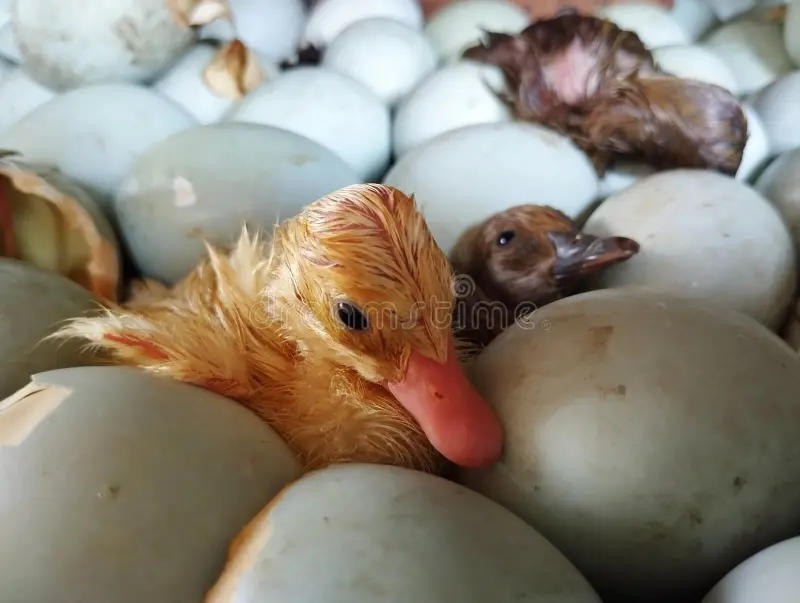
Bali ducks are capable layers, although production varies with genetics, age, diet, daylight, and management. An FAO review reported an average of 179 eggs through 68 weeks for one evaluated Bali duck population. Their eggs may range from blue-green to white.
Eggs are commonly described as ranging from blue-green to white, although color and output vary among individual ducks and breeding lines.
The egg production of the Bali duck can be impressive for an ornamental breed, but published figures should be treated as population averages rather than guarantees for an individual hen. The blue-green to white egg coloration is distinctive and appealing.
However, despite being good layers, they are not usually kept for egg production. The breed’s rarity, genetic management requirements, and ornamental status mean they are typically kept for their appearance and character rather than as production birds.
Health and Longevity: Individual Variation
Reliable Bali-specific lifespan data are limited. An individual duck’s longevity depends on genetics, housing, nutrition, predator protection, and access to appropriate veterinary care. The crest-associated trait makes careful health observation especially important, but it does not support assigning every Bali duck a fixed lifespan.
Care Requirements
Space: As active foragers, Bali ducks benefit from generous outdoor space, opportunities to explore, and a clean, secure shelter. The appropriate area depends on flock size, ground conditions, and how the enclosure is managed.
Water: Bali ducks need constant access to clean drinking water deep enough to dip their bills and clean around their eyes and nostrils. A well-managed pond or bathing container provides valuable bathing opportunities, but a permanent pond is not the only workable setup.
Diet: Use a nutritionally complete feed appropriate to the duck’s age and purpose as the dietary foundation, with constant clean water available while eating. Suitable vegetables and naturally encountered insects can add variety, but treats and forage should not displace balanced feed. Ducklings and laying birds have stage-specific nutritional needs; consult a poultry veterinarian or qualified feed professional when formulating rather than using a complete commercial ration.
Predator protection: Use a secure nighttime shelter and robust barriers appropriate to the predators in your area. Hardware cloth, secure latches, and a carefully managed door routine can form part of that protection.
Health: Crested ducks may experience cranial, balance, or neurological abnormalities associated with crest development. Monitor gait, posture, coordination, appetite, and behavior. Any bird showing imbalance, an abnormal neck position, seizures, injury, or progressive difficulty moving should be assessed promptly by a poultry-experienced veterinarian.
Is the Bali Duck Right for You?
Yes if:
- You value an unusual upright, crested appearance
- You are interested in rare breed conservation
- You have adequate space for active foragers
- You are comfortable with the genetic management realities of the breed
- You are patient in sourcing (finding Bali ducks requires specialized networks)
Approach with consideration if:
- Maximum egg production is the primary goal
- Space is limited
- You are not prepared to monitor crest-related health concerns carefully
- You want a breed that is widely available for sourcing
Bali ducks are active foragers, and many keepers value their upright, bowling-pin-like appearance. Temperament varies by individual, handling, breeding line, and environment, so friendliness should not be assumed.
The Bali duck is a living expression of Indonesia’s long duck-keeping tradition that happens to lay beautiful eggs, eat insects with focused enthusiasm, and walk with a carriage that makes every other bird in the yard look like it is slouching.
Bali ducks are not the easiest ducks to source or breed responsibly, and they are not maintained primarily for maximum production. For keepers drawn to their upright carriage, crest, and Indonesian heritage, however, they can be every bit as extraordinary as they look.
Before sourcing Bali ducks, identify a responsible breeder who can explain parentage, crest-related mating decisions, flock health, and transport requirements. Availability varies by country, and local poultry rules should be checked before purchase.
Sources and Further Reading
- FAO: Indonesian Duck Genetic Resources and Production
- Peer-reviewed research: The First Crested Duck Genome
- Peer-reviewed research: Genetic Diversity of Indonesian Local Ducks
Continue Exploring Your Backyard Flock
Use these closely related guides to plan your next steps:
2 thoughts on “Bali Duck Guide: Appearance, Care, Eggs, and Crest Genetics”
Comments are closed.