


The Ultimate Duck Care Daily Routine — What 15 Minutes Morning and Evening Actually Looks Like
Ask ten duck keepers what their daily routine looks like, and you will get ten different answers. Ask the same ten duck keepers what the most important thing about keeping ducks is, and nine of them will say the same thing: consistency.
Ducks do not require luxury equipment, but they do require suitable housing, a nutritionally complete diet, clean drinking water, companionship, protection from weather and predators, and enough space to express normal behavior. A consistent routine helps a keeper deliver those essentials and notice changes in egg production, appetite, movement, or behavior.
Consistency makes important tasks easier to remember, but it does not guarantee health, calm behavior, or egg production. The schedule must adapt to flock size, weather, enclosure design, water capacity, health needs, and the individual birds. Missing water access is urgent; a pool-cleaning schedule should be based on water condition rather than a universal number of days.
Free Backyard Flock Checklist
Planning the rest of your flock setup?
Turn your coop-size estimate into a complete setup plan with our free equipment and preparation checklist.
This is the daily duck care routine — built from the experience of real duck keepers, organized by time of day, and including everything that actually matters and nothing that does not.
Before You Build the Routine: Plan for Two Daily Visits
A small, efficient setup may take about 10 to 15 minutes in the morning and another 5 to 10 minutes in the evening, but that is an estimate—not a minimum standard or a promise. Large flocks, extreme weather, illness, frozen water, cleaning, repairs, and predator problems require more time. The goal is to complete every necessary task, not to beat a timer.
MORNING ROUTINE (15 minutes)
Task 1: Open the Coop — And Watch How They Come Out (2 minutes)
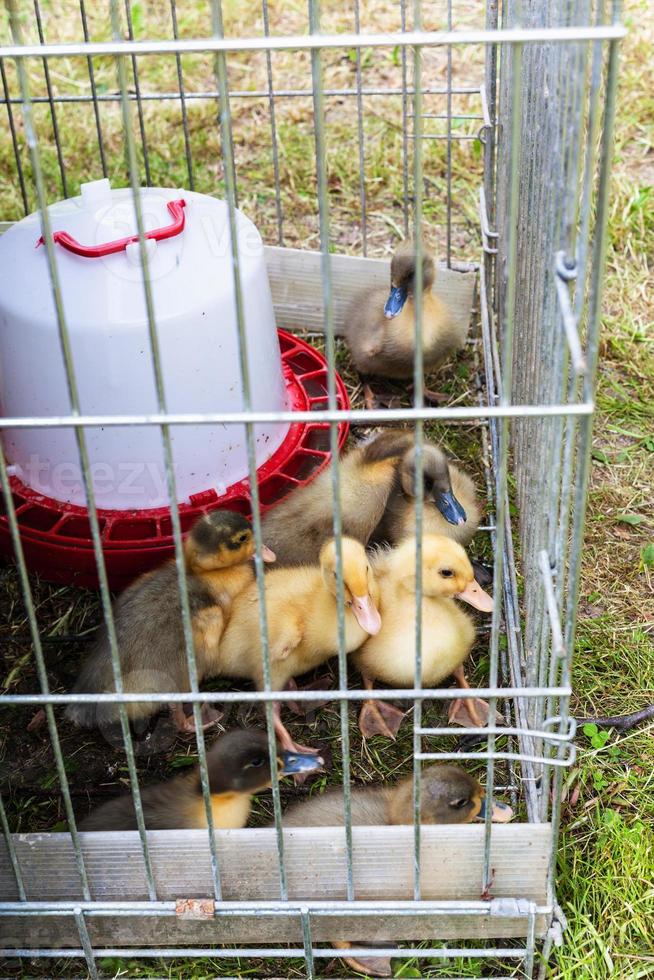
The morning coop opening is not just the first task. It is the daily health assessment. Watch every bird as they emerge.
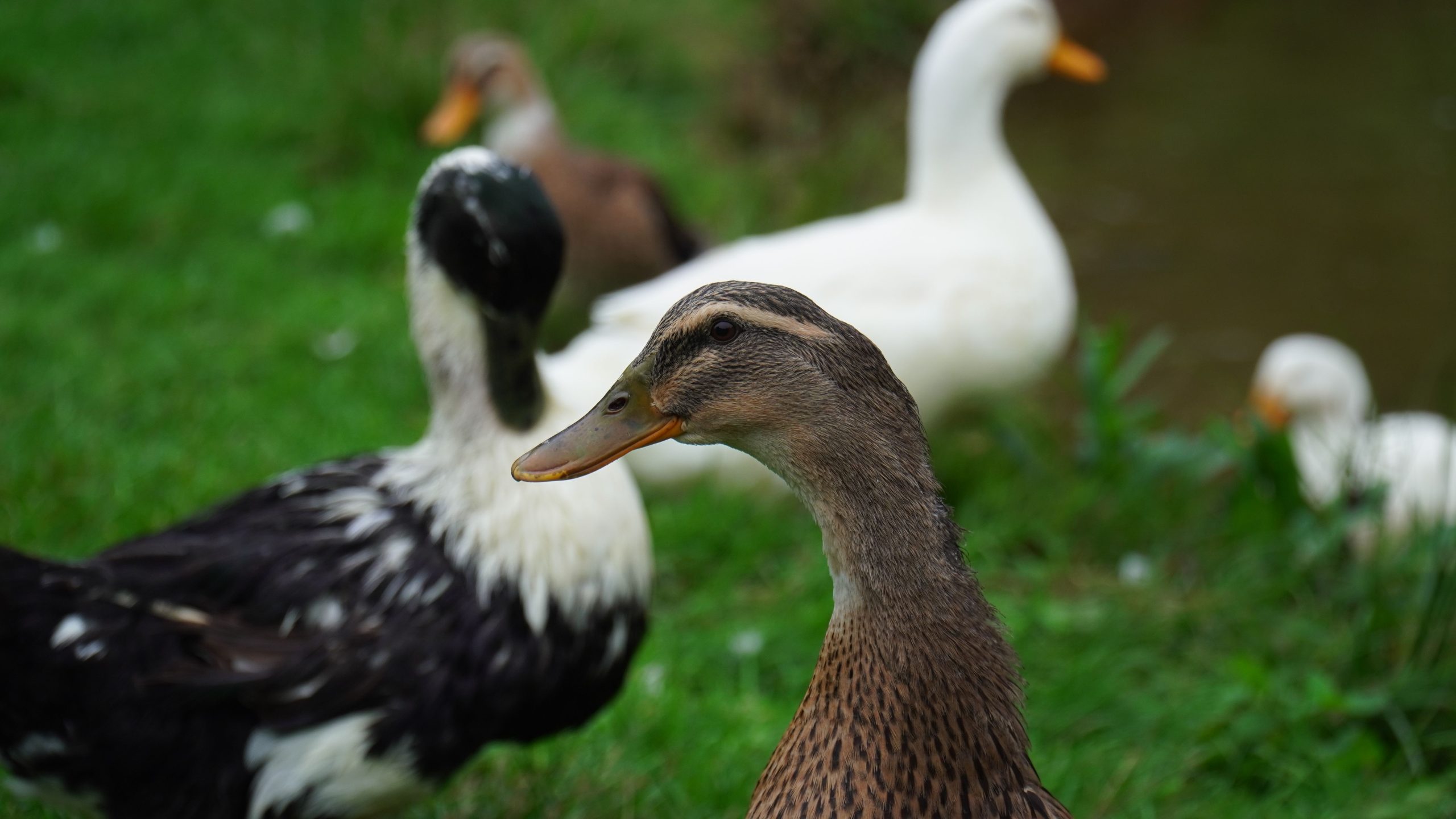
Healthy ducks emerge with energy and purpose. They move directly toward the water; they communicate with each other; they assess their environment with the specific alert attention of an animal that slept well and feels well. A duck who emerges slowly, who hangs back while others come out, who stands in the doorway with a slightly hunched posture or a dull expression — this duck is telling you something.
You will only catch these early signals if you are watching, and you will only recognize them as abnormal if you know what normal looks like. The morning coop opening is the two-minute daily health check that costs nothing and catches problems early enough to matter.
What to look for:
- All birds present and mobile
- Eyes bright and clear (no discharge)
- Posture upright (no drooping tail or hunched stance)
- Normal movement — no limping, no stumbling
- Interest in water and environment (not isolating)
Task 2: Fresh Water — The Non-Negotiable Start (3 minutes)
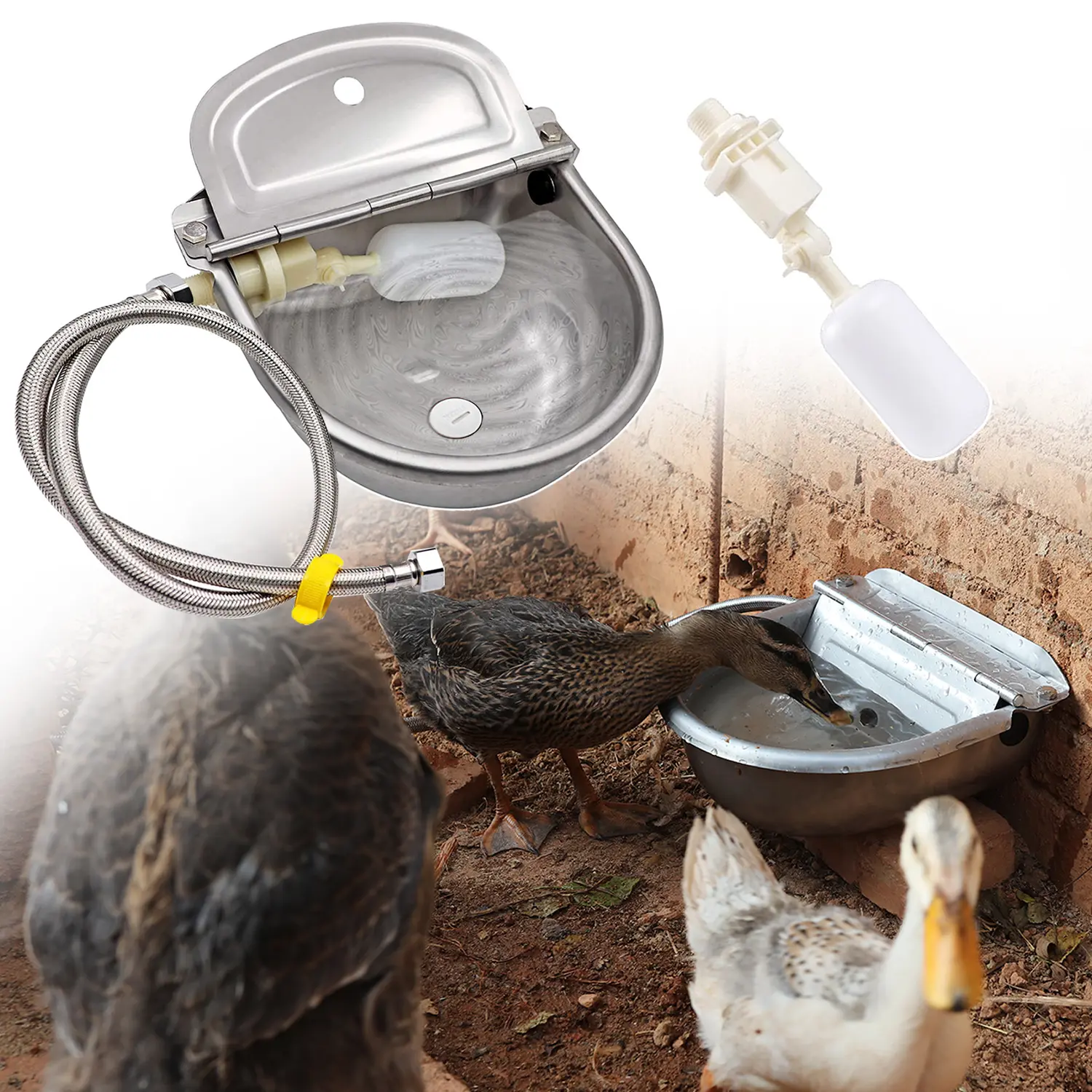
Empty and refill every water station. Every morning. Without exception.
Overnight duck water — even in a clean, covered container — is contaminated with the normal biological processes of the flock sleeping nearby. It is not necessarily dangerous, but it is not the fresh, clean water that optimal duck health requires. Clean water first thing every morning is one of the single highest-impact duck keeping practices available.
For a swimming tub or small artificial pool, remove debris and replace water as often as needed to prevent heavy fouling, odor, algae, and slippery buildup. A fixed daily replacement percentage is not meaningful because water volume, flock size, temperature, filtration, and use vary widely. Natural ponds require different management and should not be treated like containers that can simply be drained and scrubbed.
The morning water check:
- Empty and rinse all drinking containers
- Refill with fresh, clean water
- Check pool water — partial change if quality has declined
- In winter: break any ice that has formed and ensure water is accessible
Task 3: Feed — Measured, Not Scattered (3 minutes)
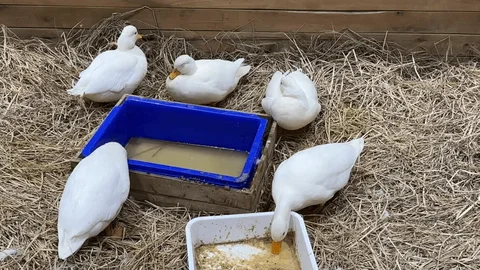
Distribute the morning feed — layer pellets for laying hens, appropriate feed for non-laying birds or ducks in molt — in feeders rather than on the ground where it will be contaminated by environmental debris and duck waste.
Provide enough complete feed for every bird to eat without crowding and follow the product label as the starting point. Intake varies with breed, body size, age, laying status, temperature, forage quality, and the feed’s energy density, so a universal 4-to-6-ounce allowance is not appropriate for every duck. Monitor body condition and leftovers and consult the feed manufacturer, NC State Extension’s duck-feeding guidance, or a poultry veterinarian when adjusting the ration.
The feeding observation opportunity: Watch the flock eat. A duck who is not approaching the feeder, who eats significantly less than usual, or who seems to have difficulty accessing the feeder is showing an early sign of illness or injury. The feeding period is the easiest time to observe individual intake.
Task 4: The Quick Coop Check (5 minutes)
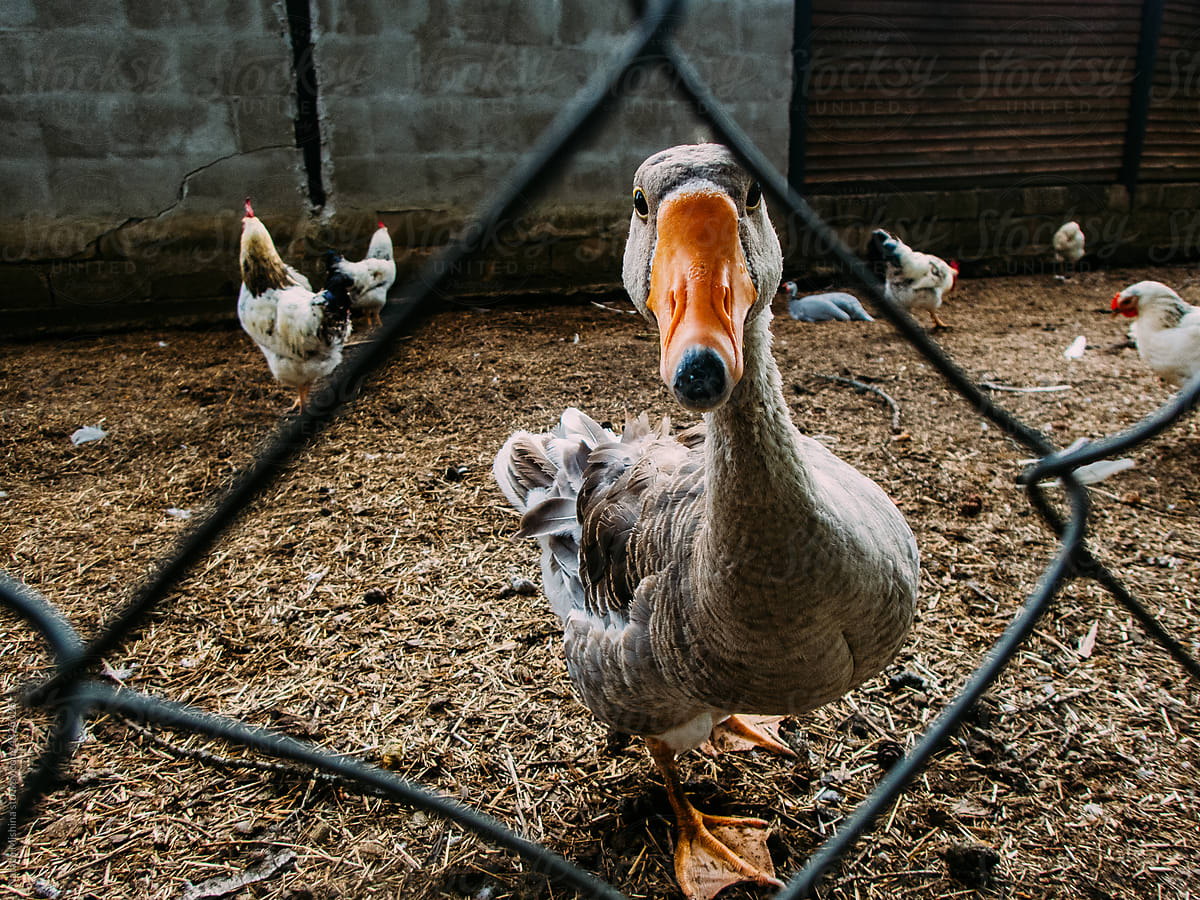
A brief internal assessment of the coop while the ducks are outside:
Bedding: Is the primary sleeping area saturated or badly soiled? A heavily soiled spot directly under the sleeping area needs spot cleaning and fresh bedding addition. Complete bedding replacement can be weekly — but a badly soiled sleeping surface should be addressed daily.
Nesting areas: Have eggs been laid? Collect eggs promptly — eggs left in nesting areas are sat on by subsequent visitors, increasing breakage and contamination. Check every nesting area, including any corners or floor areas where a hen may have chosen to lay outside the designated nesting space.
Ventilation: Check that high ventilation openings remain unobstructed and that bedding is dry. A strong ammonia odor is a warning that manure, moisture, airflow, or stocking density needs immediate attention; do not rely on smell as a precise safety meter because people vary in sensitivity and irritation can occur before a keeper responds.
Pest signs: Any evidence of rodent activity (droppings, chewed feed containers, tunneling at the coop base), predator disturbance (scratching at walls or base, displaced apron material), or evidence of external parasite activity.
Task 5: The Pool Assessment (2 minutes)
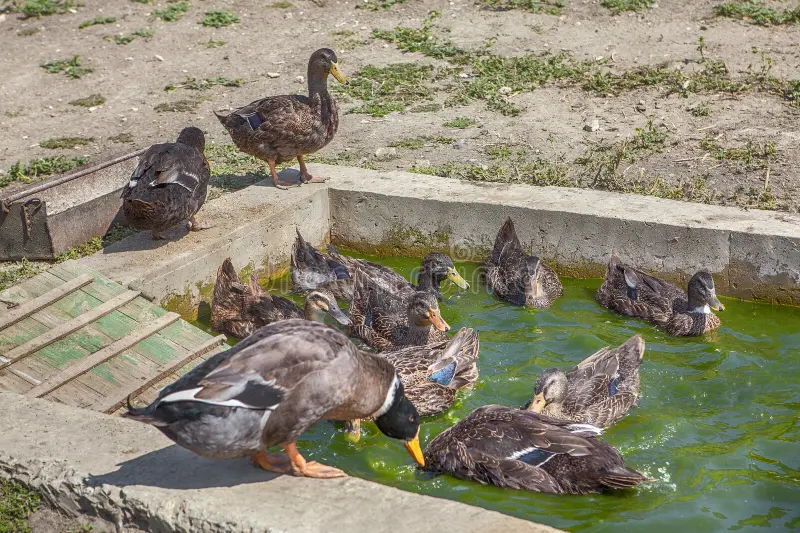
Check the pool or pond water quality. This does not require a water testing kit — it requires your eyes and nose.
Clear water with no visible surface contamination: leave it.
Visibly murky water with surface debris: partial change.
Strongly odorous water or water with significant algae growth: full change.
In summer, the water quality threshold deteriorates faster than in cool weather — more frequent assessment and more frequent partial changes are required.
MIDDAY CHECK (5 minutes)
A midday check is especially useful during hot or freezing weather, when birds are ill, or when water equipment is unreliable. It is not always essential for every well-designed setup, but it gives you another chance to catch empty waterers, heat stress, injuries, predator damage, or equipment failure before evening.
Midday check items:
Water level: Has drinking water been consumed, contaminated, frozen, or splashed out? Capacity should comfortably cover the interval between checks, with extra provision during warm weather and a backup container where practical.
Flock behavior: Is everyone active and moving normally? Any bird that is isolated, sitting with wings held away from the body, or breathing with visible effort in warm weather needs intervention.
Bathing-water access: Confirm that the water remains safe to enter and exit and is not badly fouled. A duck choosing not to swim at one particular check is not, by itself, proof of illness or poor water quality; interpret it alongside appetite, breathing, posture, gait, and the bird’s usual behavior.
Egg collection if your ducks lay midday: Some individuals lay throughout the morning and early afternoon. A midday egg collection prevents breakage and contamination.
EVENING ROUTINE (10 minutes)
Task 1: Second Feeding (2 minutes)

An evening feed — approximately one-third of the daily ration — given in the coop or immediately at coop entry time serves two purposes: nutrition delivery for the overnight period and a behavioral cue that it is time to move toward the coop.
Ducks who learn that the evening feed happens in or near the coop begin moving toward it at the appropriate time, making the coop-closing routine dramatically simpler. The feed becomes a recall tool — the most reliable one available for a species that does not reliably put itself to bed the way chickens do.
Task 2: Guide the Flock In (3 minutes)
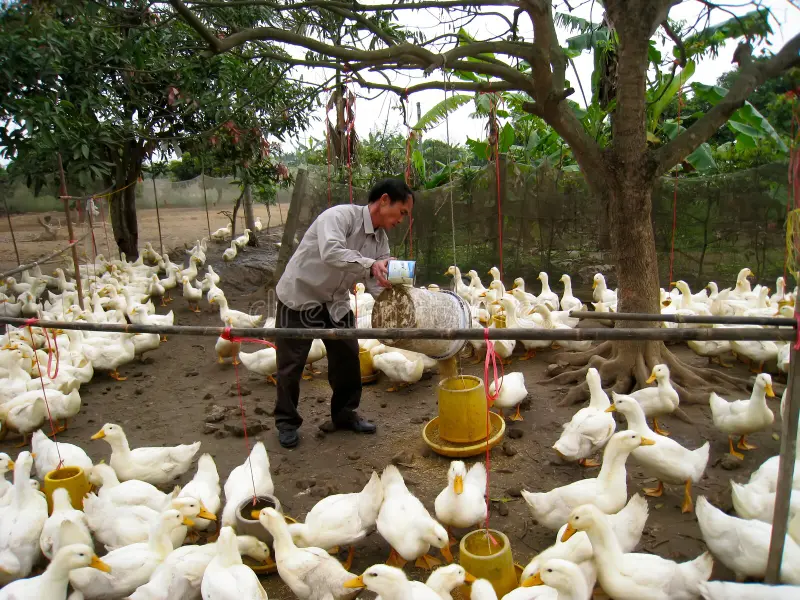
Many ducks need to be guided or trained to enter secure housing at dusk, although flock behavior varies. Use the same calm signal each evening—a call, the sound of the feed container, or another consistent cue—paired with a small amount of their normal ration near or inside the shelter. Some flocks learn quickly and others require continuing supervision, so do not promise reliable recall within a fixed two-to-three-week period.
The flock that has not developed this routine requires herding — a gentle, patient process of directing the birds toward the coop entrance using spread arms and patient movement. Design the enclosure so that the open coop door creates a natural herding funnel, reducing the area the birds can occupy until the coop entrance is the only reasonable remaining option.
Task 3: Evening Water and Egg Collection (2 minutes)
Final water check and refill. Collect any late-laid eggs.
Task 4: Secure the Coop (2 minutes)
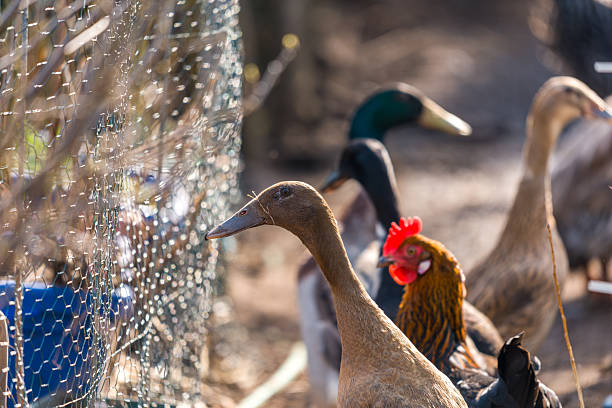
Close and latch every opening only after visually confirming that every duck is inside. An automatic door can support a routine, but it does not remove human responsibility: ducks may not enter before the timer or light sensor closes the door, and a bird can be trapped outside or near a moving panel. Choose a suitable door, test its obstruction protection, and verify the flock count every evening.
If manually closing: close the main coop door, close the pop door, check the run gate, check every latch with a deliberate pull. The night you do not check is the night a latch that seemed closed was not.
Task 5: The Evening Visual Count (1 minute)
From outside the secured coop, count. Every bird. Every night. The count should match yesterday’s count. A discrepancy — one bird not in the coop — requires immediate investigation rather than morning follow-up.
WEEKLY ADDITIONS TO THE DAILY ROUTINE
The daily routine forms the foundation. These weekly tasks build on it:
Bathing-water maintenance: Drain and clean small tubs whenever fouling, odor, algae, or slippery buildup warrants it; the frequency depends on the setup.
Housing maintenance: Remove wet and heavily soiled litter promptly and perform a deeper clean when bedding condition, odor, pests, or stocking pressure requires it rather than relying on one universal weekly schedule.
Health inspection: Handle birds calmly when needed and check body condition, feet, feathers, eyes, nostrils, vent area, and any change first noticed during daily observation.
Feeder and waterer cleaning: Wash away organic debris with detergent and potable water, rinse thoroughly, and allow equipment to dry where possible. If disinfection is needed, first clean the surface, then use a product labeled for animal-feeding equipment at the correct dilution and contact time. Vinegar alone should not be presented as a complete disinfection method.
Seasonal Routine Adjustments
Summer: Increase water checks, maintain shade and ventilation, and watch for panting, weakness, wings held away from the body, or reduced responsiveness. Cool, clean drinking water is essential; adding ice to bathing water is optional and should not replace shade or airflow.
Winter: Prevent drinking water from freezing, keep bedding dry, block direct drafts at bird level without closing high ventilation, and monitor feet and exposed tissue during severe cold. Do not increase feed automatically; use body condition, the feed label, and professional advice.
Molt: Feather loss and reduced laying can be normal, but examine birds when the pattern is unusual or accompanied by skin irritation, weakness, parasites, or poor appetite. A complete ration should remain the foundation; do not add concentrated protein automatically.
Periods of higher laying: Collect eggs frequently, keep nests clean, and provide a complete ration formulated for laying ducks, with calcium offered according to the feeding program.
A repeatable routine improves the chance that water, feed, hygiene, security, and observation are handled reliably. It cannot prevent every disease, injury, predator event, or equipment failure, but it helps a keeper notice and respond to problems earlier.
Build a routine that fits your flock, review it as conditions change, and leave enough time to complete the work properly.
Save this to Pinterest, share it with every new duck keeper who is still figuring out what needs to happen every day, and build your checklist from this guide today. Your ducks are waiting on the morning water.
Continue Exploring Your Backyard Flock
Use these closely related guides to plan your next steps:
3 thoughts on “The Ultimate Duck Care Daily Routine — What 15 Minutes Morning and Evening Actually Looks Like”
Comments are closed.