


What Ducks Can and Cannot Eat — The Complete Safe Food Guide Every Owner Needs
If you have kept ducks for more than a week, you have probably already discovered that they will attempt to eat almost anything — and that the confidence with which they approach genuinely dangerous items is identical to the confidence with which they approach genuinely appropriate food. Ducks do not have a reliable internal warning system that stops them from consuming something harmful. They have you for that. This guide is the complete reference for what your ducks can eat enthusiastically, what they can eat in moderation with caveats you need to understand, and what must never reach them under any circumstances.
The Foundation — What Ducks Need Before Any Discussion of Treats
For domestic ducks, the nutritional foundation should be a complete feed formulated for ducks or waterfowl and appropriate for their age and production stage. NC State Extension’s duck-feeding guidance likewise emphasizes commercially prepared diets for reliable growth and reproduction. A balanced diet supports overall health, growth, and long-term well-being.
Keep treats to a small portion of the diet—roughly 10% is a useful practical ceiling—so they do not displace balanced feed. Vegetables, fruit, grains, and other extras are supplements, not replacements for a complete ration. Homemade diets require professional formulation; simply combining wholesome ingredients does not guarantee the correct balance of protein, amino acids, vitamins, and minerals.
Free Backyard Flock Checklist
Planning the rest of your flock setup?
Turn your coop-size estimate into a complete setup plan with our free equipment and preparation checklist.
Water alongside every feeding is not optional. Never feed ducks without providing water nearby, as they need it to swallow food safely. Ducks use water to soften food and clear their nostrils while eating — a lack of water during feeding is genuinely physically distressing for them and can cause choking.
What Ducks Love and Should Have Regularly
Leafy Greens — The Daily Best Choice
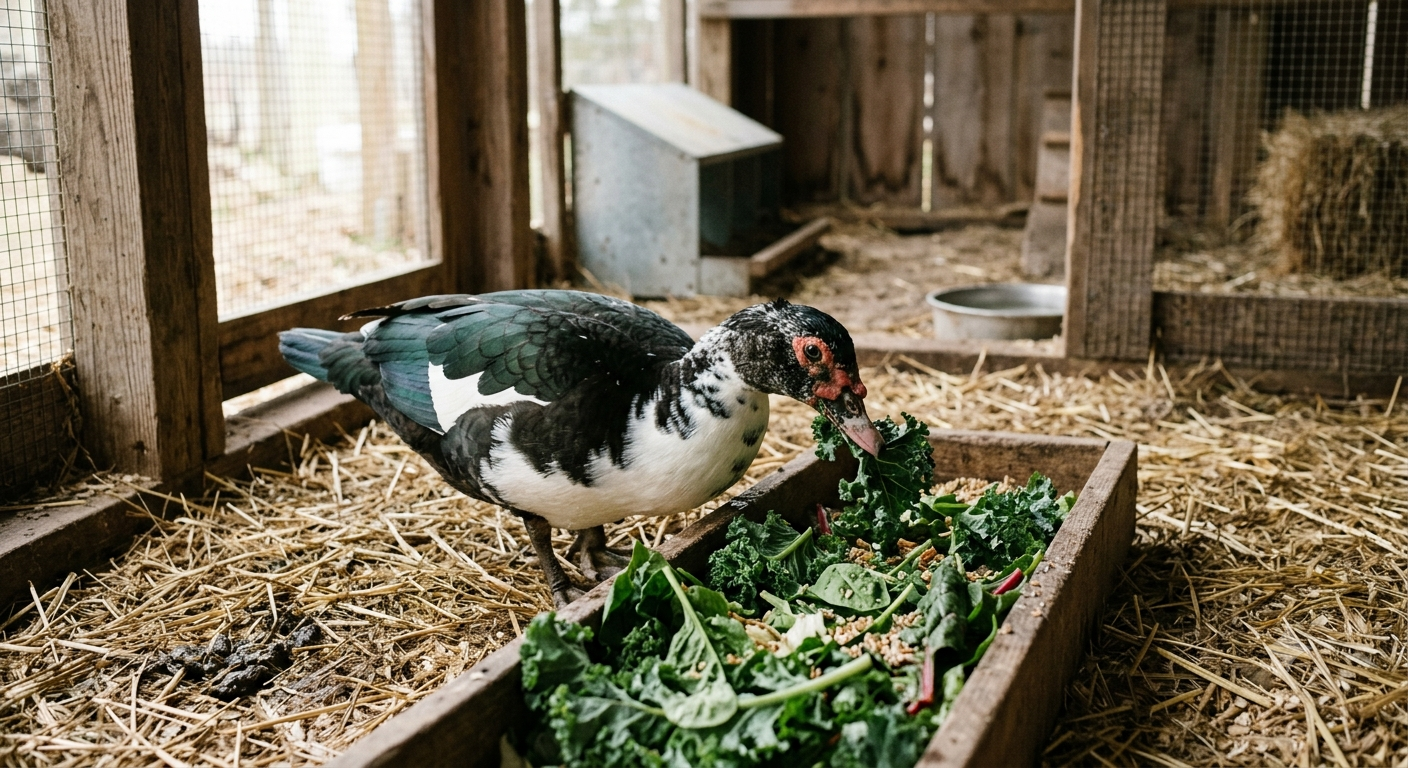
Fresh greens are one of the healthiest and most beloved duck treats. Leafy greens like romaine lettuce, kale, arugula, and spinach (in moderation) give ducks vitamins, hydration, and fiber. They mimic natural foraging plants and encourage natural behaviors. Chopped herbs like dill, oregano, basil, and parsley are also wonderful and smell irresistible to ducks.
Spinach is acceptable as an occasional treat, but avoid making any single leafy green a large part of the diet. Variety matters, and laying ducks should receive a complete layer or breeder ration rather than relying on vegetables to meet the calcium needs involved in producing duck eggs.
Vegetables — The Nutrient-Dense Supplement
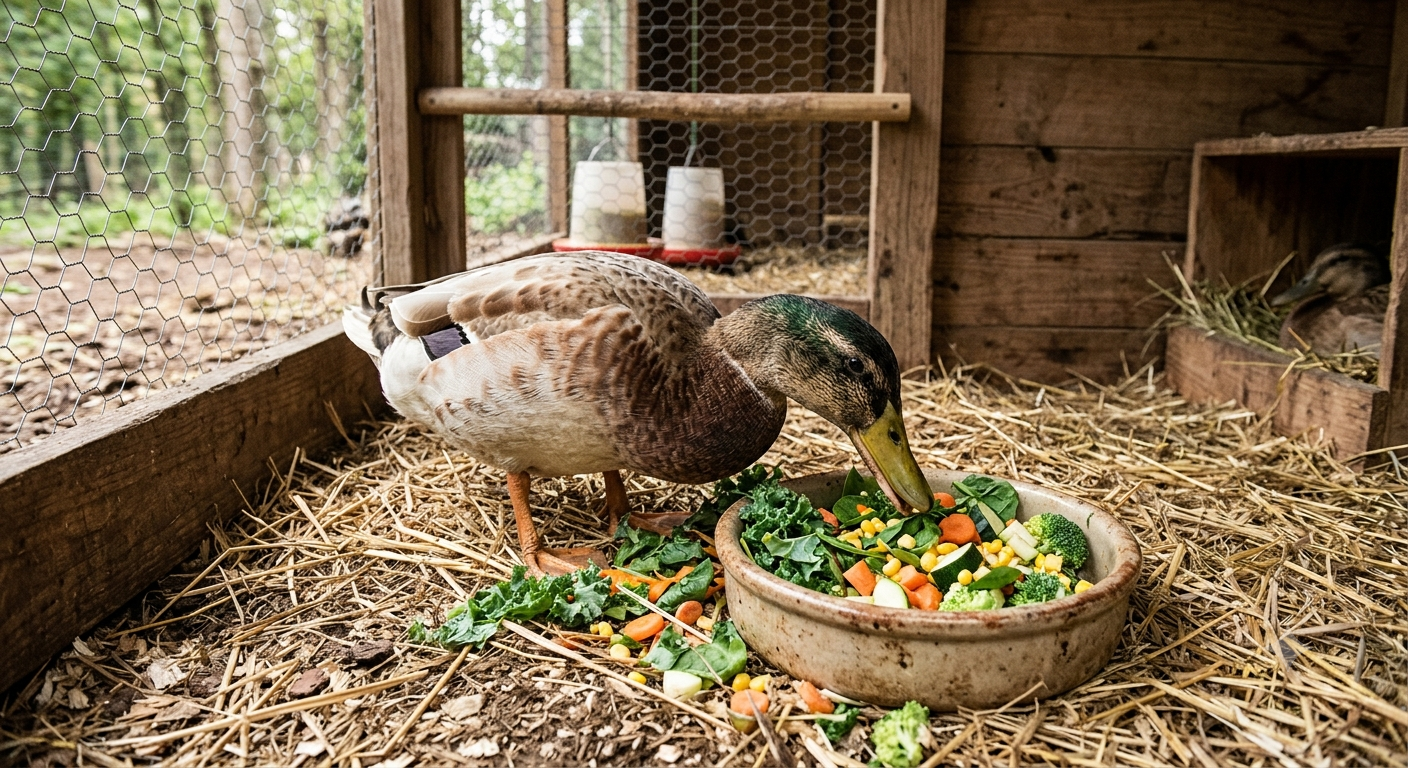
Vegetables provide vitamins, minerals, and crunch. Ducks enjoy peas, cucumber slices, shredded carrots, chopped broccoli stems, green beans, squash, pumpkin, zucchini, celery leaves, and cabbage.
Peas deserve special mention as a near-universal duck favorite — defrosted frozen peas float in water, which appeals to ducks’ natural dabbling instinct, and they are one of the most nutritionally appropriate treats available at essentially no cost from any frozen food aisle. A handful of defrosted peas dropped into the water bucket is an enrichment, hydration supplement, and treat in one.
Ripe tomatoes can be fed as an occasional treat without issues. The only thing to be careful about is the green parts of the plant — leaves, stems, and unripe tomatoes contain tomatine that can be toxic for ducks. But the ripe, red part of the tomato is totally fine.
Fruits — Occasional Treats, Not Staples
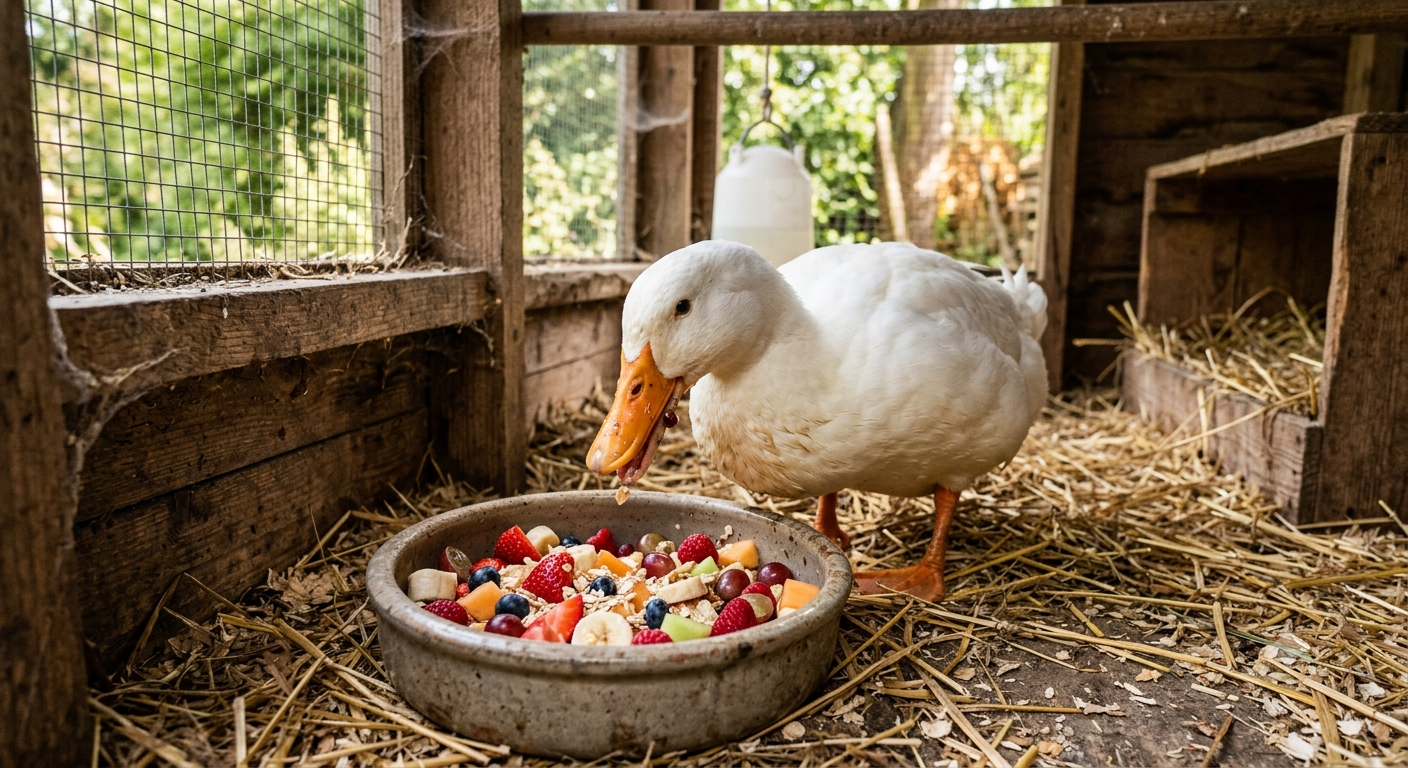
Fruit can be offered in small amounts, but it is naturally sugary and should remain an occasional treat. Remove hard pits and apple seeds, cut large or firm pieces to a size the birds can swallow comfortably, and discard leftovers before they spoil.
Examples include berries, watermelon, banana, seedless pieces of apple, halved grapes, mango, pitted peach, and melon. No fruit is nutritionally necessary when ducks already receive a complete ration, so portion size matters more than choosing a supposed “best” fruit.
Protein-Rich Foods — Optional Treats
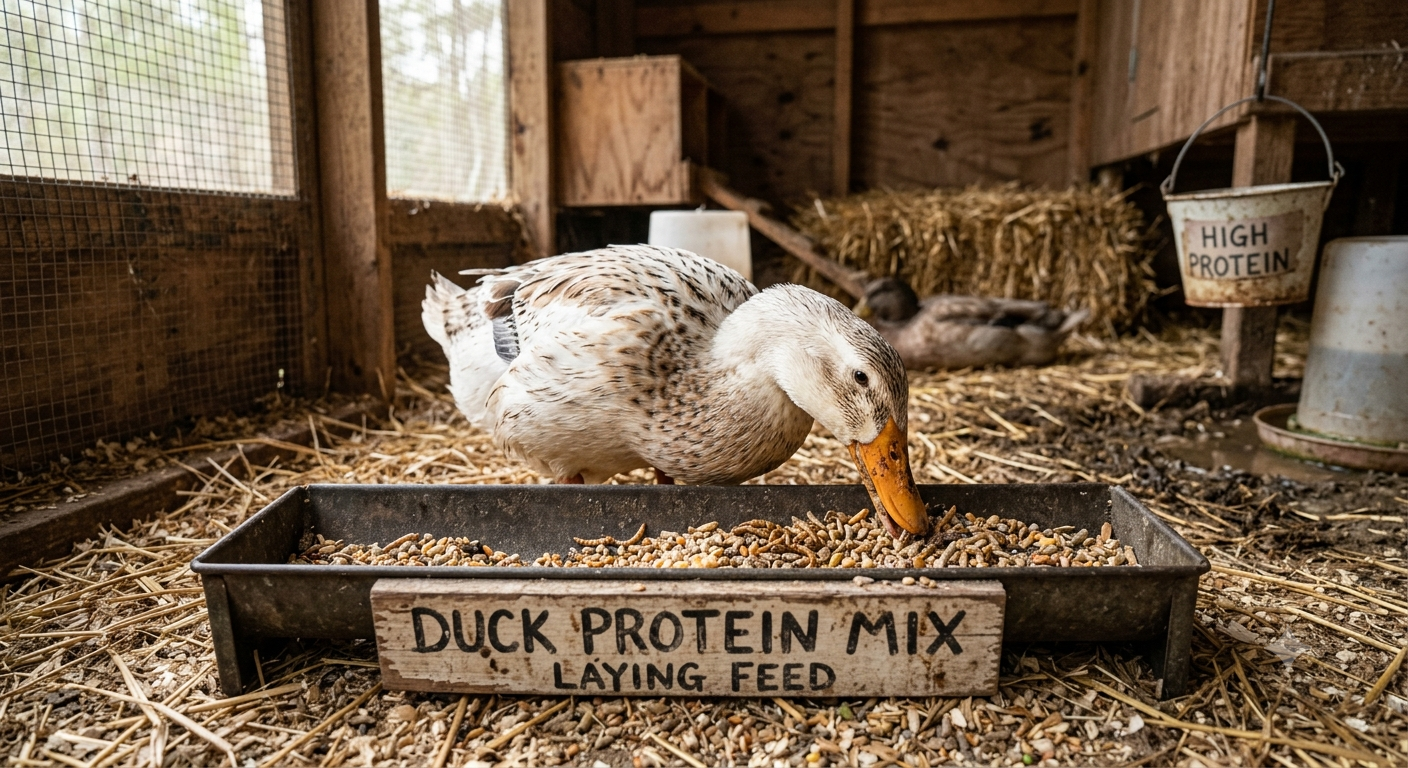
Ducks are omnivores and commonly eat insects while foraging. Dried mealworms, black soldier fly larvae, earthworms, crickets, and thoroughly cooked unseasoned egg can be offered as small treats.
Extra protein is not automatically beneficial: a complete commercial ration already supplies protein at an appropriate level. Avoid claims that insect treats will necessarily improve feathers, eggs, or behavior, and do not let supplements displace the balanced feed.
Grains — Energy but Not Nutrition
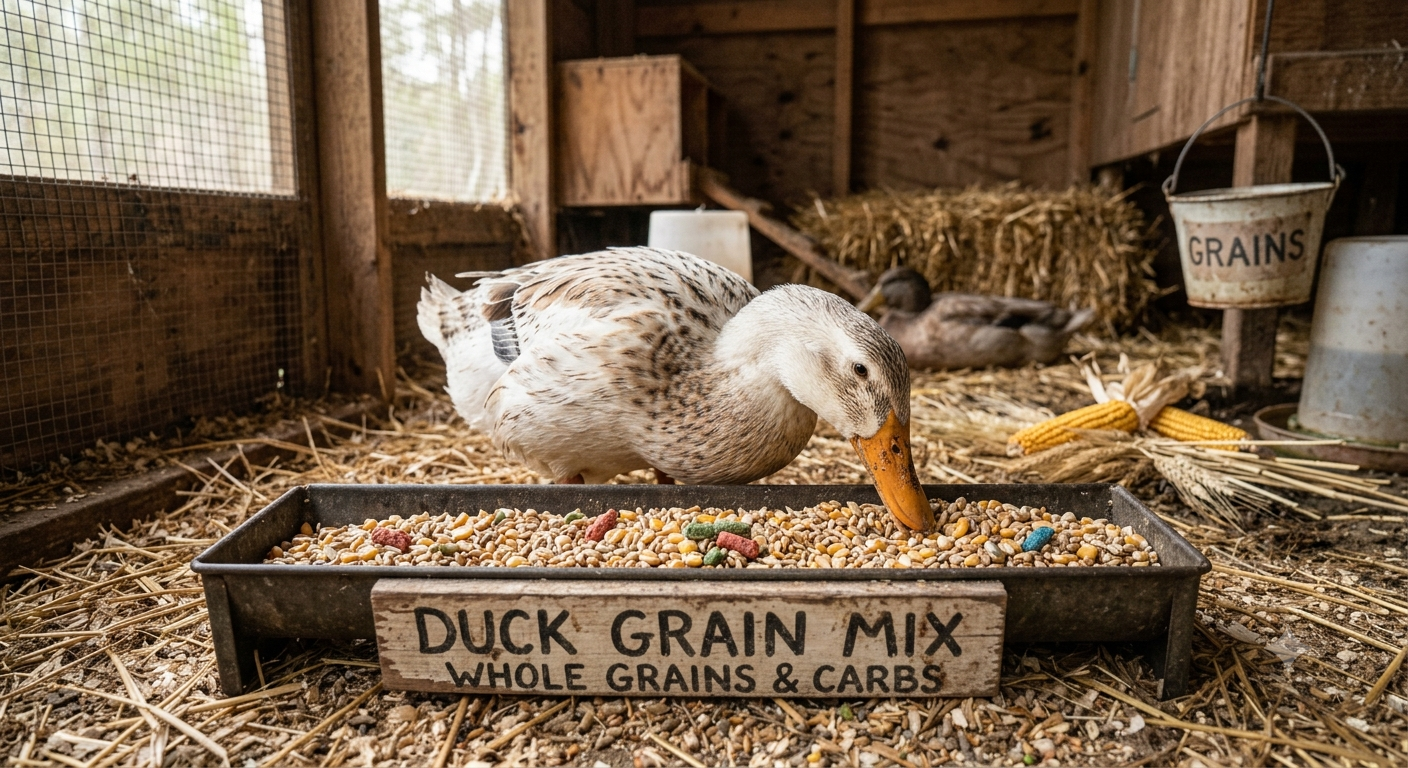
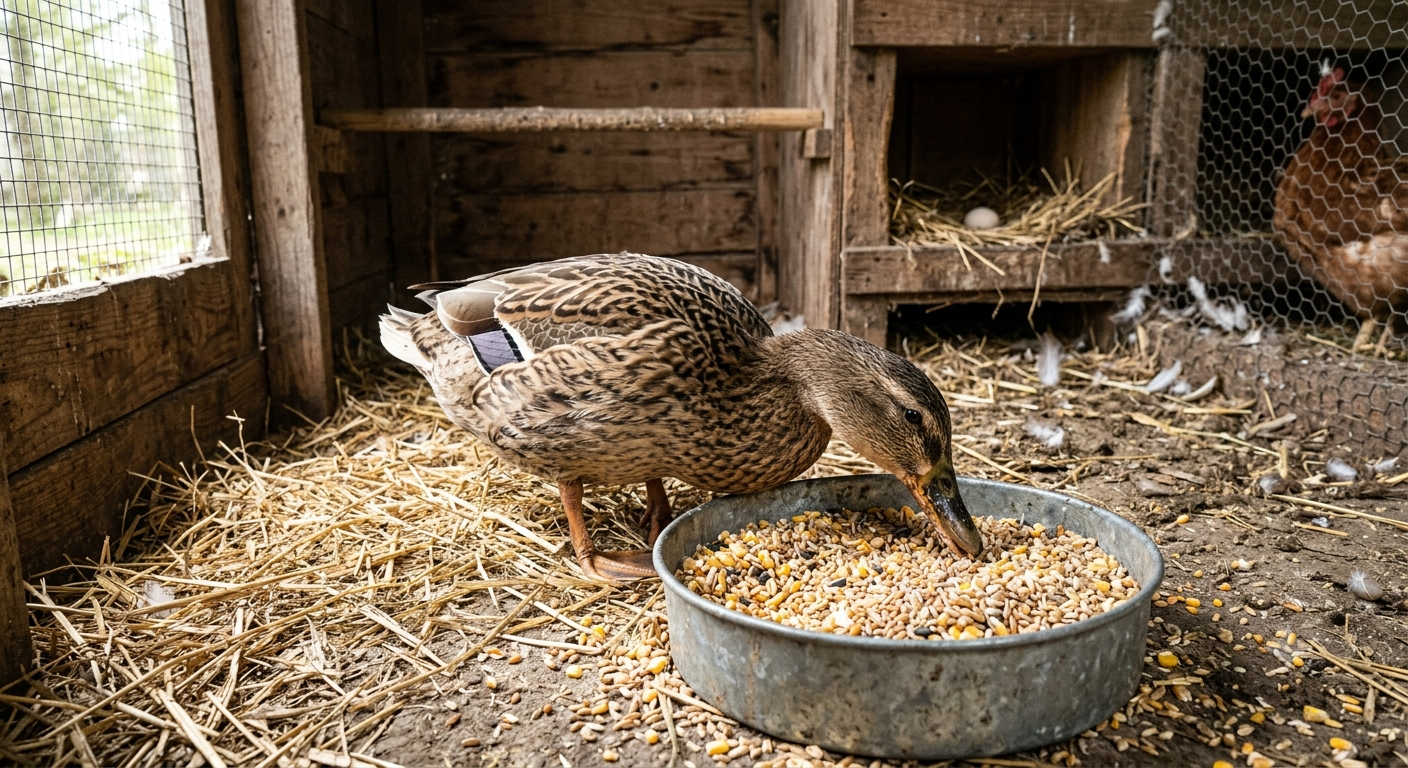
If your ducks primarily eat premixed feed, adding grains to their diet is not necessary or beneficial. Grains are mostly carbohydrates, so while they’re necessary for energy, too much of them will dilute the amount of protein, fat, vitamins, and minerals your ducks are getting.
Cooked or uncooked rice, oats, corn, barley, and wheat are all safe in small quantities. The myth that uncooked rice will expand in a bird’s stomach and harm them is completely false. Wild ducks have been eating wild rice for millennia. Both cooked and uncooked rice are safe. The only grain concern is quantity — grains as a significant proportion of the diet dilute the nutritional density of the overall feeding regime.
What Ducks Can Eat With Important Caveats
Legumes: All legumes are high in lectins and should be cooked or heat-treated before feeding. Sprouting and soaking is also helpful. The exception is green beans and peas, which are fine to feed raw because they are generally harvested and eaten immature.
Nuts: Since many nuts are large and hard and since ducks swallow their food whole, there is a risk of nuts causing choking or crop impaction if fed whole. It’s best to chop nuts into small pieces before feeding them to your ducks. Do not feed your ducks salted nuts, or rinse them off first.
Spinach and chard: Safe in small quantities, problematic in excess due to oxalic acid binding calcium.
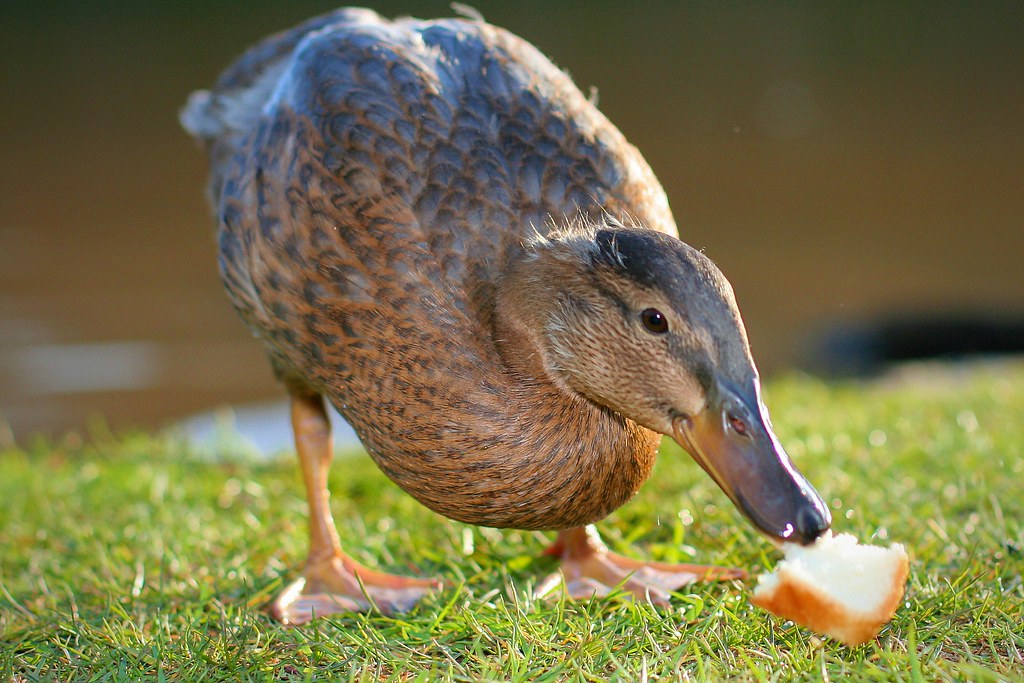
Bread: A small accidental piece is unlikely to poison a healthy duck, but bread is a poor routine food because it displaces a balanced ration and uneaten pieces foul the water. Skip it in favor of the duck’s normal feed or small portions of suitable vegetables.
Foods and Materials to Keep Away From Ducks
Avocado: Keep the fruit, skin, pit, leaves, and stems away from ducks. Birds can be especially sensitive to avocado toxins; the Merck Veterinary Manual’s food-hazard guidance describes serious poisoning in susceptible bird species.
Chocolate, caffeine, and alcohol: Do not offer chocolate, cocoa, coffee grounds, caffeinated drinks, or alcohol. These products can affect a bird’s nervous and cardiovascular systems and are not appropriate flock foods.
Onion-family plants: Avoid deliberately feeding onions, garlic, leeks, chives, or concentrated powders made from them. Veterinary guidance for birds associates these plants with red-blood-cell damage. A tiny accidental bite is different from a measured toxic dose, so contact a veterinarian for case-specific advice rather than attempting a home treatment.
Raw or undercooked dried beans: Dried beans—especially kidney beans—must be properly cooked before they are considered as food because heat is needed to reduce harmful lectins. Ordinary fresh green beans and peas are different foods and can be offered in small pieces.
Green potatoes, potato sprouts, and questionable plant parts: Do not feed green or sprouted potatoes or allow access to potato foliage. Ripe tomato flesh is generally treated as a food, but keep birds away from tomato vines and leaves. The earlier blanket claim that nearly all nightshade produce is lethal was too broad.
Rhubarb leaves: Keep the leaves out of reach because of their oxalate content. There is no practical reason to offer the stalks either when many better-studied treats are available.
Moldy, spoiled, or contaminated feed: This is one of the most important hazards. Store feed dry, clean up wet leftovers promptly, and discard anything with mold or an unusual odor. Cornell’s Duck Research Laboratory specifically warns that duck feed ingredients must be properly dried and protected from mold and other contamination.
Very salty, heavily processed, or heavily seasoned foods: These can deliver excessive salt, fat, or additives while displacing proper feed. Do not give processed meats, chips, or leftover sauces.
Raw animal products: Do not use raw eggs, raw meat, or spoiled animal products as treats. Thorough cooking and clean handling reduce exposure to foodborne pathogens. The claim that tasting raw egg automatically creates an egg-eating habit is not established enough to present as a certainty.
Citrus and dairy: These are not necessary duck foods and may cause digestive upset when overfed, but they should not be presented as proven duck poisons or as foods known to block calcium absorption. Leaving them off the treat menu is a simple, cautious choice.
The One Rule That Simplifies Everything
If you are uncertain about a food, leave it out until you can check a poultry-veterinary or university-extension source. Ducks do not need treats when a complete, age-appropriate ration is available. If a duck consumes something potentially toxic, record what it ate, approximately how much, and when, then contact a veterinarian or animal-poison service promptly—do not induce vomiting or try an online home remedy.
Continue Exploring Your Backyard Flock
Use these closely related guides to plan your next steps:
2 thoughts on “What Ducks Can and Cannot Eat — The Complete Safe Food Guide Every Owner Needs”
Comments are closed.