

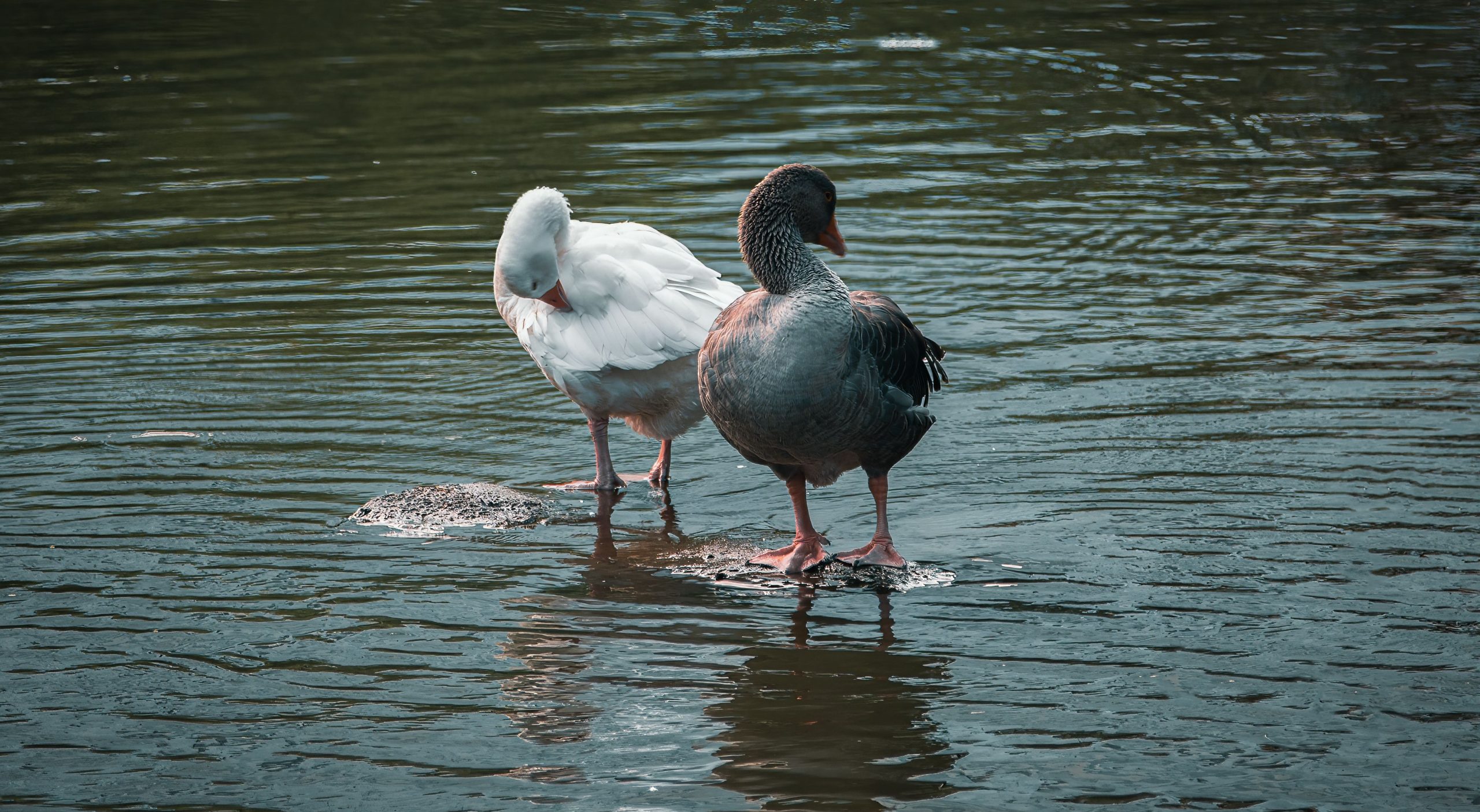
8 Goose Breeds for Backyard Flocks: Size, Temperament, and Care
Adding geese to a duck flock changes the social and management needs of the backyard. Geese are alert and may vocalize when they notice something unfamiliar near the enclosure, but an alarm is not predator protection. Ducks and geese still require secure housing, appropriate fencing, and direct supervision whenever local risk calls for it.
With suitable housing, thoughtful handling, and an appropriate individual bird, geese can also become engaging members of a backyard flock. Behavior is influenced by genetics, sex, season, socialization, and previous experience.
Geese and ducks can sometimes share space successfully, but compatibility is individual and can change during breeding season. Provide multiple feeding and watering stations, enough space to avoid competition, and areas where smaller birds can move away. Introduce birds gradually under supervision, and separate any goose that chases, pins, mounts, or injures a duck. Ganders may become more territorial during breeding season even when previously manageable.
Free Backyard Flock Checklist
Planning the rest of your flock setup?
Turn your coop-size estimate into a complete setup plan with our free equipment and preparation checklist.
These eight breeds illustrate a range of sizes, production traits, and commonly reported temperaments for backyard keepers. No breed is automatically compatible with ducks. Published weights and egg numbers are approximate population or breeder ranges, not guarantees for an individual bird.
Breed 1: Embden — The Classic White Giant
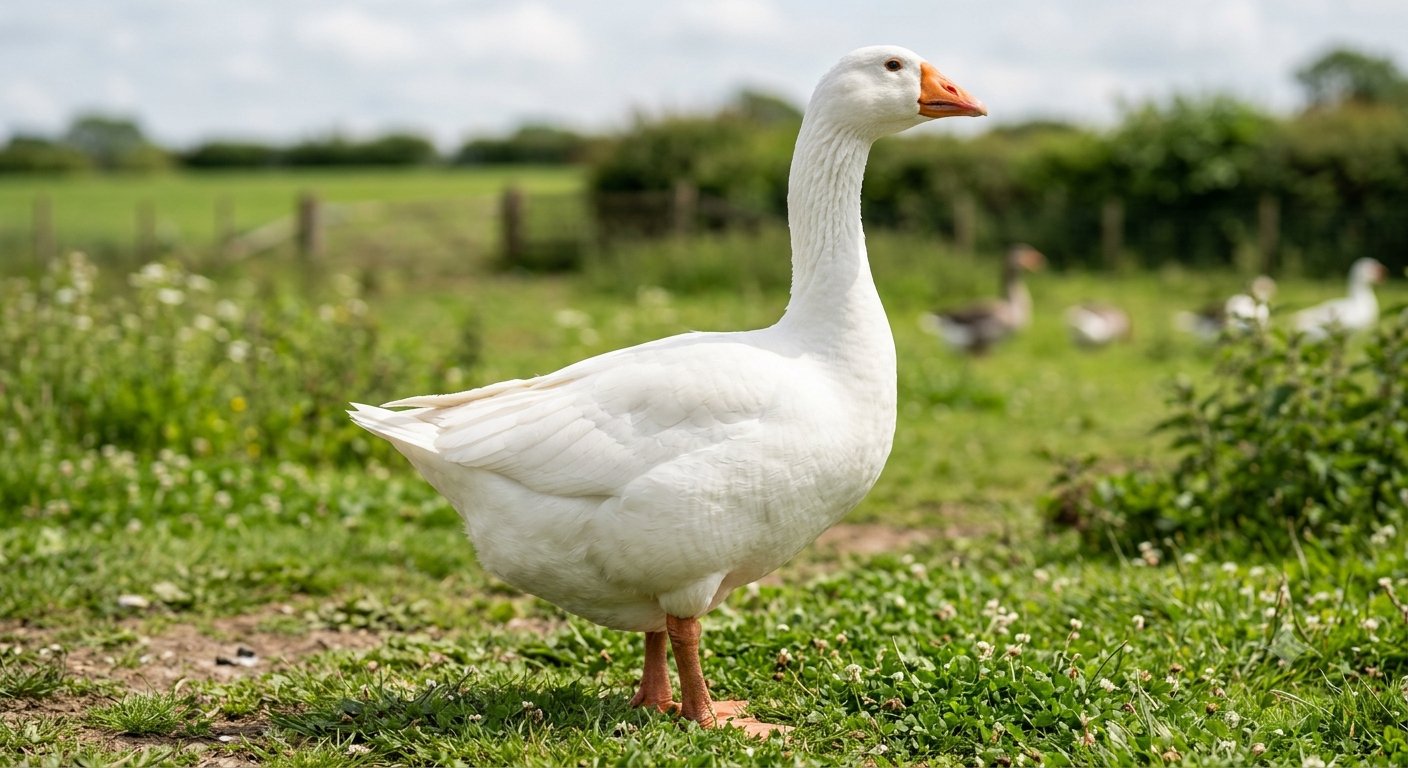
The Embden goose is the bird that most people picture when they think “goose.” Large, white, orange-billed, with the specific upright carriage and confident presence that makes geese look like they own every space they occupy.
Embdens are the most common backyard geese in the United States and the United Kingdom, and their popularity reflects genuine qualities rather than mere familiarity. They are calm and manageable when well socialized from goslinghood. They are good foragers. They are reliable as a watchdog-equivalent — alert, vocal when something changes in their environment, and large enough that their alarm response communicates urgency effectively.
With ducks: Embdens generally coexist with ducks without aggression outside of breeding season. During breeding season (typically February through April), ganders may become protective and should be monitored.
Size: Males 20–30 lbs. Females 15–20 lbs. The largest domestic goose breed.
Eggs: 30–40 large white eggs per year
Best for: Keepers who want the classic large goose with a calm, manageable temperament
Breed 2: Toulouse — The Gentle Laid-Back Giant
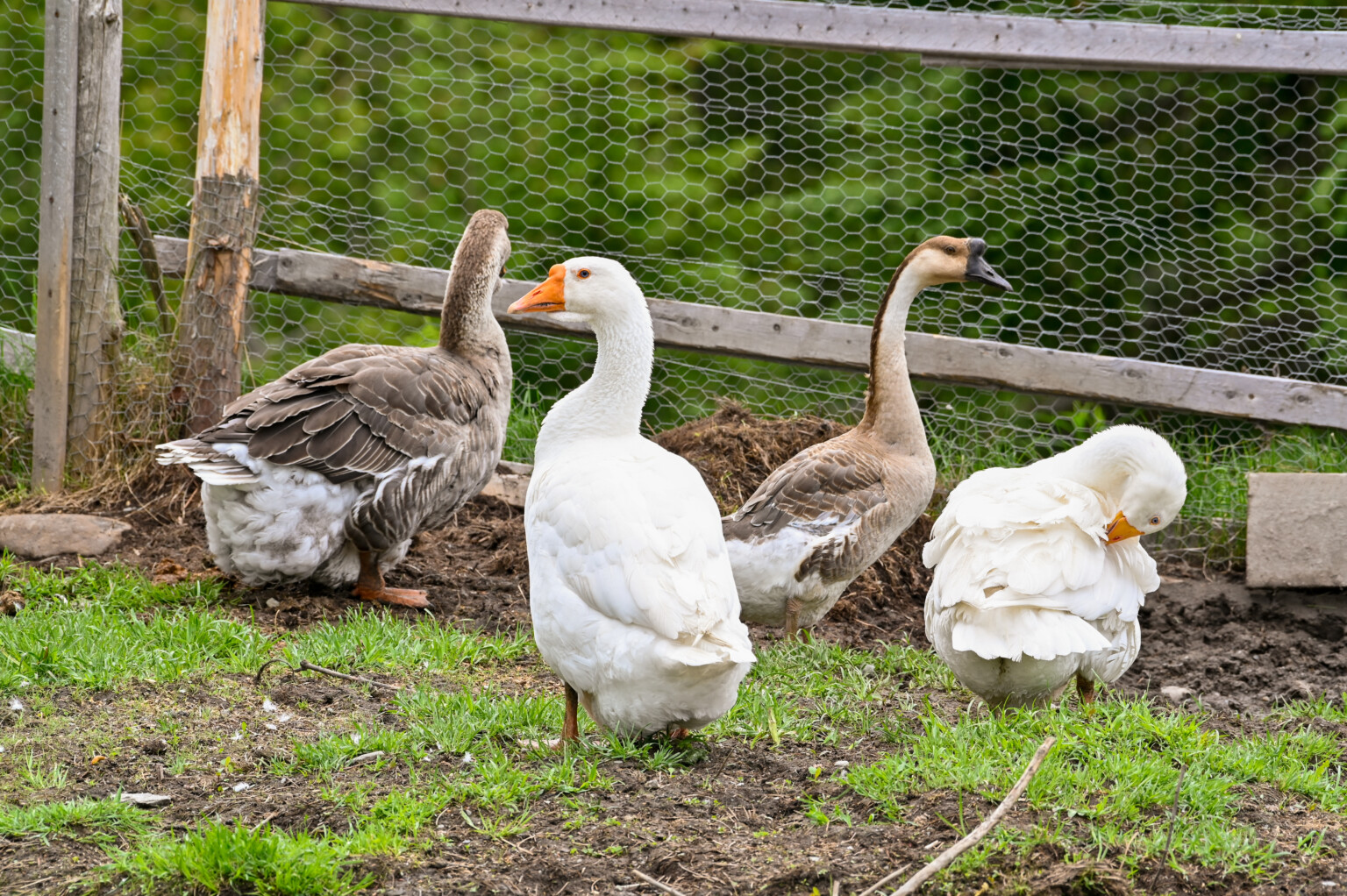
The Toulouse is the couch potato of the goose world. Heavy, slow-moving, calm to the point of placidity, and possessed of a dewlap (a fold of skin under the bill) that gives them the specific expression of a creature who is comfortable with how things are going and sees no reason to rush.
Toulouse geese are often described as relatively calm for a large breed, but line, handling, sex, and season matter. They are not reliably non-aggressive, and breeding-season behavior requires the same observation and separation plan as with other geese in a mixed flock.
The trade-off: Their calm nature makes them less effective as a watchdog element of the flock than the more alert breeds. They are companions and lawn ornaments more than sentinel animals.
Size: Males 20–26 lbs. Females 13–20 lbs.
Eggs: 20–35 eggs per year
Best for: Keepers who want calm, non-aggressive geese that coexist easily with ducks
Breed 3: African — The Alert and Distinctive
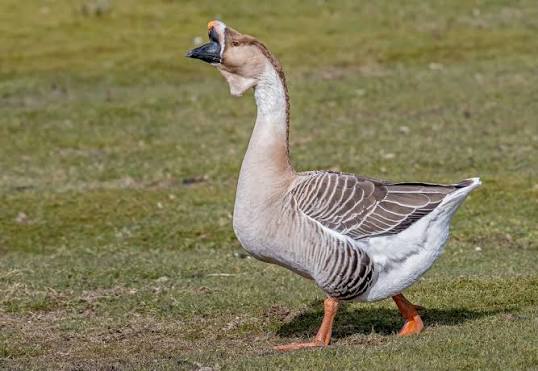
The African goose — not actually from Africa despite the name, but a Chinese breed developed from the wild Swan goose — is distinguished by the prominent knob on the base of the bill, the brown and gray plumage, and an alertness and vocality that makes them the most effective natural alarm system available in any backyard waterfowl setup.
African geese take their watchdog role seriously. They announce the presence of strangers, unfamiliar animals, overhead raptors, and anything else that enters their assessed perimeter with a specific, carrying call that leaves no ambiguity about the nature of the alert. The duck flock that shares space with African geese benefits from the earlier warning system in ways that reduce predator pressure meaningfully.
With ducks: Generally tolerant when raised together or introduced carefully. The alertness that makes them excellent watchdogs also makes them more reactive to changes than calmer breeds.
Size: Males 18–22 lbs. Females 12–18 lbs.
Best for: Keepers who want a watchdog-effective goose alongside their duck flock
Breed 4: Chinese — The Most People-Oriented Breed
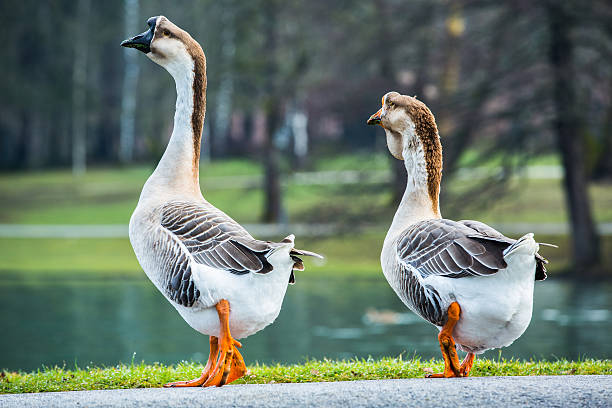
The Chinese goose — also derived from the Swan goose, smaller than the African, and available in both brown and white color forms — is the goose breed most consistently described as “like a dog” by the keepers who raise them. They are intensely bonded to their people, follow their keepers around the property, vocalize in response to human interaction rather than just alarm situations, and display an individual personality richness that surprises keepers who expected a less complex animal.
Chinese geese are also the most efficient lawn-management geese available — they graze continuously and cover ground with a focused enthusiasm that reduces grass maintenance in areas where they free-range.
With ducks: Generally good companions. Their social nature extends to other waterfowl in their group, though individual personalities vary.
Size: Males 10–12 lbs. Females 8–10 lbs. Significantly lighter than the larger breeds.
Eggs: 40–65 eggs per year — the highest laying goose breed
Best for: Keepers who want a genuinely interactive, people-oriented goose
Breed 5: Sebastopol — The Most Beautiful Breed Available
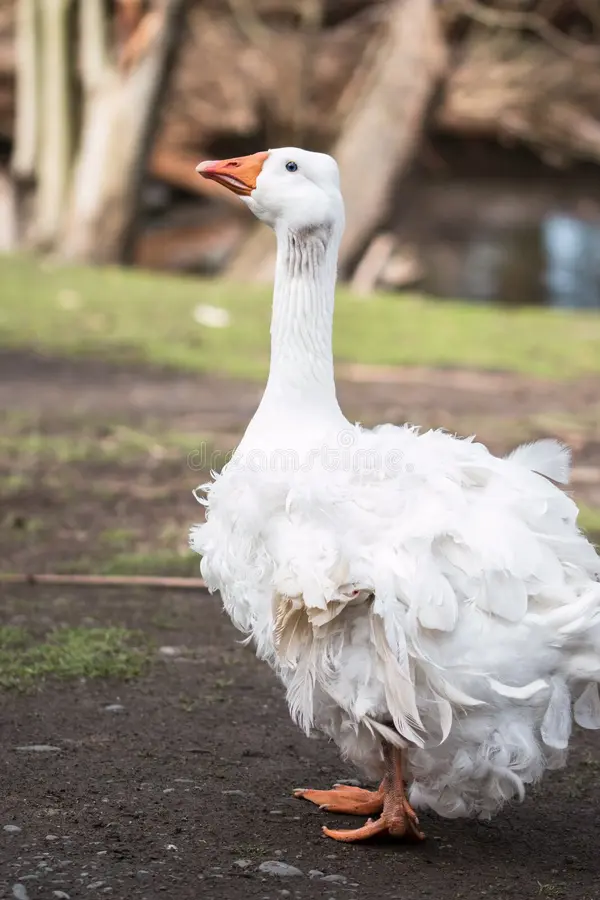
The Sebastopol goose is the breed that stops people mid-conversation. The feathers — long, soft, curling downward rather than lying flat — produce an appearance that is somewhere between a swan and a cloud that has achieved sentience. The Sebastopol is the ornamental peak of domestic goose breeding, and they know it in the way that very beautiful animals sometimes seem to.
They are calm, relatively gentle, and manage well in small spaces because the curled feather structure limits their inclination to wander widely. They are poor fliers — the feather structure prevents effective flight — which simplifies containment.
With ducks: Generally excellent companions. Their calm disposition makes mixed flock introductions smoother than with more active breeds.
The care consideration: The curled feathers that make Sebastopols extraordinary also require specific management. They do not provide the same weather protection as normal feathers — Sebastopols need shelter from prolonged heavy rain and cannot tolerate the wet conditions that standard goose breeds manage without difficulty.
Best for: Keepers who prioritize visual impact and ornamental quality over watchdog function or production
Breed 6: American Buff — The Heritage Breed to Save
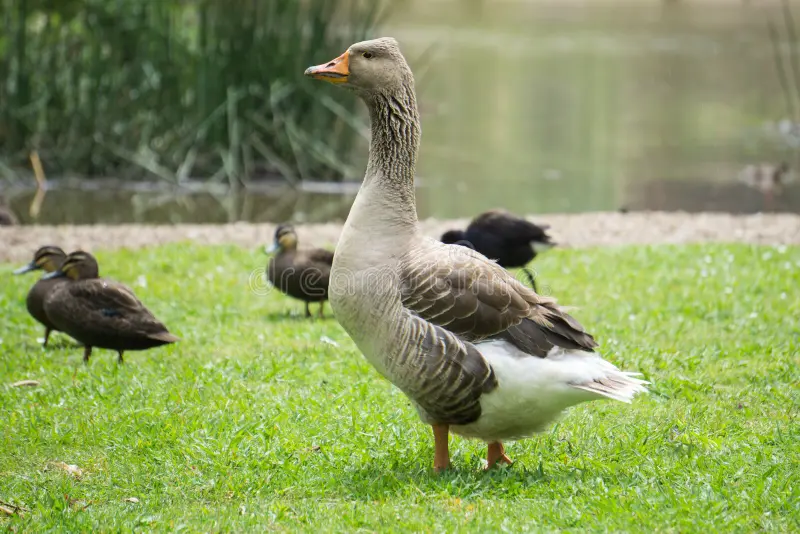
The American Buff goose is a heritage breed developed in the United States in the early twentieth century and now on the American Livestock Breeds Conservancy’s watch list — meaning the breeding population is small enough to warrant conservation attention. Keeping and breeding American Buff geese is a genuine contribution to heritage breed preservation alongside all the other benefits of keeping them.
They are apricot-buff colored — a warm golden tone that photographs beautifully in garden settings. American Buff geese are commonly described as manageable, moderate-sized foragers. Early, calm handling may help birds become comfortable around people, but friendliness varies and should never be assumed.
With ducks: Generally peaceful. Their calm temperament makes integration straightforward.
Size: Males 18 lbs. Females 16 lbs.
Best for: Heritage breed enthusiasts, keepers who want a distinctive-colored, manageable goose
Breed 7: Pilgrim — The Auto-Sexing Breed
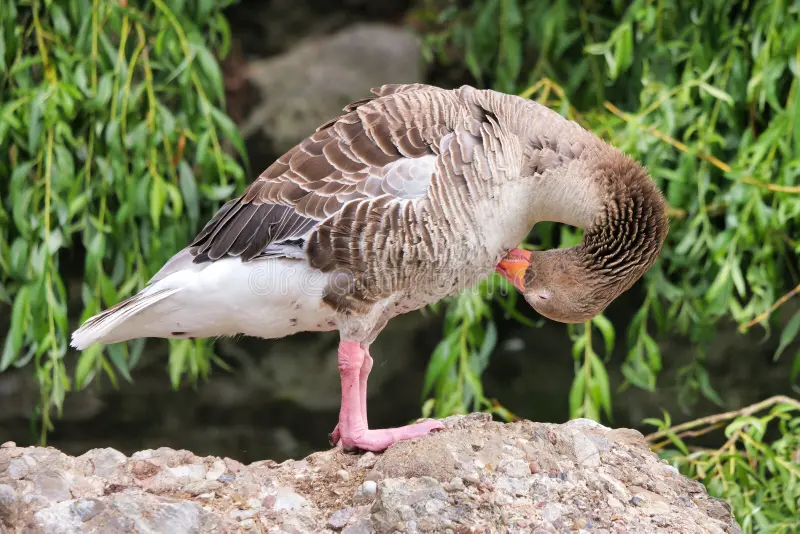
The Pilgrim goose is the only auto-sexing domestic goose breed — meaning the sexes are distinguishable by color from hatching. Males are white with blue eyes; females are gray with brown eyes. This makes sex determination at hatch possible without the vent sexing that other breeds require.
For the small flock keeper who wants a specific sex ratio — typically one gander to two to four geese — the Pilgrim’s auto-sexing quality is a genuine practical advantage. Pilgrims are commonly described as calm and capable foragers. They may be less vocal than some lines or breeds, but all geese can be loud, especially when alarmed, separated, excited, or breeding.
With ducks: Generally excellent. The Pilgrim’s calm disposition is one of the breed’s most consistent qualities.
Best for: Keepers who want controlled sex ratio management from hatch
Breed 8: Roman Tufted — The Compact, Friendly Option
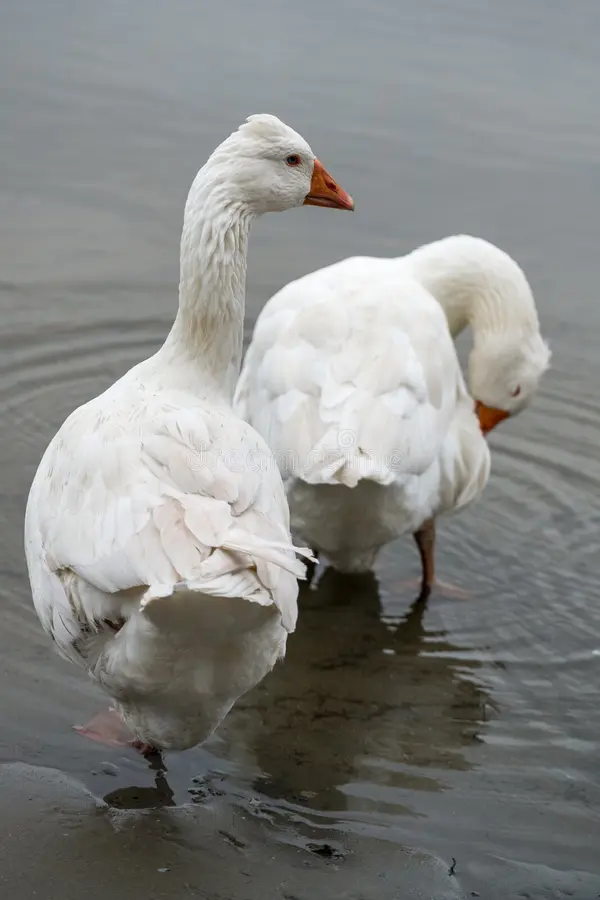
The Roman Tufted goose — a small, compact white goose with a distinctive tuft of feathers on the crown of the head — is the most manageable size of the goose breeds on this list. Lighter and smaller than any other breed here, the Roman Tufted is sometimes described as the goose for people who were not sure they wanted geese.
Their small size makes them less intimidating for newcomers to goose keeping. Their calm disposition makes integration with duck flocks straightforward. And their distinctive tuft gives them a visual personality that makes them immediately recognizable and immediately endearing in any farm photography.
With ducks: Excellent compatibility due to size and temperament.
Best for: Small spaces, beginners to goose keeping, keepers who want a gentle goose companion for their duck flock
Introducing Geese to an Existing Duck Flock
Regardless of breed: introduce geese to ducks gradually. A visual introduction — separated by a fence for one to two weeks before full integration — allows both species to establish social familiarity before the physical proximity that integration requires.
Monitor feeding — geese are significantly larger than most duck breeds and will dominate shared feeders if food is limited. Use multiple feeding stations or feed the species separately until the social hierarchy is established.
Monitor the gander during breeding season annually — even the calmest breed may become protective during this period and require management.
Geese and ducks share more than the waterfowl category. They share the specific quality of a farm experience that surprises people who did not expect to find animals this characterful, this watchful, or this genuinely entertaining in a backyard setting.
Choose the breed that matches your management comfort and your flock’s needs. Start with one pair or one small group. Introduce gradually. And prepare for the specific moment when your geese sound their alarm call and every duck in the flock lifts their head in immediate, coordinated response — because the flock’s early warning system just triggered.
Before adding geese, assess local noise and livestock rules, available space, secure housing, veterinary access, sex ratio, and a permanent separation option. A supervised introduction can reveal compatibility, but keepers should be prepared for the possibility that particular geese and ducks cannot live safely together.
Sources and Further Reading
- FAO: Origins and Breeds of Domestic Geese
- Extension Foundation: Selecting a Goose Breed for a Small or Backyard Flock
- The Livestock Conservancy: Heritage Geese in American History
Continue Exploring Your Backyard Flock
Use these closely related guides to plan your next steps:
One thought on “8 Goose Breeds for Backyard Flocks: Size, Temperament, and Care”
Comments are closed.