


12 Ways to Keep Your Chicken Coop Cool in Summer
A chicken coop that works well in cool weather can become uncomfortably hot in summer if enclosed walls, limited ventilation, or direct sun allow heat to build up.
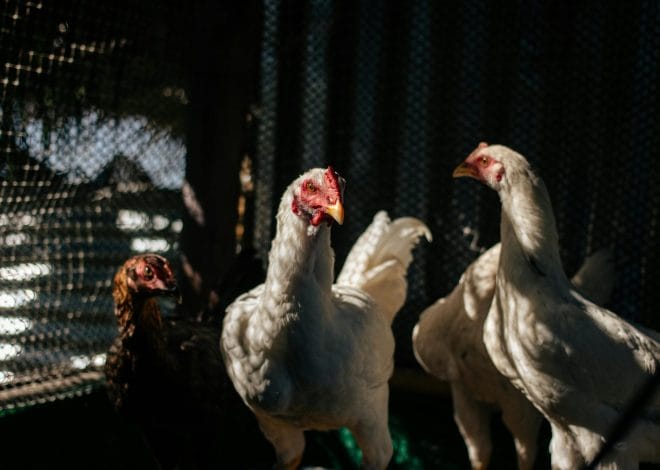
Chickens do not sweat. They release heat partly by panting and holding their wings away from their bodies, and they usually drink more as temperatures rise. There is no single outdoor temperature that is safe for every flock: humidity, airflow, shade, breed, age, body size, and health all affect risk. Heavy panting, wings held away from the body, lethargy, weakness, or a pale comb are warning signs that require prompt cooling and close observation. Prolonged heat stress can reduce egg production and can become life-threatening.
The coop management that prevents this is not complicated. It is primarily ventilation, shade, cool water, and the removal of every unnecessary heat source from the coop during summer. These twelve interventions address each of these variables and the specific moments when they matter most.

Free Backyard Flock Checklist
Planning the rest of your flock setup?
Turn your coop-size estimate into a complete setup plan with our free equipment and preparation checklist.
Fix 1: Open Every Ventilation Panel Fully
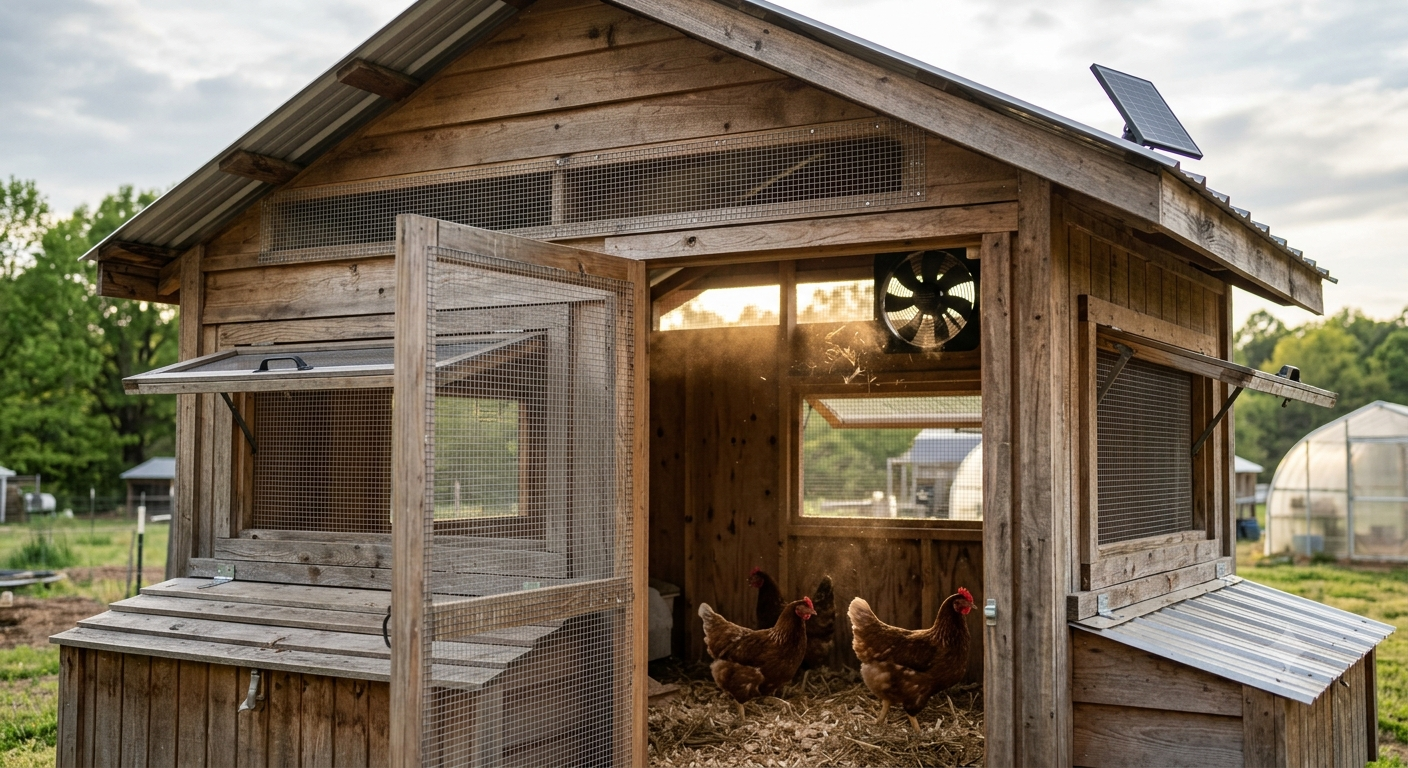
The single most impactful summer coop intervention that costs nothing. Every ventilation panel that is partially closed to reduce drafts in winter should be fully open from the first warm day until the last.
The logic is the inverse of winter management: in winter, ventilation is about moisture management with draft minimization. In summer, ventilation is about heat management and maximum airflow is the priority. A coop with maximum open ventilation in summer stays measurably cooler than an identical coop with restricted ventilation, even without any additional cooling measures.
Walk through the coop and identify every ventilation opening — every hardware-cloth-covered vent, every adjustable panel, every gap that was partially sealed for winter. Open them all the way.
Fix 2: Add a Fan
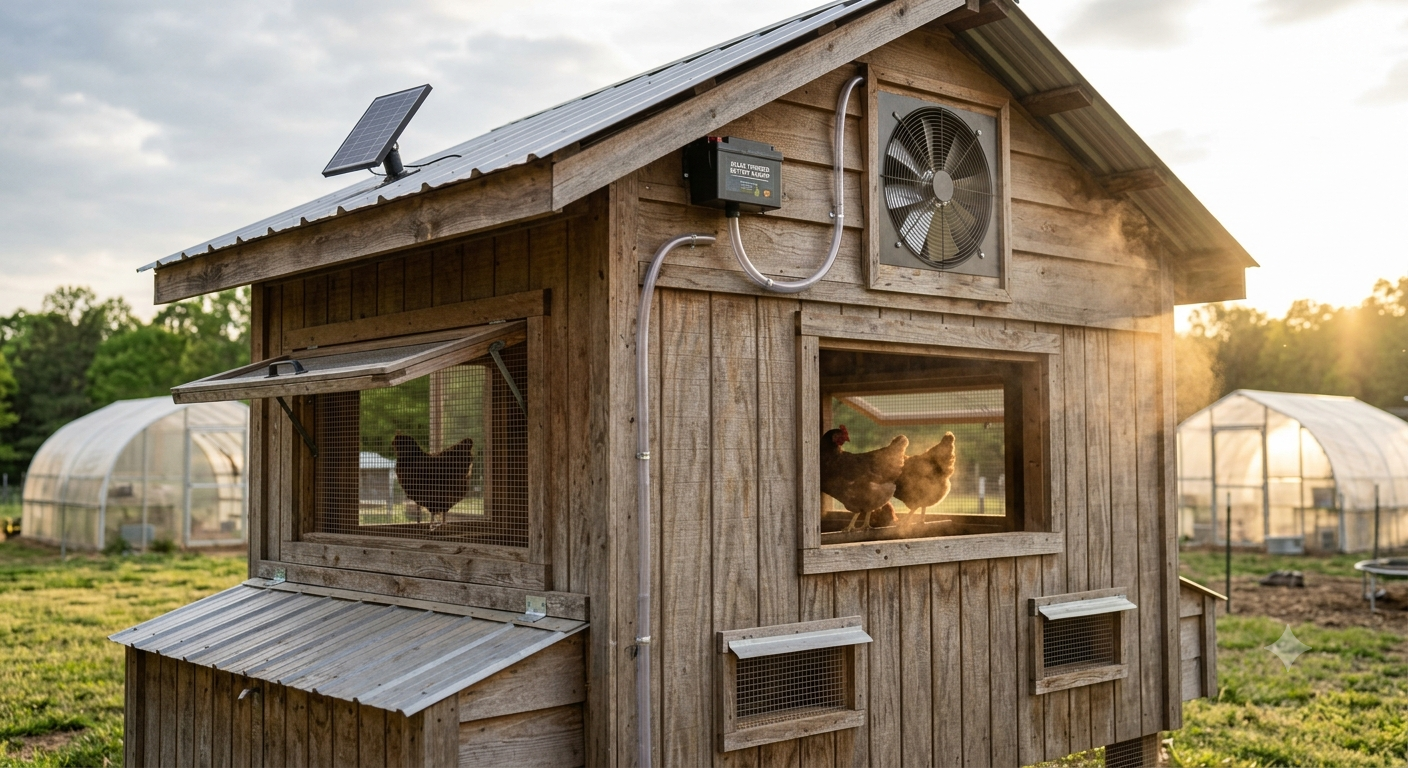
A battery-powered or electric fan positioned to draw hot air out of the coop rather than blow cool air in provides consistent airflow through the sleeping space during the hottest hours. Hot air rises — a fan exhausting air through an upper ventilation opening pulls the hottest air (which accumulates near the roofline) out of the coop continuously.
Fan positioning: An exhaust fan near the roofline can help remove rising hot air while lower openings admit fresher air. Use equipment rated for the location, keep blades fully guarded, protect cords from pecking and moisture, and never let a fan or extension cord create a fire hazard. A fan should support—not replace—generous passive ventilation.
Fix 3: Install Shade Cloth Over the Run
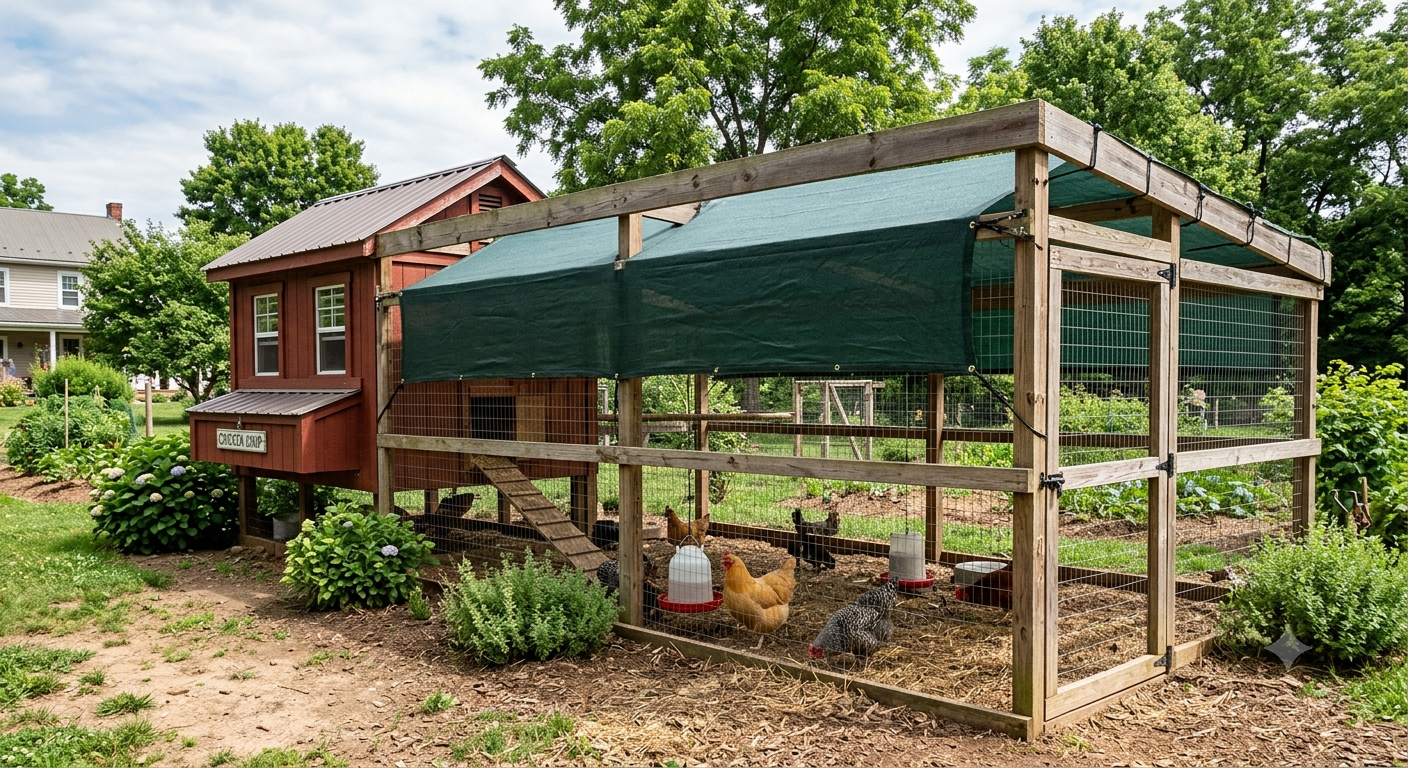
Direct solar radiation on the run surface — the ground where chickens spend the day — generates additional heat load that the birds must manage on top of ambient temperature. Shade cloth installed over the run provides an immediate, significant reduction in ground surface temperature by blocking the radiant heating.
Choose shade cloth dense enough to block strong sun while still allowing airflow. Secure it so wind cannot pull it loose, and position it to shade the areas birds use during the hottest part of the day. Shade reduces radiant heat, but the space beneath it still needs good air movement.
Fix 4: Freeze the Water
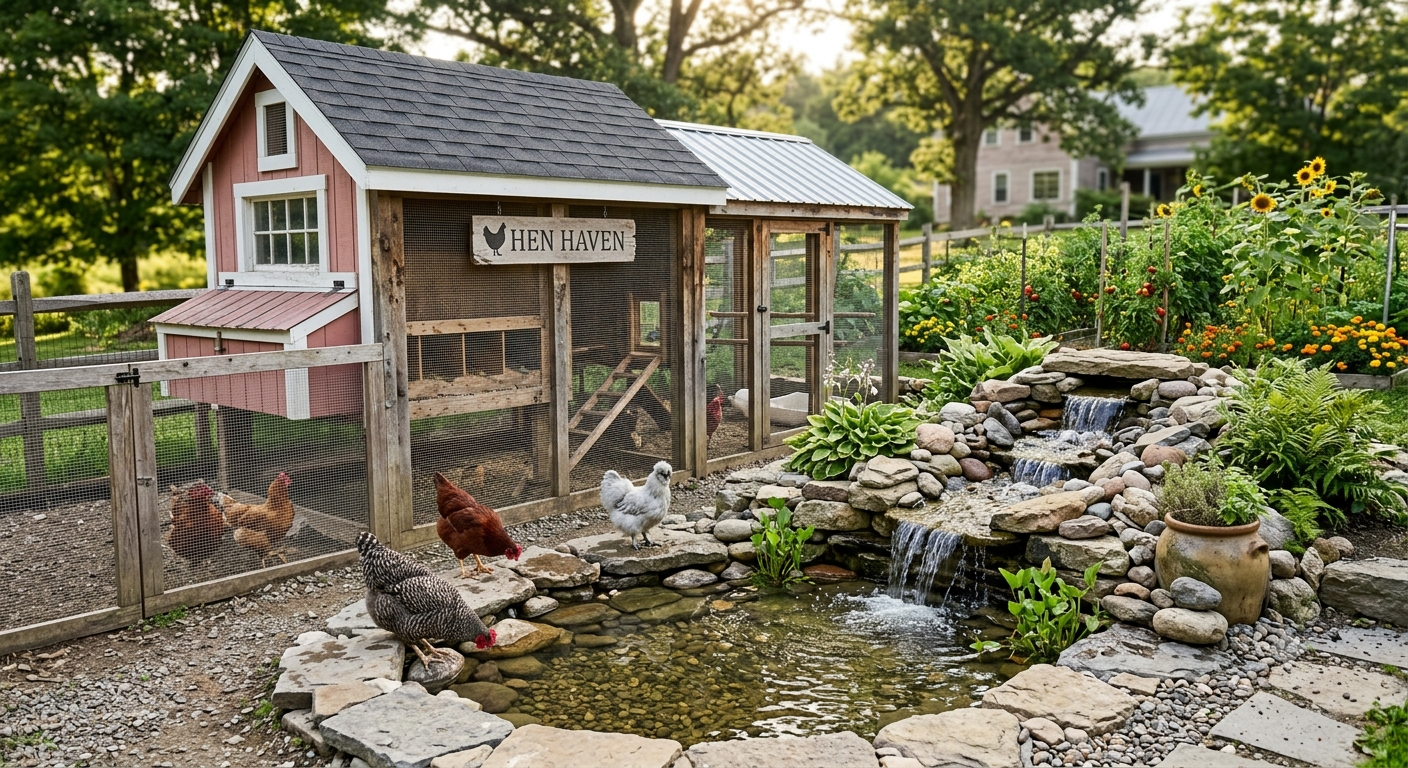
Clean, fresh water must remain available at all times during hot weather. Place more than one water station in deep shade and check them repeatedly through the day so a tipped, dirty, or empty container never leaves the flock without water.
An optional cooling aid: Freeze a clean, sealed bottle that is only partly filled—leaving room for expansion—and place it in a water container. It may help slow warming, but it does not replace frequent checks, cleaning, and refilling. Avoid loose plastic caps or damaged bottles that birds could peck apart.
Fix 5: Wet Down the Run in the Morning
In a hot, dry climate, lightly dampening a small shaded patch of well-drained ground can provide a cooler place for birds to stand or dust nearby. This is less useful in humid weather, when evaporation is limited.
Keep the coop bedding, feed area, and most of the run dry. Saturated soil and wet litter encourage odor, ammonia, flies, and sanitation problems. Stop if water pools or the area stays muddy.
Fix 6: Frozen Treat Station
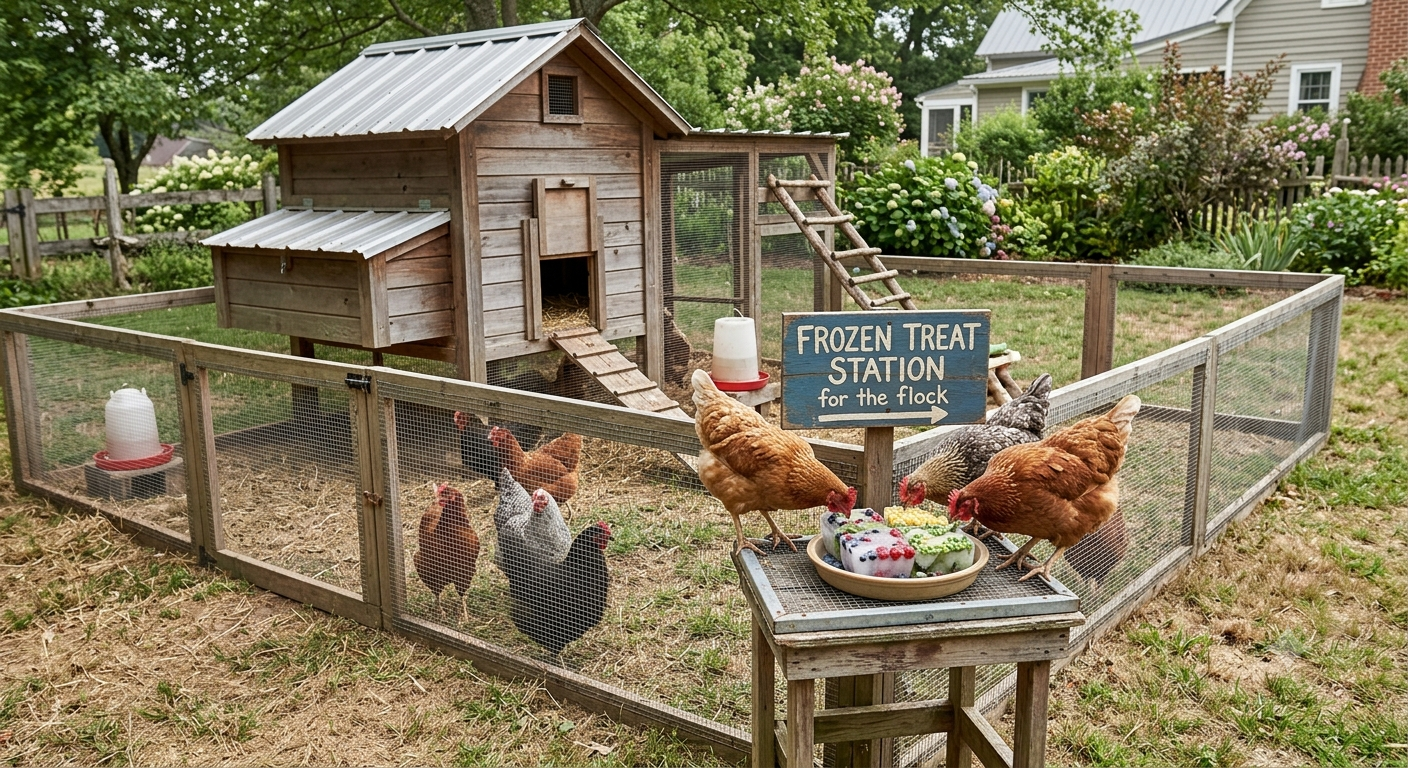
Frozen watermelon chunks, frozen corn, frozen peas, ice blocks with treats frozen inside — placed in the run during the afternoon heat period.
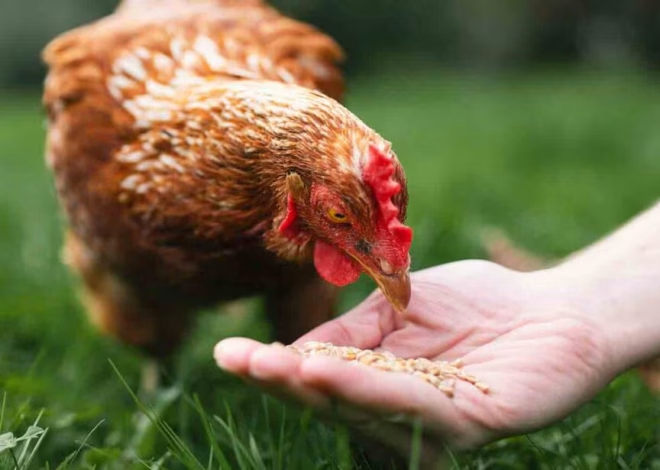
A small portion of chilled, water-rich produce can provide enrichment and encourage moisture intake. Treats should remain limited so birds continue eating a nutritionally complete poultry ration; remove uneaten food before it spoils or attracts pests.
Watermelon is a popular option, but it is an extra—not a treatment for heat stress and not a substitute for unlimited clean water, shade, ventilation, and prompt care for a distressed bird.
Fix 7: Apply Reflective Material to the Coop Roof
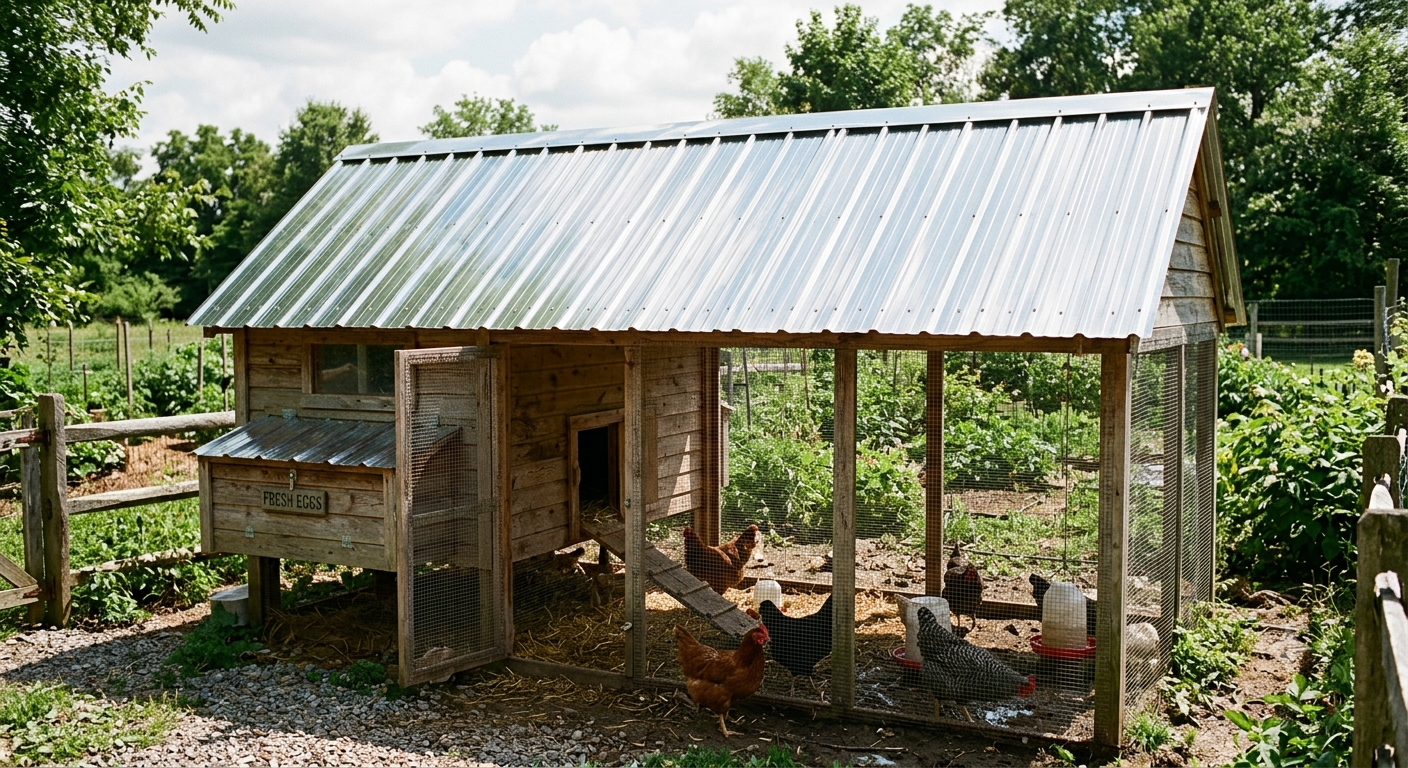
Dark-colored roofing — black asphalt shingles, dark metal — absorbs solar radiation and re-radiates it as heat into the coop interior. A significant portion of summer coop heat gain comes through the roof rather than through the walls.
A light-colored or reflective roof surface can reduce solar heat gain. For a temporary cover, leave an air gap above the roof, keep every ventilation opening clear, and anchor the material securely enough for local wind conditions.
Do not drape loose material where birds can reach it, and do not use a temporary cover that traps heat, sheds water into the coop, or becomes a wind hazard.
Fix 8: Create a Misting System
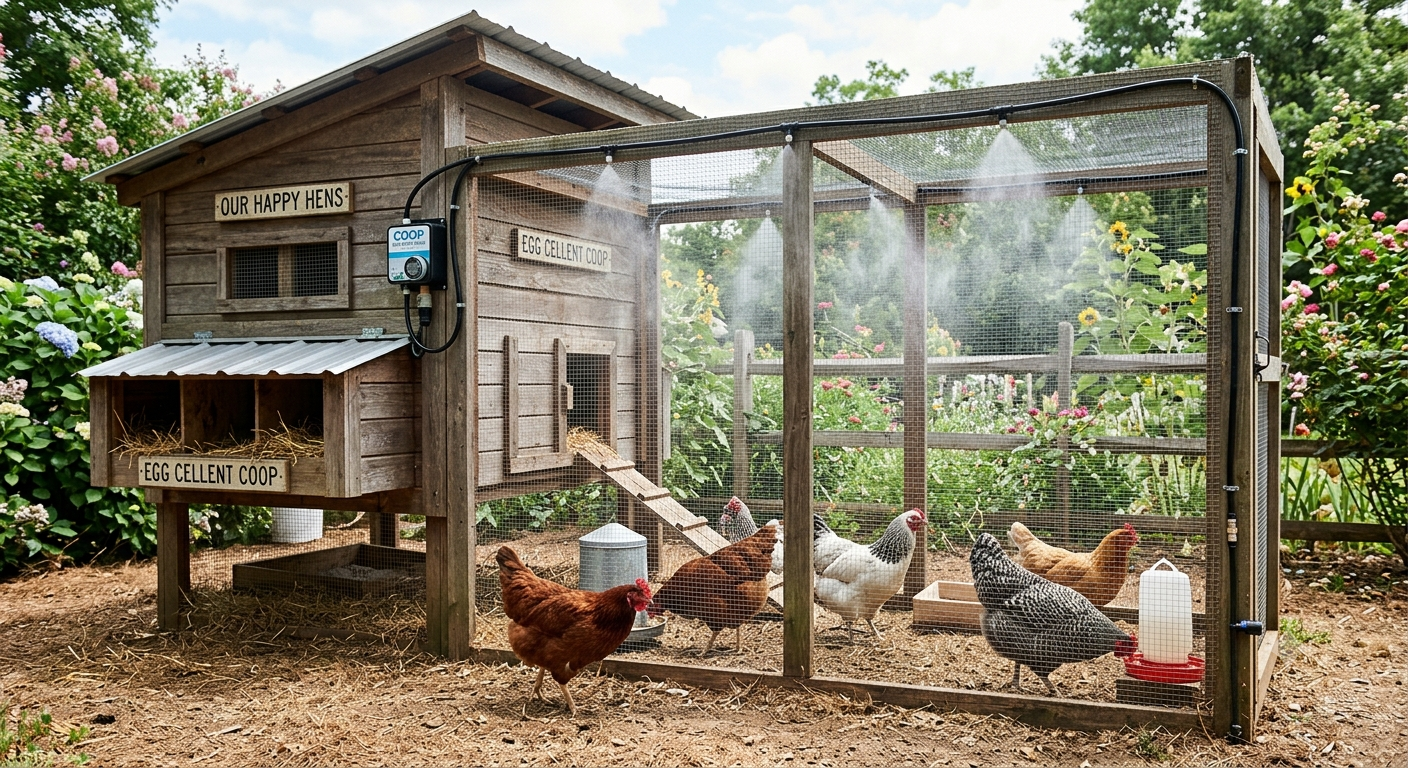
Fine mist can support evaporative cooling in hot, dry conditions, but its value falls as humidity rises. Use it only where air moves freely, and monitor the birds and litter rather than relying on a fixed run time.
Keep mist away from feed, nest boxes, bedding, plugs, fans, and electrical connections. If feathers or litter remain wet, reduce or stop misting. A soaker hose wets surfaces rather than producing a true fine mist, so it should not be treated as an equivalent system.
Fix 9: Increase Ventilation Points
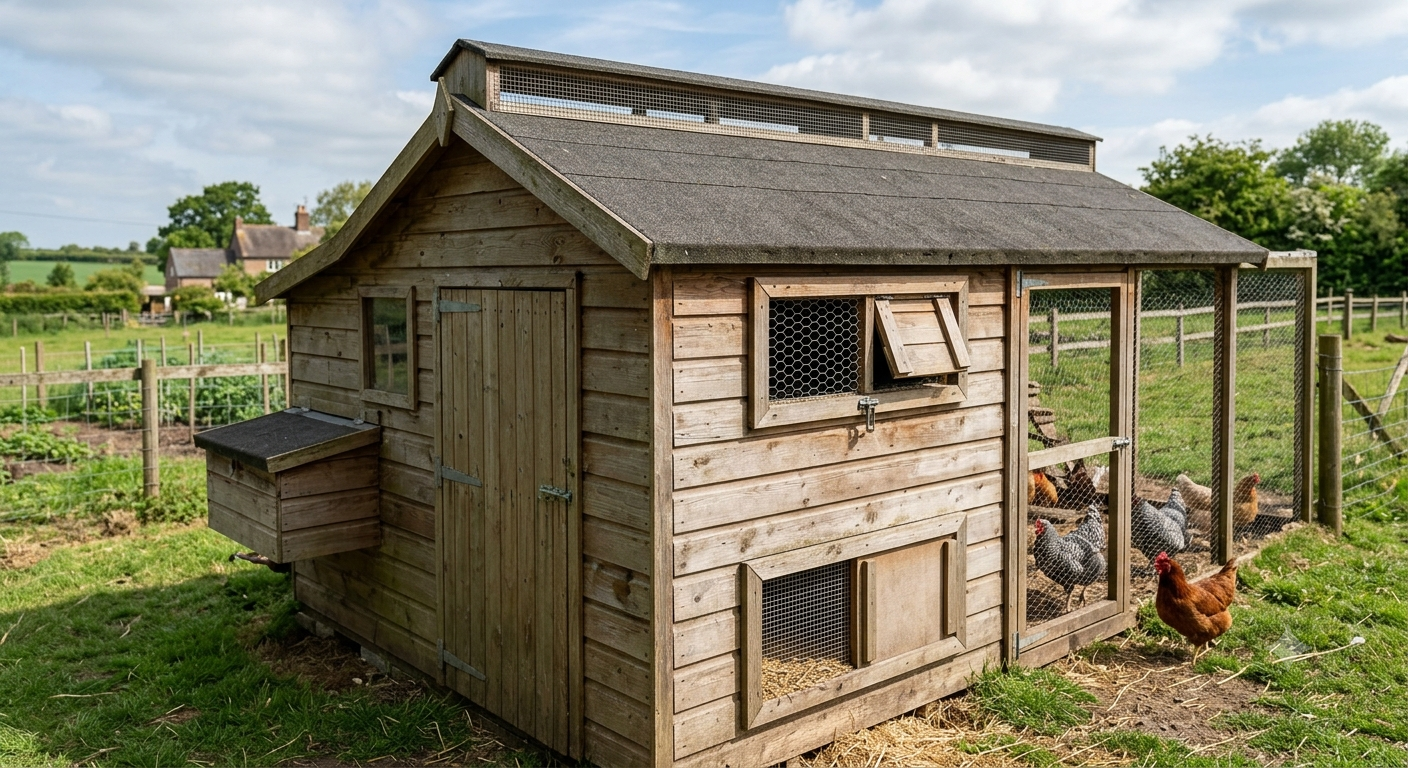
If the coop does not have adequate ventilation even with all existing vents open, the summer heat management problem requires adding ventilation rather than simply optimizing existing ventilation.
Add securely hardware-cloth-covered openings near the roofline if the coop remains hot and stagnant. Ventilation needs vary with coop design, flock size, climate, and whether mechanical fans are used, so assess airflow throughout the occupied area instead of relying on one universal opening-to-floor ratio. Structural cuts should preserve the coop’s strength and weather protection.
This is the infrastructure intervention that costs more effort than the others on this list but produces the most durable improvement — a coop that is better ventilated in perpetuity, not just for this summer.
Fix 10: Remove Heat Sources From Inside the Coop
Any heat-generating element inside the coop that was installed for winter benefit — heat lamps, supplemental lighting on timers, brooder elements — should be removed or powered off during summer.
Heat lamps produce substantial heat and also introduce fire risk when poorly secured or exposed to dust and bedding. Remove or disconnect seasonal heating equipment that is no longer needed. Keep any essential electrical equipment clean, guarded, dry, and installed for its environment.
Fix 11: Plant Fast-Growing Shade Vegetation
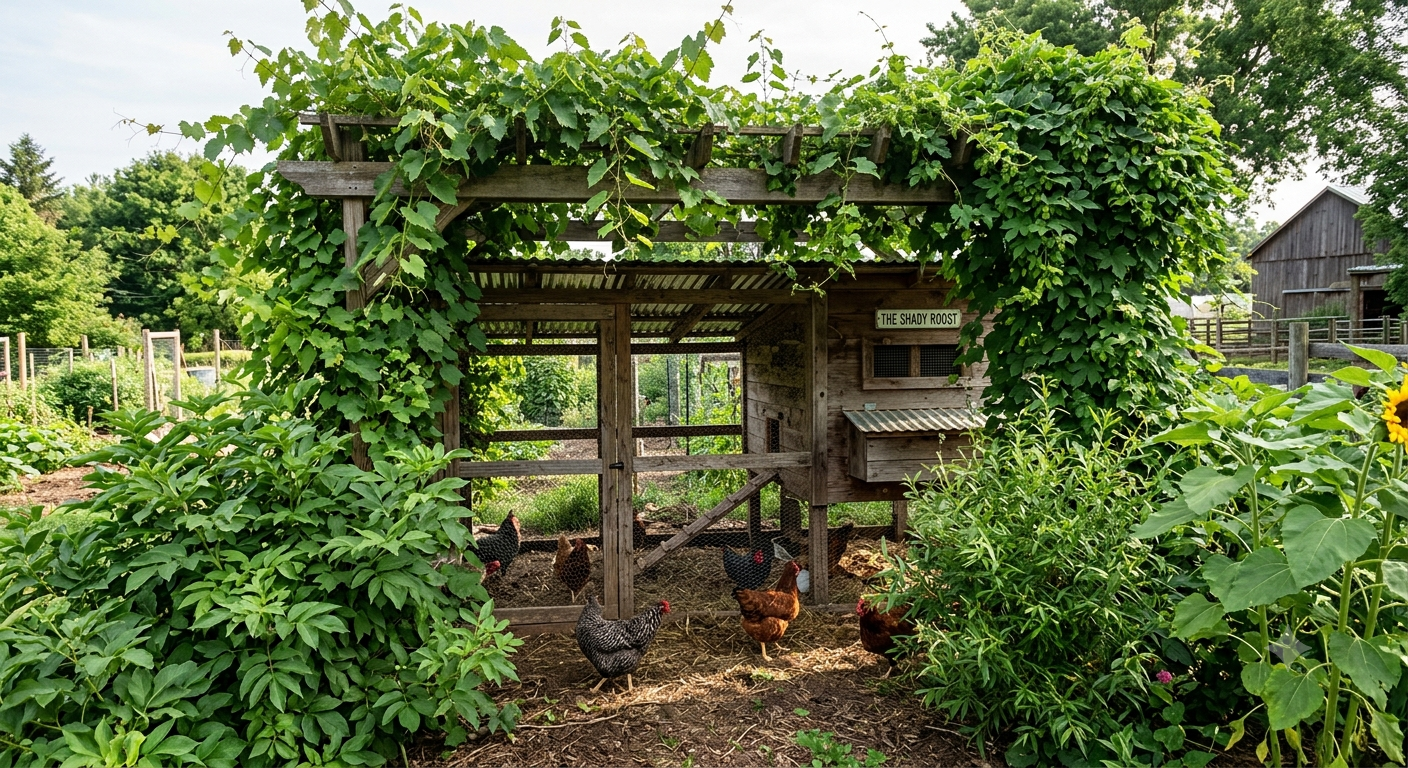
Fast-growing annual vines planted on the south and west sides of the run fence in spring — climbing varieties like beans, cucumbers, or annual climbing nasturtiums — provide living shade cover by midsummer that continues to develop through the hottest months.
Living plants can add shade and may cool the immediate area through evapotranspiration, but growth rate and cooling vary widely by climate, watering, and placement. Do not let vegetation block airflow or weaken fencing.
Choose plants carefully: Confirm that every species and every plant part is safe for poultry before placing it within reach. Keep unknown, treated, or potentially toxic plants outside the run, and remember that a young vine will not provide emergency shade during a current heat wave.
Fix 12: Reduce Scratch and Grain During Heat Waves
Heat can reduce appetite, making every bite of balanced feed more important. Large amounts of scratch grain and treats can displace a complete layer ration without supplying the same balance of protein, vitamins, and minerals.
Keep the flock’s appropriate complete ration available and limit extras, especially when birds are already eating less. Offer feed during cooler parts of the day if that encourages normal intake, and ask a poultry veterinarian or qualified nutrition adviser before adding concentrated supplements or making major dietary changes.
The chicken coop that manages summer well is not a different coop from the one that manages winter well — it is the same coop with seasonal management applied intelligently. Ventilation opened fully. Shade added. Water kept cold. Heat sources removed. The run cooled through misting and surface wetting. Frozen treats deployed during the hottest hours.
Use the measures that fit your climate and coop, then watch the birds rather than assuming one setup works everywhere. If a chicken becomes weak, limp, unresponsive, or continues struggling despite cooling, contact a veterinarian promptly.
For further guidance, see University of Minnesota Extension’s heat-stress guidance and Extension Poultry’s backyard-chicken recommendations.
Continue Exploring Your Backyard Flock
Use these closely related guides to plan your next steps:
One thought on “12 Ways to Keep Your Chicken Coop Cool in Summer”
Comments are closed.