
8 Tips to Protect Your Chicken Backyard Flock From Parasites
You will not always see the problem coming. That is what makes poultry parasites so insidious. A hen that is carrying a significant mite infestation can look completely normal at a glance. A flock with a growing internal worm burden may show reduced egg production for weeks before any other symptom is obvious enough to notice. By the time the classic visible signs appear — pale combs, feather loss, listlessness, visible weight loss — the parasite population inside or on your birds has been building for weeks or months, silently draining the nutritional resources and immune capacity that should have been going into egg production, feather quality, and general health.
Worms, mites, lice, and other parasites cause stress, illness, and underperformance in chickens. Prevention of parasites is not only an easier road than treatment, but you will be rewarded with happier hens. Every tip in this guide is a prevention strategy — the habits and systems that keep parasite populations below the threshold of harm rather than scrambling to treat an established infestation. Prevention costs less, takes less time, and produces better health outcomes than any treatment protocol. These eight tips are the prevention protocol that works.
Tip 1 — Inspect Every Bird Monthly, in the Right Places, After Dark
The most important single habit in parasite prevention is hands-on inspection — regular, systematic, thorough examination of each bird to catch infestations at their earliest, most treatable stage.
Free Backyard Flock Checklist
Planning the rest of your flock setup?
Turn your coop-size estimate into a complete setup plan with our free equipment and preparation checklist.
Regular hands-on checks can help you spot mites or lice before a heavy infestation develops. Examine the skin and feather bases—especially around the vent—and respond promptly to irritation, feather damage, dark debris, or moving insects. The University of Kentucky Cooperative Extension notes that poultry lice remain on the bird, while some mites spend much of their time in housing and equipment.
The vent area of a portion of the flock should be checked every two weeks for northern fowl mites. Use a flashlight or check in bright daylight; the light will cause the mites to move, making them easier to see. Mites may be seen on eggs when they are gathered.
The timing of inspection matters for one specific parasite: red mites hide in coop cracks during the day and feed on birds at night. Key difference: lice live on the bird full-time. Red mites live in the coop — in cracks, under roosts, and in bedding — and only visit birds at night to feed. This makes red mites harder to spot on your birds but easier to find in the coop itself.
For red mite detection, inspect the coop interior at night with a flashlight — run the beam along the underside of roosts, into the cracks between boards, and around the nesting box edges. Red mites are visible as moving red or grey dots in the flashlight beam. Finding them at this stage, before the infestation reaches the level that begins causing anemia in your birds, is the difference between a simple treatment and a weeks-long management crisis.
Tip 2 — Quarantine and Inspect Every New Bird
New birds are a common way parasites enter a flock. Quarantine incoming chickens in a separate area before mixing them with the resident flock, and inspect them more than once during that period. Also, be cautious with used crates, feeders, nest boxes, and coop furnishings, since parasites can travel on equipment.
Many flock keepers use a 30-day separation period, but no single timeline guarantees that a bird is parasite- or disease-free. Keep newcomers physically separated, avoid sharing tools and footwear between groups, and inspect them at arrival and repeatedly before integration. If you find parasites or signs of illness, consult a poultry veterinarian or local extension professional about treatment and when it is safe to restart the observation period.
Tip 3 — Build and Maintain a Dedicated Dust Bath
Dust bathing is normal chicken behavior and can help birds maintain their feathers. Provide a sheltered area of dry, loose soil or sand so the flock can dust-bathe throughout the year.
Avoid filling the bath or coating the coop with clouds of diatomaceous earth or other very fine powders. Dust can irritate the respiratory tract, and a dust bath should not be presented as a reliable treatment for an established infestation. If mites or lice are confirmed, identify the parasite and use a poultry-labeled control according to its directions or veterinary advice.
Tip 4 — Manage the Coop Environment Relentlessly
Cleanliness is the foundation of a healthy flock. Chickens spend a lot of time scratching and pecking around, making it easy for intestinal parasites to spread if their environment isn’t properly managed. Seasonal coop cleaning is one of the best ways to keep your flock healthy. Scrape off roosts, clean out nest boxes, replace soiled bedding, and disinfect surfaces.
Ensure your coop is dry and well-ventilated. Moisture is the best friend of parasites like mites and lice, while good airflow helps to keep their populations down.
Practical coop management includes removing accumulated droppings, replacing wet or heavily soiled nesting material, cleaning equipment, sealing cracks where poultry mites can hide, and correcting leaks or condensation. Cleaning lowers exposure, but it does not replace parasite identification and an appropriate labeled treatment when an infestation is already present.
Tip 5 — Exclude Wild Birds From All Flock Contact Areas
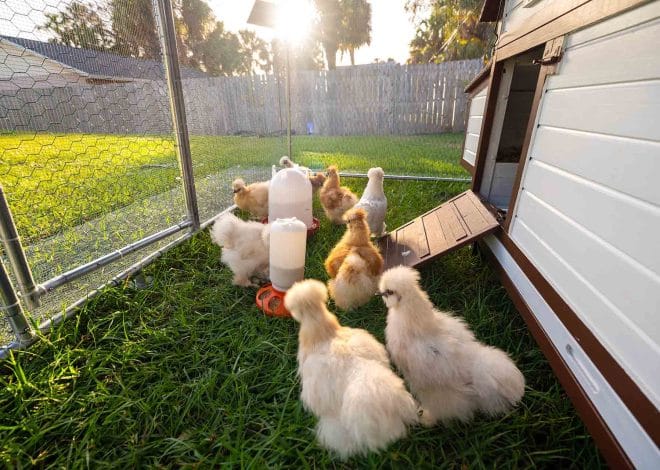
Wild birds and shared show or swap environments can increase risk. Exclude wild birds from contact with chickens, the coop, or feed. They can be a source of parasite problems.
Wild birds carry external parasites, including mites and lice that rapidly transfer to domestic flocks on any contact surface — shared feeders, dust bath areas, and any coop access point. Cover feeders when not in use to prevent wild bird access. Use hardware cloth rather than bird netting on any outdoor run, as wild birds can pass parasites through the larger openings of bird netting. Ensure the run roof is completely covered to prevent wild birds from landing on and defecating through the mesh.
Tip 6 — Support Immunity Through Nutrition
Feed a complete ration appropriate for the birds’ age and production stage, provide clean water, and avoid diluting the diet with too many treats. Good nutrition supports general health and recovery, but garlic, probiotics, fermented feed, and supplements should not be described as proven parasite preventives or substitutes for diagnosis and treatment.
Tip 7 — Rotate Pasture Access Regularly
Moving birds between clean areas and preventing persistent mud and manure buildup can reduce contact with parasite eggs and intermediate hosts. However, there is no universal 4-to-6-week rest period that makes poultry ground parasite-free: survival varies by parasite, temperature, moisture, soil, and climate.
Where rotation is impractical, focus on drainage, manure management, clean feeders and drinkers, and avoiding overcrowding. Ask a poultry veterinarian or local extension service for a plan suited to the parasites and conditions in your area.
Tip 8 — Know When to Deworm and Do It Correctly
Do not deworm solely because a calendar says it is time. If you suspect worms, contact a poultry veterinarian and ask whether a fecal examination or other diagnostic work is appropriate. Identification matters because products do not cover every parasite, dosing and legal uses differ, and unnecessary treatment can contribute to drug resistance.
SAFE-GUARD AquaSol is an FDA-approved fenbendazole product for specific worms in chickens, but it must be used exactly as labeled. The current official prescribing information on DailyMed lists its indications, preparation, dosing, warnings, and withdrawal information. Never assume that a different fenbendazole formulation or an off-label dose has the same instructions.
A Practical Prevention Routine
Regular inspection, separation of new birds, dry and clean housing, reduced contact with wild birds, suitable nutrition, and thoughtful ground management can lower parasite risk. They cannot guarantee a parasite-free flock. When birds show pale combs, weight loss, reduced laying, feather damage, breathing difficulty, weakness, or a rapidly worsening condition, seek veterinary help rather than relying on home remedies.
Continue Exploring Your Backyard Flock
Use these closely related guides to plan your next steps:
4 thoughts on “8 Tips to Protect Your Chicken Backyard Flock From Parasites”
Comments are closed.