
10 Summer Secrets That Keep Backyard Ducks Cool
Ducks can struggle during hot, humid weather, especially when shade, clean water, and airflow are limited. Their bills and unfeathered legs help release heat, and water access supports normal drinking and preening behaviors.
But here is the equally important truth: “more heat-tolerant than chickens” does not mean “impervious to heat.” Ducks in inadequate summer conditions — without sufficient water access, without shade, without the specific interventions summer requires — show heat stress that reduces egg production, compromises immune function, and in severe cases results in duck losses during heat waves.
The difference between a duck flock that thrives through summer and one that merely survives it is these ten care adjustments. Most take five minutes to implement. All of them matter.

Free Backyard Flock Checklist
Planning the rest of your flock setup?
Turn your coop-size estimate into a complete setup plan with our free equipment and preparation checklist.
Tip 1: The Duck Pool Is Now a Priority — Not a Nice-To-Have
In every other season, a duck pool is important for welfare and enrichment. In summer, it is a critical thermoregulation tool. Ducks cool themselves most effectively through water immersion — pressing their body into cool water, dunking their heads, performing the frenzied diving and splashing that constitutes a duck’s most enthusiastic behavior.
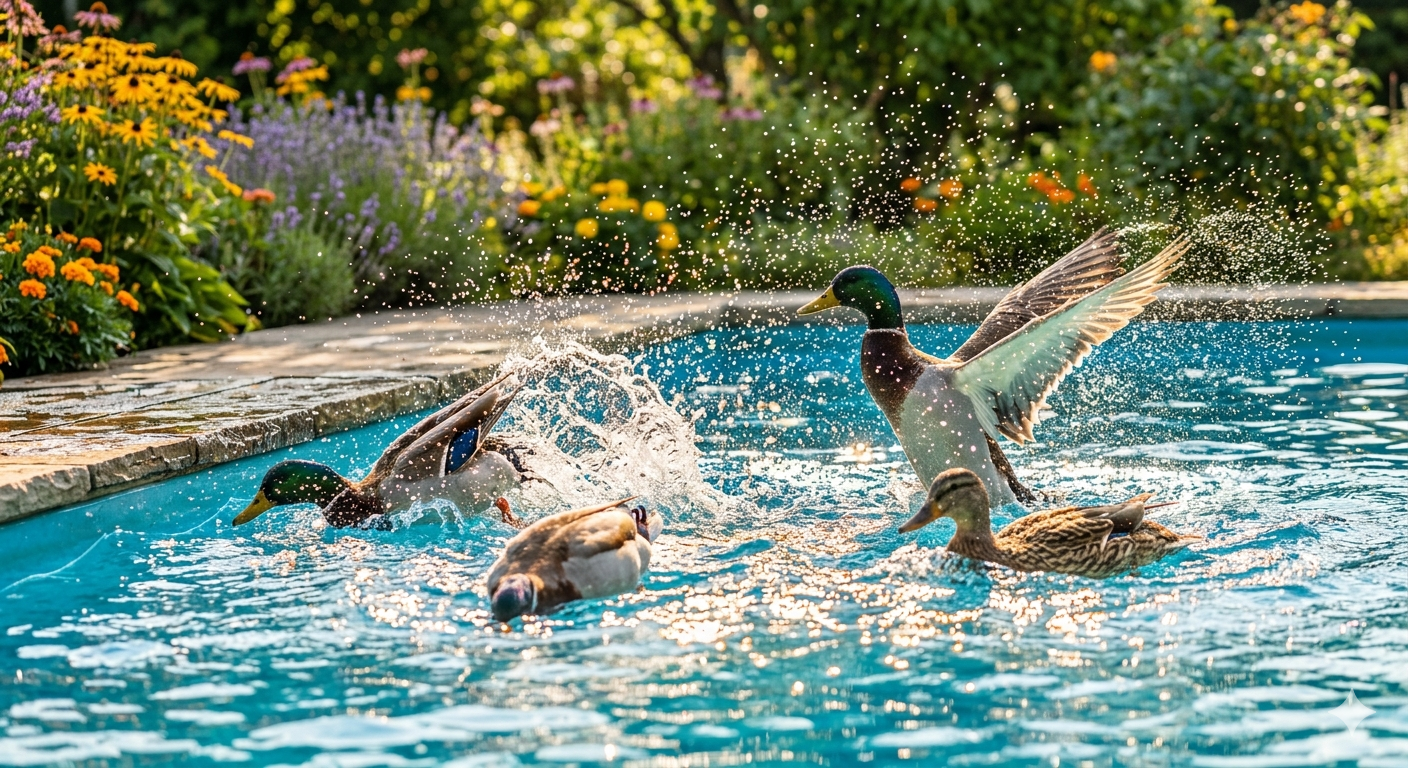
Ducks must always have clean drinking water deep enough to submerge their bills and clear their nostrils. A clean bathing container can provide additional comfort and enrichment, but shade, airflow, and unlimited drinking water remain essential even when no full pool is practical. If you have been meaning to upgrade from the kiddie pool to a larger, deeper setup, this summer is the time. A minimum depth of 12 inches allows body immersion. Eighteen to twenty-four inches allows diving — the behavior that produces the most effective cooling.
Summer pool management: Change the water more frequently in summer — duck waste degrades water quality faster in warm temperatures. A partial water change daily (drain and refill to approximately 50% before topping up) is far less labor-intensive than a full change and keeps water quality at an acceptable level.
Tip 2: Keep Drinking Water Cool Throughout the Day
Ducks consume significantly more water in summer than in cooler seasons. Their water intake during hot days is remarkable — several times their winter consumption — and any interruption to the water supply during peak heat creates rapid dehydration risk.
Add ice blocks to drinking water in the morning — a large block melts slowly and keeps water noticeably cooler through midday. Position drinking water in the shadiest available area of the enclosure so it receives maximum benefit from shade temperature.
Inspect water twice daily in summer. A waterer that was full at 7 am may be empty by midday in a large flock during a heat wave.
Tip 3: Create More Shade Than You Think You Need
The same shade assessment principle that applies to chicken coops applies to duck enclosures — walk your setup at midday on a hot day and observe where your ducks actually are versus where the shade is.
Shade cloth strung across the run provides immediate relief. A large tarp at an angle that maximizes shaded floor space costs little and installs in an afternoon. Fast-growing annual vines planted on the run’s south and west sides provide living shade by midsummer in most climates.
The goal: every duck in the flock should be able to simultaneously access shade during the hottest part of the day without any individual being forced to stand in direct sunlight.
Tip 4: Pea Ice Treats — The Duck Summer Obsession
Peas, berries, or small pieces of watermelon can be occasional enrichment when offered in modest amounts and in pieces appropriate for the birds. Treats should not displace a balanced waterfowl ration, and heavily salted, seasoned, moldy, or spoiled food should never be offered. Cool water matters far more than frozen treats.
Tip 5: Time Activities and Feeding for the Cool Hours
Keep a balanced ration available according to your normal feeding system, while refreshing feeders and doing handling or maintenance during cooler morning or evening hours when practical. The digestion of food generates metabolic heat; feeding during the coolest hours of the day means that heat is produced when the ambient temperature is lower and more manageable.
Morning and evening are also the appropriate times for any activities that require moving the flock, collecting eggs, or performing maintenance in the enclosure. Mid-afternoon — the hottest period of the day — should be left as undisturbed as possible. A flock resting quietly in shade is a flock managing the heat appropriately; unnecessary disturbance during peak heat forces them to expend energy and generate body heat they do not need.
Tip 6: Recognize Heat Stress in Ducks Specifically
Duck heat stress looks different from chicken heat stress, and knowing the specific duck signs prevents misidentification and delayed intervention.
Early heat stress signs in ducks:
- Bill held open with rapid breathing (ducks pant through their bills, not their beaks like chickens)
- Wings held away from the body — exposing the less-feathered underwing area to air
- Lethargy and reduced movement during hours when they are normally active
- Reduced or no interest in food
- Egg production drop — sometimes dramatically sudden
Serious heat stress signs:
- Duck is lying flat and unresponsive
- Neck extended along the ground (not tucked as in normal rest)
- No response to the approach or handling
For a seriously heat-stressed duck, move it gently to a cool, shaded, well-ventilated area and offer fresh water without forcing it to drink or immerse. Weakness, collapse, confusion, seizures, or labored breathing is an emergency—contact a poultry-experienced veterinarian immediately.
Tip 7: Wet Down the Enclosure During Peak Heat
Lightly wetting a shaded surface may provide evaporative cooling in a dry climate, but it can worsen mud, litter moisture, and humidity in other settings. Use this only where water drains away from the coop and birds still have a dry resting area.
Focus the water on: the shade cloth (evaporation from the surface creates cooling), the ground surface in shaded areas (creating a cool, damp surface the ducks will press against), and any solid walls of the enclosure that are absorbing and re-radiating solar heat.
Tip 8: Ensure Coop Ventilation — Ducks Need More Than Chickens
The duck coop‘s nighttime ventilation requirements are higher than chicken coops of equivalent size because ducks produce more moisture, and in summer, that moisture combines with heat to create conditions that are harder to manage than in cooler seasons.
Check that ventilation openings are clear and protected from predators. If using a fan, keep wiring, blades, cords, and the unit itself securely out of reach, protect it from water and dust, and use equipment rated for the location.
A genuinely predator-resistant attached run may offer birds more choice on warm nights, but do not leave a pop door open to an unsecured area. The coop itself still needs sufficient nighttime ventilation.
Tip 9: Monitor Egg Production as a Health Indicator
Egg production is one of the most sensitive indicators of duck flock stress, and summer heat is one of the most common causes of unexplained production drops. A flock that drops from reliable daily production to intermittent or dramatically reduced production during a heat wave is communicating directly that the heat management is insufficient.
When production drops during summer, review every element of this guide. Is water available continuously and cold? Is shade sufficient? Is the pool being changed frequently enough to remain appealing? The egg production answer will follow when the comfort conditions are addressed.
Tip 10: Plan for Extended Heat Waves in Advance
A three-day heat wave is manageable with improvised solutions. A two-week heat wave requires planned infrastructure. If your climate includes extended summer heat, the following pre-season investments produce significantly better flock outcomes:
An automatic waterer that refills from a hose connection prevents mid-day water emergencies. A mister system on a timer that runs during peak afternoon hours creates ongoing evaporative cooling without daily manual intervention. A battery backup for any fans used in the coop ensures cooling continues through power interruptions during summer storms.
Build a Repeatable Hot-Weather Routine
Prepare before the forecast peaks: maintain multiple clean water stations, dependable shade, dry resting space, safe airflow, and a plan for any bird showing distress. Observe the flock several times during extreme heat and adjust based on behavior and local humidity.
The ten tips in this guide are all of that, organized and actionable. Save this to Pinterest before the first heat wave, share it with every duck keeper you know who is approaching their first summer with a flock, and go add ice to the pool this afternoon. Your ducks will notice immediately.
Sources and further reading
- Cornell Duck Research Laboratory: Duck housing and management
- Cornell Duck Research Laboratory: Duck nutrition
Continue Exploring Your Backyard Flock
Use these closely related guides to plan your next steps:
One thought on “10 Summer Secrets That Keep Backyard Ducks Cool”
Comments are closed.