





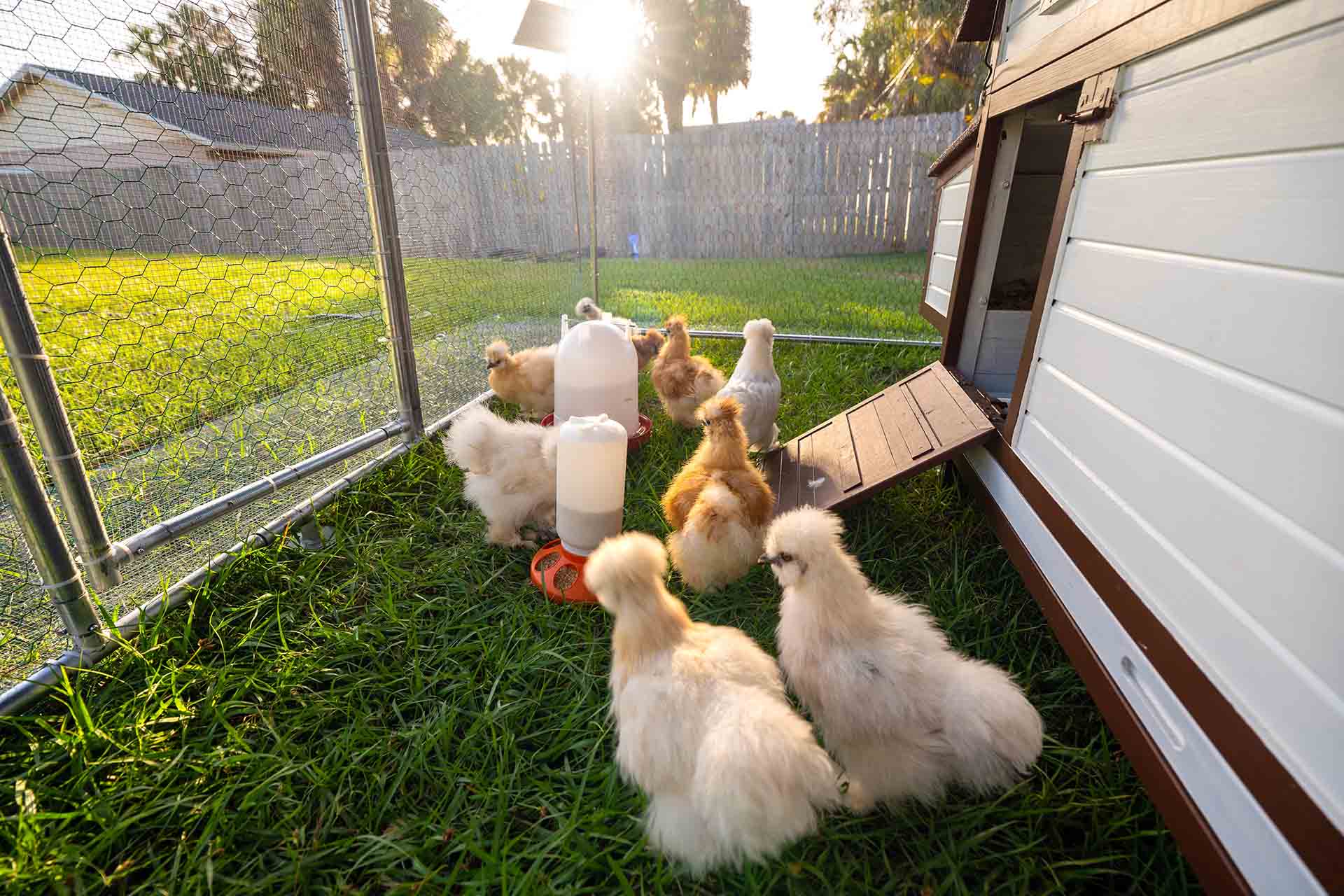
7 Common Chicken Coop Mistakes—and How to Fix Them
Nobody sets up their first chicken coop perfectly. This is not a criticism — it’s just the reality of learning something new that involves living animals, building skills, predator behavior, and chicken psychology all at once. The good news is that almost every common mistake is fixable. The better news is that if you read this before you build, you might skip a few of the harder lessons entirely.
Here are the seven mistakes that trip up nearly every beginner, and exactly what to do differently.
Mistake 1: Building the Coop Too Small
This is the single most universal beginner mistake in chicken keeping, and it happens for a completely understandable reason: you’re starting with four or six chickens, so you build for four or six chickens. What nobody warns you about is that four chickens almost always become eight, and eight somehow becomes twelve, and suddenly your carefully sized coop is overcrowded, the flock is stressed, health problems are appearing, and you’re staring down a rebuild.
Free Backyard Flock Checklist
Planning the rest of your flock setup?
Turn your coop-size estimate into a complete setup plan with our free equipment and preparation checklist.
The fix is simple: build for at least twice the number of birds you’re starting with. The standard is four square feet of enclosed coop space per bird — use that as your per-bird calculation for your future flock size, not your current one. The cost difference between a coop for six and a coop for twelve is modest. The cost of rebuilding after the fact is significantly higher.
Mistake 2: Using Chicken Wire Instead of Hardware Cloth
The name “chicken wire” is one of the most misleading terms in backyard farming. It keeps chickens in. It does not keep predators out. Raccoons can tear through standard chicken wire with their hands. Foxes can chew through it. Weasels fit through the holes.
Hardware cloth — the welded galvanized mesh with small openings — is what actually protects your flock. It costs more than chicken wire, and it is absolutely worth every additional penny. Use it on every window, every vent opening, and as an apron buried at least twelve inches underground around the run perimeter to stop diggers. Any opening on your chicken coop or run that is covered with standard chicken wire is a vulnerability.
Mistake 3: Poor Ventilation
Chickens produce remarkable amounts of moisture and ammonia through their droppings and respiration. A chicken coop without adequate ventilation becomes humid, ammonia-saturated, and genuinely dangerous to flock respiratory health — often before you even notice the smell yourself.
The fix is to ensure ventilation openings near the roofline of the coop — positioned high enough that winter drafts don’t blow directly on roosting birds, but open enough to allow real air movement. Many beginner coops are sealed tight in an attempt to keep birds warm, which actually creates worse conditions than proper ventilation ever would. Chickens tolerate cold far better than they tolerate damp, ammonia-heavy air.
Mistake 4: Placing Nesting Boxes Higher Than Roost Bars
Chickens instinctively want to sleep at the highest available point. This is an ancient predator-avoidance behavior, and it is absolutely non-negotiable. If your nesting boxes are positioned higher than your roost bars, your hens will sleep in the nesting boxes — soiling the laying space, crushing eggs, and creating a hygiene problem that compounds every single night.
The fix: roost bars are always higher than nesting boxes. Roost bars at 18 to 24 inches minimum, nesting boxes at 12 to 18 inches. The pecking order will sort out who gets the highest roost bar — that’s their business. Your job is just to make sure the roost bars win the height competition over the nesting boxes.
Mistake 5: Not Predator-Proofing the Door Latches
Raccoons are significantly more dexterous than most people expect. A basic hook-and-eye latch — the kind that comes on most prefabricated coops — can be opened by a raccoon in seconds. This is not a metaphor or an exaggeration. It happens regularly, and the losses are devastating.
The fix is a carabiner clip, a combination padlock, or a latch that requires two separate actions to open. Anything a raccoon can’t manipulate with a single paw movement. Check every door on your chicken coop and run. If you can open it with one finger, so can a raccoon.
Mistake 6: Starting with Too Many Chickens
The opposite problem from building too small — actually beginning with too many birds before you’ve established the routines, skills, and systems that good flock management requires. A large flock with a beginner keeper is harder on both the keeper and the chickens than a small flock with the same beginner.
Four to six hens is genuinely the ideal starting point. It gives you enough birds to observe real flock dynamics and produce meaningful egg numbers, while keeping the daily management load light enough to learn without being overwhelmed. You can always add birds. Starting smaller is almost always the right call.
Mistake 7: Skipping the Routine
This is the least structural mistake on the list and the one that causes the most problems over time. Chickens need consistent daily care — morning opening, evening closing, regular feeding and watering, egg collection, and weekly spot cleaning. When routine slips, everything compounds: eggs left in nesting boxes go bad, water levels drop, the coop gets dirtier faster than expected, and predator risk increases dramatically when birds aren’t locked in consistently at dusk.
The fix is building the routine before you get the birds. Know exactly who opens the coop, at what time, and what they check on each visit. Have a plan for when you travel or when life gets busy. An automatic door opener is one of the best investments a chicken keeper can make — it closes the coop at dusk every single night, regardless of what’s happening in your life.
Final Thoughts
Every one of these mistakes is recoverable. Most chicken keepers make at least two or three of them and still end up with thriving flocks and a deep love of the whole undertaking. But if you can avoid a few of them going in, your first year with chickens will be significantly smoother and significantly more enjoyable. Share this with anyone who’s setting up their first chicken coop — they’ll be grateful you did. 🐔
Adapt every measurement to the flock
Rules of thumb are planning aids, not guarantees. Breed size, climate, time spent confined, flock dynamics, and run quality all affect how much space and ventilation birds need. Observe crowding, feather damage, condensation, odor, damp litter, and competition at feeders; those signs tell you when the setup needs adjustment.
Sources and further reading
- University of Minnesota Extension: Raising chickens for eggs
- CDC: Backyard Poultry and Public Health
- Utah State University Extension: Poultry resources
Continue Exploring Your Backyard Flock
Use these closely related guides to plan your next steps:
4 thoughts on “7 Common Chicken Coop Mistakes—and How to Fix Them”
Comments are closed.