
Is My Chicken Sick? 12 Health Problems Every Keeper Must Know
Here is the thing about chickens and illness that every experienced keeper learns — usually through one difficult, avoidable loss: chickens are prey animals. And prey animals have evolved over millions of years to hide signs of illness until they physically cannot.
Chickens are hardy animals, but they are also prey species that instinctively hide signs of illness until a disease has progressed significantly. Catching problems early gives your birds a much better chance of recovery and protects the rest of your flock from exposure.
Chickens often conceal illness until signs become noticeable, so early observation matters. Recognizing a change improves the chance of timely evaluation, but visible signs alone rarely identify the exact disease.

Free Backyard Flock Checklist
Planning the rest of your flock setup?
Turn your coop-size estimate into a complete setup plan with our free equipment and preparation checklist.
Veterinary and biosecurity note: This guide helps you recognize warning signs; it cannot diagnose a bird or prescribe medication. Isolate a visibly ill bird safely, use dedicated footwear and equipment, contact a poultry-experienced veterinarian or diagnostic laboratory, and follow all product labels and egg/meat withdrawal requirements. Sudden deaths, rapid spread, severe respiratory or neurological signs, or a sharp flock-wide production drop may require immediate reporting to animal-health authorities.
This guide introduces twelve important health problems and warning-sign categories backyard keepers should recognize. It is not a prevalence ranking, and many signs overlap. Use it to notice changes, strengthen biosecurity, and know when veterinary or animal-health help is needed—not to diagnose by appearance alone.
The Daily Health Check Habit That Saves Flocks
Before any specific condition: the practice that makes everything else possible.
Changes in appetite are one of the most common early warning signs. If your chickens suddenly stop pecking at their feed or water, it’s a red flag.
Spend two minutes with your flock every morning watching them move, eat, and interact. You are not looking for anything specific — you are establishing your baseline. What is normal for your flock is what you will recognize as abnormal when something changes. A flock you know intimately tells you when something is wrong before any specific symptom appears, simply through the subtle change in the pattern of its daily behavior.
A bird sitting alone. A bird whose comb color has changed. A bird moving differently from yesterday. A bird not at the feeder at the usual time. These are the signals that appear before the obvious ones, and catching them is entirely dependent on having established the normal clearly enough to notice the deviation.
Problem 1: Respiratory Signs — Many Possible Causes
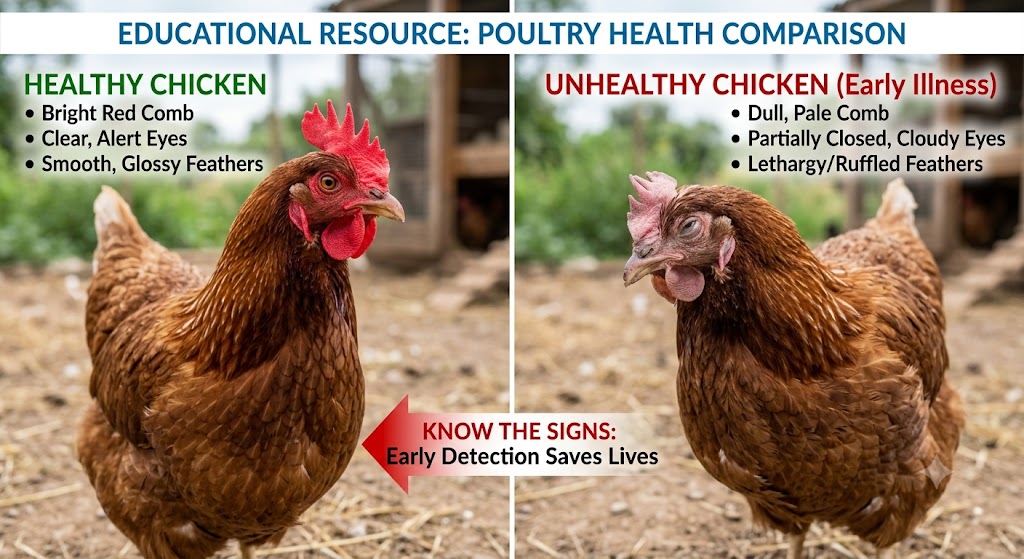
Sneezing, coughing, nasal or eye discharge, facial swelling, abnormal breathing, or a drop in egg production can occur with several infectious diseases as well as dust, ammonia, or other environmental irritation.
Do not decide that signs are bacterial or viral from appearance alone. Some infections require laboratory testing, antibiotics do not treat viruses, and using medication without diagnosis can mask signs, fail to control spread, and create withdrawal or resistance concerns.
Early signs: Occasional sneezing, clear nasal discharge, a slight reduction in activity. These signs are easy to miss in the context of a busy flock.
Advanced signs: Open-mouth breathing, audible rattling or crackling in the respiratory tract, colored or thick nasal discharge, labored breathing even at rest, significant drop in egg production.
The most common bacterial respiratory conditions:
Mycoplasma (chronic respiratory disease): Mycoplasma gallisepticum can cause coughing, nasal discharge, eye changes, and breathing difficulty, but these signs overlap with other diseases. Laboratory testing may be needed, and treatment decisions belong with a veterinarian because infected birds can remain carriers.
Infectious coryza: Avibacterium paragallinarum can cause facial swelling, nasal discharge, and respiratory signs. It is contagious, but appearance alone is not enough for a confirmed diagnosis; seek veterinary or laboratory guidance before using antibiotics.
Response pathway: Separate a visibly ill bird in a clean, low-stress area where it can be monitored without sharing equipment with the flock. Contact a poultry-experienced veterinarian or diagnostic laboratory, especially for labored breathing, rapid spread, neurological signs, or deaths. Check ventilation and ammonia without exposing the bird to chilling drafts, and follow local reporting instructions when a serious poultry disease is suspected.
Problem 2: Coccidiosis — An Urgent Risk for Young Birds
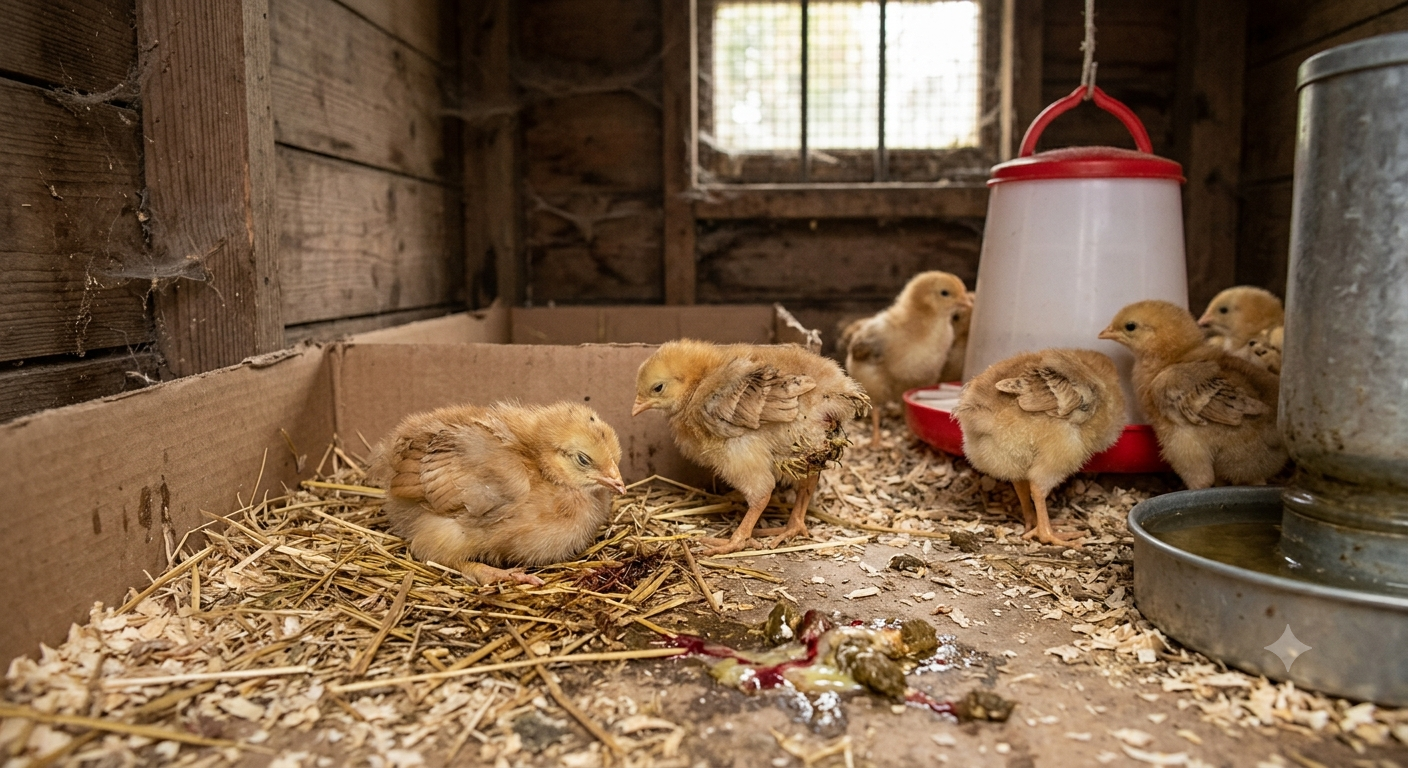
Coccidiosis is an intestinal disease caused by single-celled parasites called Coccidia. It is one of the most common causes of death in young chickens.
Coccidia are protozoan parasites that can damage the intestinal lining. Risk depends on species, exposure, immunity, age, stocking, moisture, and sanitation. Young or newly exposed birds can become seriously ill quickly, but not every property or dropping pattern should be assumed to have the same challenge.
Early signs: Lethargy, reduced feed consumption, huddling with fluffed feathers, general unthriftiness in young birds.
Advanced signs: Bloody or abnormal droppings, dehydration, rapid weight loss, weakness, or deaths in young birds. Blood can occur with coccidiosis but is not definitive, and some serious coccidial infections do not produce obvious blood.
What to do: Separate the affected bird, provide supportive access to water and appropriate feed, and contact a veterinarian or diagnostic laboratory promptly. Bloody droppings can be consistent with coccidiosis but are not a safe basis for an unsupervised drug regimen. Use amprolium or any other medication only according to applicable labeling and professional guidance.
Prevention: Keep brooders clean and dry, avoid crowding and fecal contamination of feed or water, and use a veterinarian- or hatchery-informed prevention plan. Do not deliberately expose chicks to soil as a home immunity protocol; vaccination and medicated-feed decisions depend on how chicks were raised and should be coordinated rather than improvised.
Problem 3: Marek’s Disease — The One to Know Before You Buy
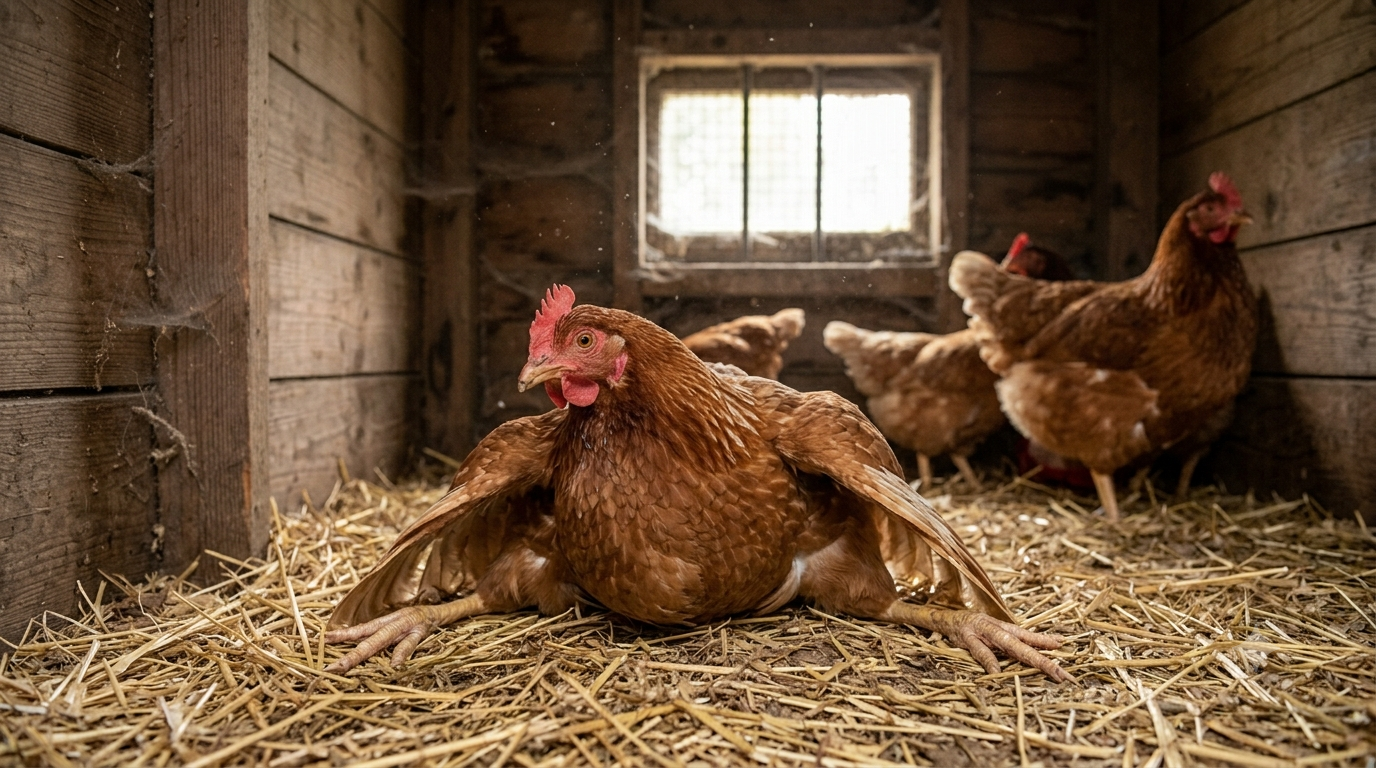
Marek’s disease virus is shed in feather dander and can persist in the environment. Vaccination at hatch substantially reduces disease and tumors, but it does not guarantee complete protection or prevent infection and shedding. Vaccine timing and handling matter, so ask the hatchery whether chicks were vaccinated and discuss home-hatched chicks with a poultry veterinarian before exposure.
Marek’s disease is caused by a contagious herpesvirus and can cause paralysis, nerve changes, eye disease, tumors, weight loss, or death. These signs overlap with injuries, nutritional problems, and other infections, so laboratory evaluation is important.
Signs: Gradual leg weakness, one leg extended forward and one backward (the classic Marek’s sign), progressive inability to rise, grey iris color, blindness in some forms.
What to do: Isolate and support an affected bird while arranging veterinary or diagnostic help. There is no curative treatment for Marek’s disease. For future chicks, obtain hatchery vaccination information or discuss correct vaccination timing with a poultry veterinarian.
Problem 4: Newcastle Disease — Know the Warning Signs
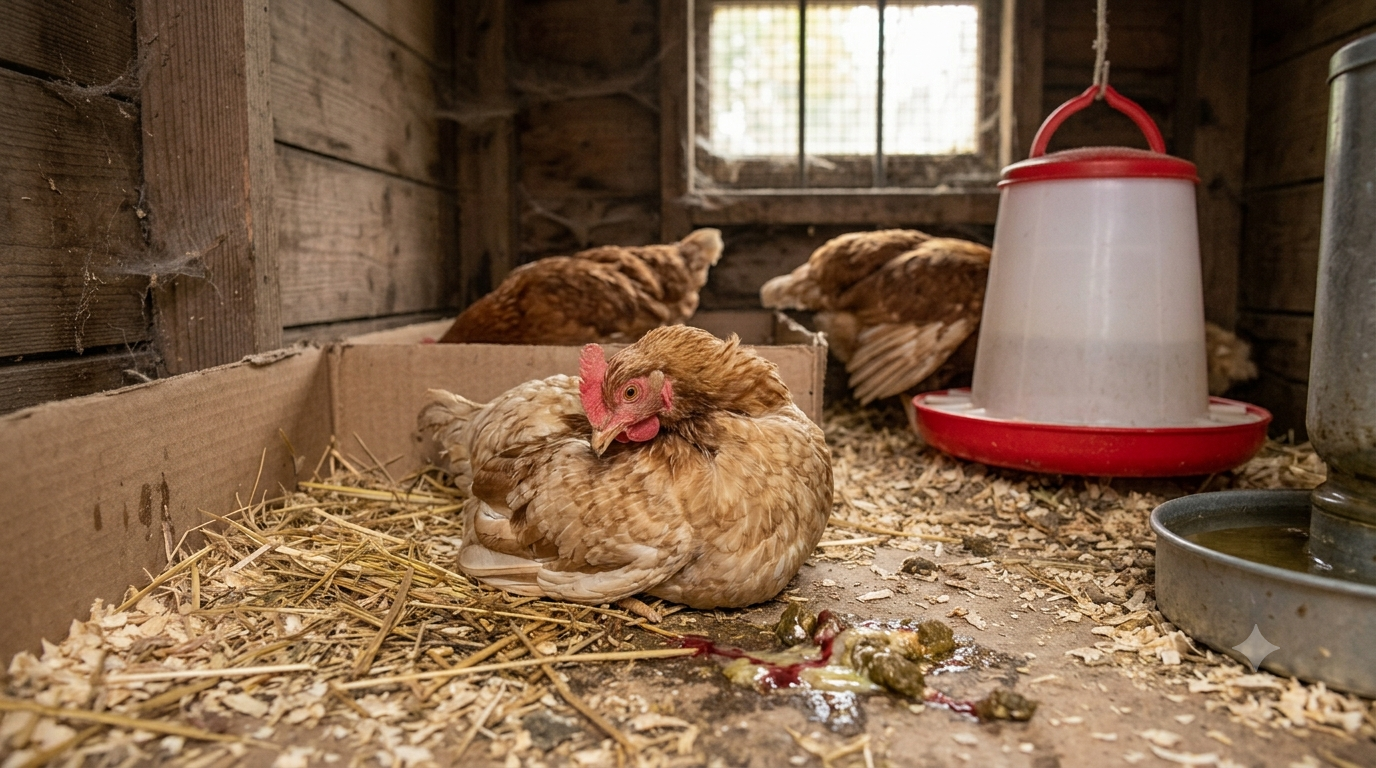
Symptoms: Respiratory distress, greenish watery droppings, sudden drops in egg production, twisted necks or paralysis (torticollis), and in virulent strains, very high mortality within a short window.
Newcastle disease can cause respiratory, digestive, neurological, and production signs, but a twisted neck is not diagnostic; poisoning, injury, nutritional disease, and other infections can look similar.
Reporting requirement: Virulent Newcastle disease is reportable in the United States and many other jurisdictions. If it is suspected—especially with rapid spread, neurological signs, or sudden deaths—avoid moving birds or equipment and contact the appropriate animal-health authority immediately. Vaccination requirements and availability vary by location.
Problem 5: Bumblefoot — The Preventable Foot Infection
Minor superficial foot injuries can be gently cleaned and protected while the bird is kept on clean, dry footing. Swelling, a deep scab, lameness, heat, discharge, or an abscess warrants veterinary assessment; cutting or debriding a chicken’s foot at home can worsen pain, bleeding, and infection.
Bumblefoot is a bacterial infection of the foot pad — typically caused by Staphylococcus aureus — that begins as a small dark scab on the bottom of the foot and can progress to a hard, swollen, painful abscess.
Signs: A black scab on the foot pad. Lameness or preferential weight-bearing on one foot. Swelling of the foot or leg.
Causes: Wire flooring, rough concrete, splinters, sharp objects in the run that create small wounds. Obesity in the bird. Damp bedding that softens the foot pad and makes it more susceptible to injury.
Severity matters: A superficial mark is different from a hot, swollen, painful foot or deep abscess, but home grading systems are not a substitute for examination. Keep the bird on clean, dry, padded footing and seek veterinary help for lameness, swelling, discharge, spreading redness, or a lesion that does not improve promptly. Do not cut into the foot or pull out a scab at home.
Prevention: Avoid wire or rough concrete flooring. Maintain dry bedding. Keep the run free of sharp objects. Monitor birds in heavy breeds regularly — their higher body weight increases foot pad stress.
Problem 6: Egg Binding — The Hen Who Cannot Lay
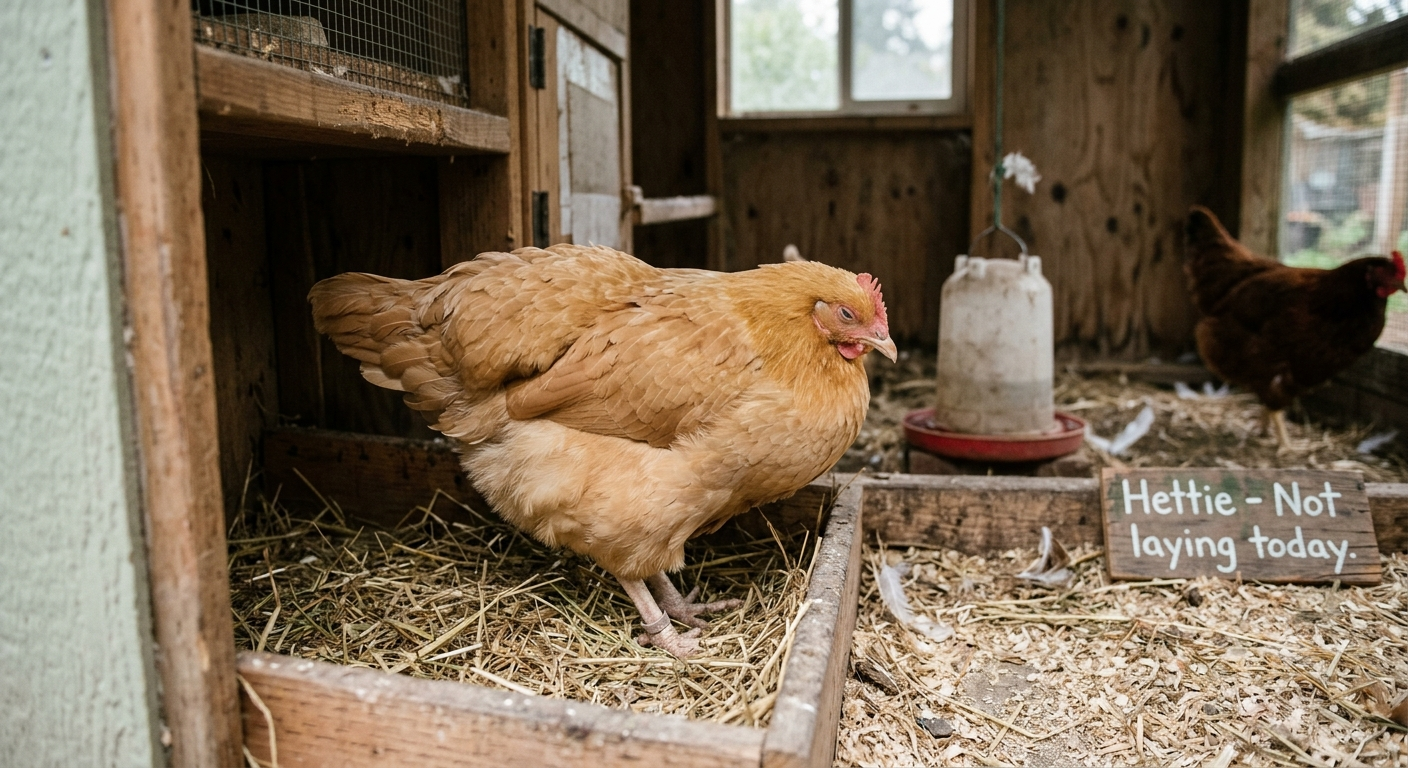
Health issues related to egg laying are some of the most common health problems among chickens.
Egg binding is the potentially life-threatening condition in which a hen cannot pass an egg. The egg is physically present in the reproductive tract but cannot be expelled — causing pain, organ compression, and, without intervention, death.
Signs: A hen straining, sitting heavily in a corner, moving very carefully with a wide-legged stance, pumping her abdomen, or appearing very uncomfortable. Sometimes a bulge is visible or palpable in the lower abdomen.
Immediate action: Keep the hen calm, warm, and separate from flockmates while contacting a poultry-experienced veterinarian promptly. Avoid repeated bathing, abdominal pressure, oil inserted into the vent, or attempts to break or extract an egg; suspected egg binding can resemble other reproductive emergencies and delays can be dangerous.
What to do: Egg binding can become life-threatening and can resemble other reproductive or abdominal problems. Keep the hen calm and warm and contact a poultry-experienced veterinarian promptly; do not squeeze the abdomen or attempt to break or extract an egg without professional direction.
Prevention: Ensure adequate calcium in the diet through free-choice oyster shell supplementation. Ensure appropriate protein levels in the feed. Avoid obesity. Do not push young pullets to begin laying before they are physically mature.
Problem 7: External Parasites — Mites and Lice
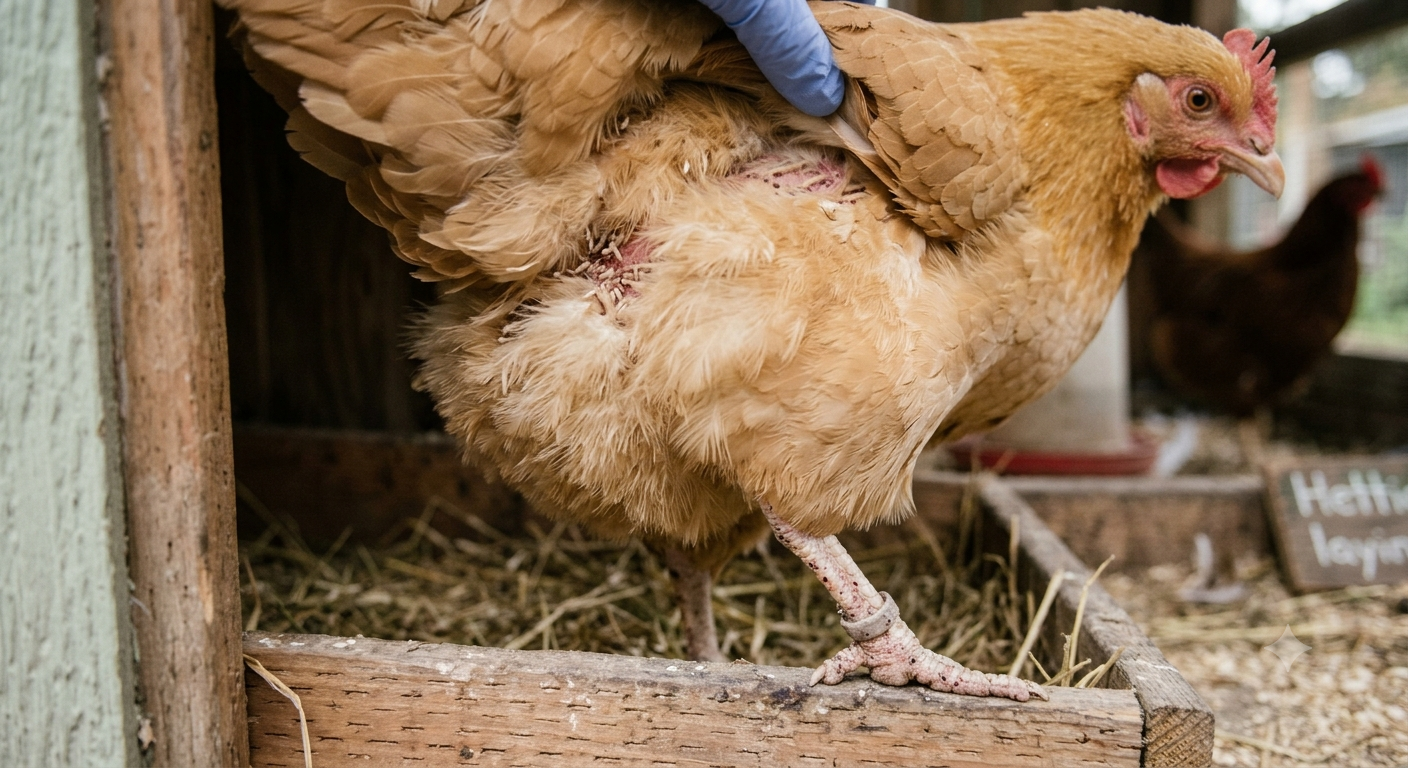
Mites, lice, ticks, and worms are the most common causes of parasitic diseases among chickens.
External parasites — primarily red mites (Dermanyssus gallinae), northern fowl mites, and various lice species — are among the most common ongoing management challenges in backyard chicken keeping. They are not dramatically obvious in early infestation but cause cumulative harm through blood loss, skin irritation, and secondary infection.
Signs: Excessive preening and scratching, pale combs and wattles (indicating anemia from blood loss in heavy infestations), feather loss particularly around the vent area, visible tiny moving dots on the skin under feathers when you part them, eggs clustered at the base of feathers.
Red mite specific sign: Check the coop — red mites feed on birds at night and hide in the coop structure during the day. Run a white cloth along coop joins and crevices. Red smears indicate mite presence.
Treatment: Confirm whether the problem is mites, lice, or another condition, then use only a product labeled or professionally directed for the bird and premises. Follow the exact label for application, repetition, protective equipment, and egg or meat withdrawal; intervals vary by product and parasite.
Prevention: Provide a dry dust-bathing area, inspect birds and coop crevices regularly, and quarantine new birds with separate equipment. Avoid wood ash and unapproved powders as mite treatments; fine dust can irritate eyes and airways, and it does not replace identification and labeled control.
Problem 8: Internal Parasites (Worms)
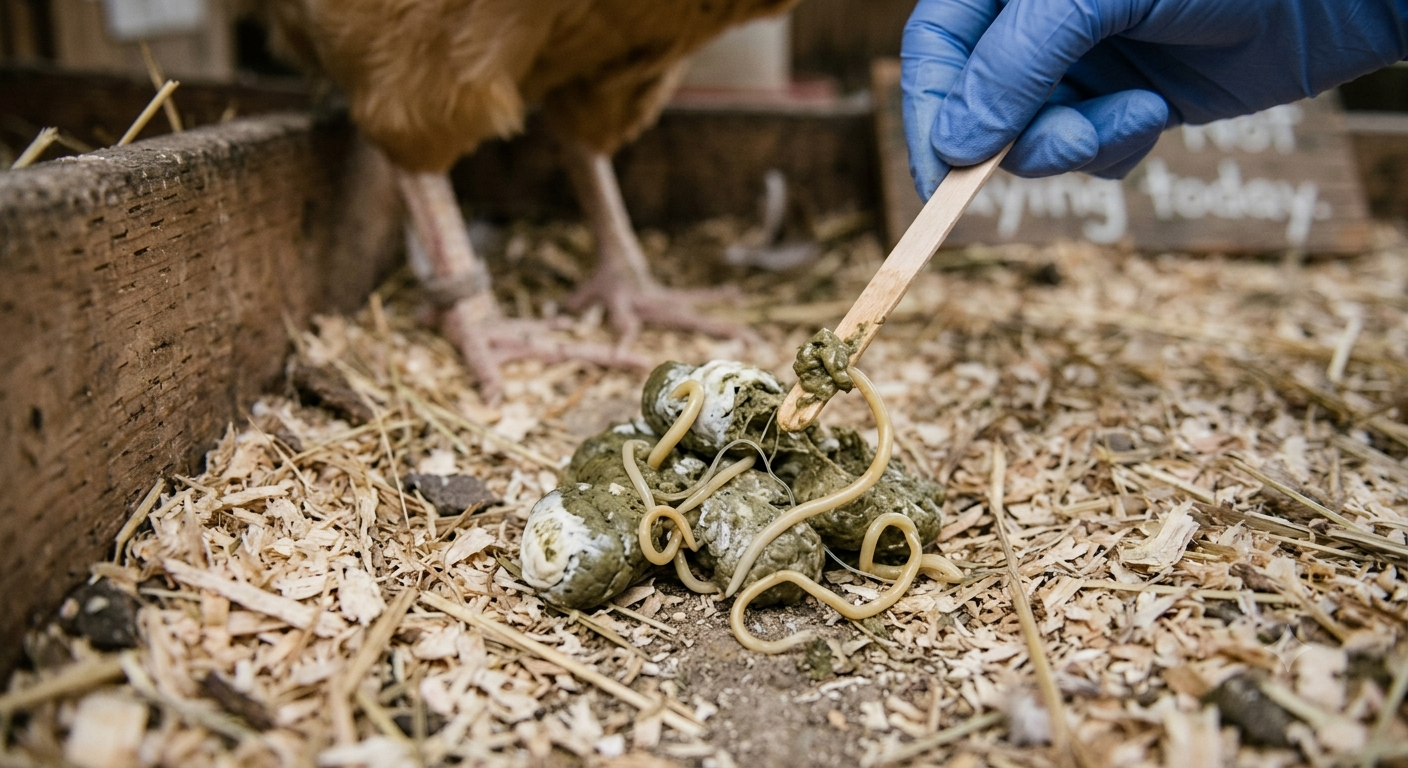
Most adult backyard chickens carry some level of internal parasite load. The concern is when that load becomes high enough to cause clinical disease — weight loss, poor egg production, pale combs, diarrhea.
Signs: Weight loss despite adequate food access. Diarrhea. Pale comb and wattles. Poor feather condition. Reduced egg production. Worms occasionally visible in droppings (though not all worm species are visible).
Most common worm species in backyard flocks: Roundworms (Ascaridia galli), cecal worms (Heterakis gallinarum), capillary worms, and tapeworms.
Treatment: Different worms require different control strategies, and drug approvals and withdrawal periods vary by location. Obtain a fecal test and veterinary guidance before using fenbendazole or another dewormer.
Prevention: Keep litter and feeders dry, reduce fecal contamination, avoid overcrowding, and use pasture rotation where practical. Rotation may reduce exposure but does not reliably eliminate every parasite, and soil should not be chemically “treated” without professional and environmental guidance.
Problem 9: Vent Prolapse
Vent prolapse occurs when the tissues of the cloaca partially emerge outside the body and cannot retract. It is a veterinary emergency and a significant welfare concern requiring immediate action.
Signs: Red, moist tissue visible protruding from the vent. The bird is straining, frequently picking at the area.
Immediate action: Isolate the hen from flockmates to prevent pecking, place her in a clean, dim, calm enclosure, and contact a poultry-experienced veterinarian urgently. Keep exposed tissue from drying using professional guidance, and do not apply human medications or attempt invasive replacement without veterinary direction.
Prevention: Avoid obesity, ensure adequate calcium, do not force early laying in young pullets, and provide appropriate calcium supplementation.
Problem 10: Fowl Pox
Viral diseases can share respiratory, skin, digestive, or neurological signs, and many have no specific curative treatment. Accurate diagnosis matters for supportive care, biosecurity, vaccination decisions, and any required disease reporting.
Fowl pox is a viral disease that appears in two forms: dry pox (scab-like lesions on the skin, typically on the comb, face, and legs) and wet pox (lesions inside the mouth and throat that interfere with eating and breathing).
Signs of dry pox: Small raised yellow or grey blisters on the comb, wattles, and face that develop into dark scabs over one to two weeks.
Signs of wet pox: Yellow-white raised lesions inside the mouth and throat. The more serious form — birds may be unable to eat or breathe normally.
Treatment: There is no specific treatment for fowlpox virus. Supportive care and control of secondary infection should be guided by a veterinarian; do not routinely remove firmly attached scabs because this can cause bleeding and spread infectious material.
Prevention: Vaccination available. Eliminate mosquitoes where possible — the primary vector for transmission.
Problem 11: Heat Stress
The chicken health condition most relevant to the current summer season, and the one most likely to affect flocks right now.
Signs: Open-mouth breathing, wings held away from the body, reduced activity and feed consumption, pale combs, significant drop in egg production, and in severe cases collapse and death.
Emergency response: Move affected birds to shade and a cooler, well-ventilated area and provide cool, clean water. Avoid ice-water immersion or abrupt chilling. A collapsed, unresponsive, or severely distressed bird needs urgent veterinary help.
Prevention: Provide dependable shade, clean fresh water at all times, and strong airflow without trapping birds in a hot coop. Chilled treats may encourage moisture intake but are not treatment and should not displace complete feed. Breed, age, body size, health, humidity, and acclimation all affect heat tolerance.
Problem 12: Pecking and Cannibalism
Chickens may exhibit bald spots with missing feathers where they have been pecked at or may have scabs and cuts in easily reached places such as their backs.
Feather pecking and cannibalism can be associated with crowding, excessive light, limited resources, stress, injury, parasites, or an unbalanced diet. Protein is only one possible nutritional factor.
Immediate action: Separate an injured bird so flockmates cannot worsen the wound. Control bleeding, keep the bird clean and calm, and obtain veterinary advice for deep, contaminated, or extensive injuries. Use only wound products labeled or professionally recommended for poultry; color alone does not make a spray protective.
Address the cause: Check space, feeder and drinker access, lighting, ventilation, parasites, injuries, flock dynamics, and whether birds consume a complete ration. Add safe foraging and enrichment opportunities while correcting the underlying problem.
Raising healthy chickens means more than just providing fresh feed and clean water — it also means knowing how to spot, prevent, and treat the most common chicken diseases.
Knowing each bird’s normal behavior helps you recognize change sooner, but observation cannot guarantee an outcome or replace testing. Keep your veterinarian, diagnostic laboratory, and animal-health authority contact information available before an emergency occurs.
Spend a few quiet minutes watching the flock eat, drink, breathe, walk, and interact. Record meaningful changes and act promptly when signs are severe, spreading, or persistent.
Sources and Further Reading
- Merck Veterinary Manual: Common Infectious Diseases in Backyard Poultry
- Merck Veterinary Manual: Management-Related Problems in Backyard Poultry
- Penn State Extension: Poultry Diseases—Where to Get Help
- USDA APHIS: Avian Influenza Information
Continue Exploring Your Backyard Flock
Use these closely related guides to plan your next steps:
- How to Raise Chickens: The Complete Beginner’s Guide Nobody Handed You
- Tips to Protect Your Chicken Backyard Flock From Parasites
- Your Chickens Run From You
When recovery is no longer possible, consult this careful guide to humane end-of-life decisions for a chicken.
4 thoughts on “Is My Chicken Sick? 12 Health Problems Every Keeper Must Know”
Comments are closed.