



12 Ways to Keep Your Chickens Cool This Summer
Your chickens are wearing a down jacket in July. They cannot take it off. They cannot sweat. They cannot tell you they are struggling. They can only show you — through dropped egg production, lethargy, open-mouth breathing, and in severe cases, death.
Heat stress is one of the most underestimated threats to backyard flocks during summer, and it arrives faster than most keepers expect. A flock that was perfectly comfortable at 75°F can be visibly struggling at 85°F, and genuinely at risk by 95°F — particularly for heavy breeds, older hens, and anyone whose coop was not designed with summer ventilation as a priority.
These twelve tips are what experienced backyard keepers do when summer arrives — the interventions that keep the flock laying, comfortable, and safe through even the hottest weeks of the year.

Free Backyard Flock Checklist
Planning the rest of your flock setup?
Turn your coop-size estimate into a complete setup plan with our free equipment and preparation checklist.
Tip 1: Maximize Coop Ventilation Before the Heat Hits
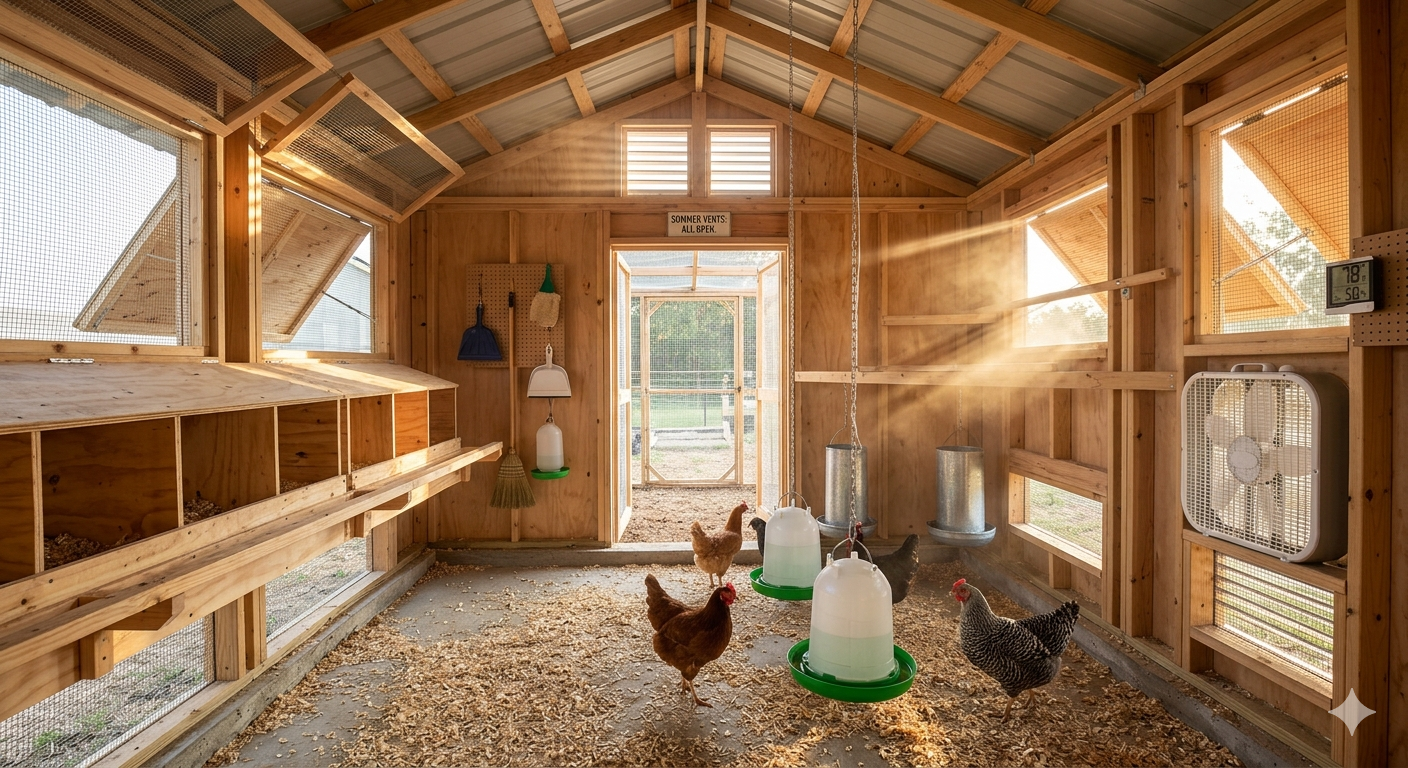
The single most important summer chicken keeping intervention is adequate coop ventilation — and the time to address it is before the temperature spikes, not during.
A chicken coop that is adequately ventilated for spring needs more airflow in summer. Assess every vent opening — are they fully open? Are there additional openings that can be created? Hardware cloth-covered vents on the north and south sides of the coop create cross-ventilation that moves air through the space rather than simply allowing it to stagnate.
A fan can improve air movement, but use only equipment suitable for the dusty location. Secure the unit, blades, cords, and wiring out of reach; protect electrical components from water; keep exits clear; and never rely on a fan instead of permanent ventilation.
Tip 2: Provide Continuous Fresh Cool Water — Multiple Stations
Chickens generally drink more as temperatures rise, and flock demand can change quickly with humidity, diet, breed, and activity. A flock that runs out of fresh water during a hot afternoon can show rapid health decline.
Position multiple water stations in shaded areas around the run and near the coop. Add ice blocks to waterers in the morning to keep water cool through the hottest midday hours. A poultry electrolyte product may be useful in some heat-stress situations when used exactly as labeled; keep plain fresh water available as well and avoid homemade high-salt mixtures.
Check water levels twice daily during summer — morning and midday at a minimum. A waterer that is full at 7 am may be empty by noon on a 95°F day.
Tip 3: Create Shade Everywhere — More Than You Think You Need
A run that provides adequate shade in spring does not provide adequate shade in midsummer when the sun angle changes and the heat intensity increases. Walk your run at midday on a hot day and observe where the shade falls. If the shaded area is smaller than the floor space of the coop, your flock cannot all shelter from the sun simultaneously.
Add shade cloth across the top of the run — 70–90% shade cloth allows airflow while dramatically reducing the radiant heat load. Plant fast-growing climbing vines on the south and west sides of the run fencing for living shade that also cools the air through transpiration.
Tip 4: Freeze Treats — The Chickens Will Love You
Small portions of fruit or vegetables frozen in water can provide enrichment, but treats are not a primary cooling system and should not displace a balanced poultry ration. Offer bite-size, unseasoned pieces and remove leftovers before they spoil.
📸 Image direction: Chickens gathered around a frozen watermelon treat in the summer run — pure enrichment energy. The bright colors of the watermelon against the chickens’ feathers photographs beautifully.
Tip 5: Wet Sand or Dirt Patches for Dust Bathing
Chickens dust bathe to maintain feather and skin health — but in summer, a damp dust bathing area also provides a cooling benefit. Misting the dust bathing area or adding a small amount of water creates a cooled surface that chickens will prefer during hot periods.
A shallow area of slightly cool soil in deep shade may be used for resting in a dry climate, but keep the normal dust-bath material loose and dry. Do not create persistent mud or damp litter around the coop.
Tip 6: Recognize Heat Stress Before It Becomes Heat Stroke
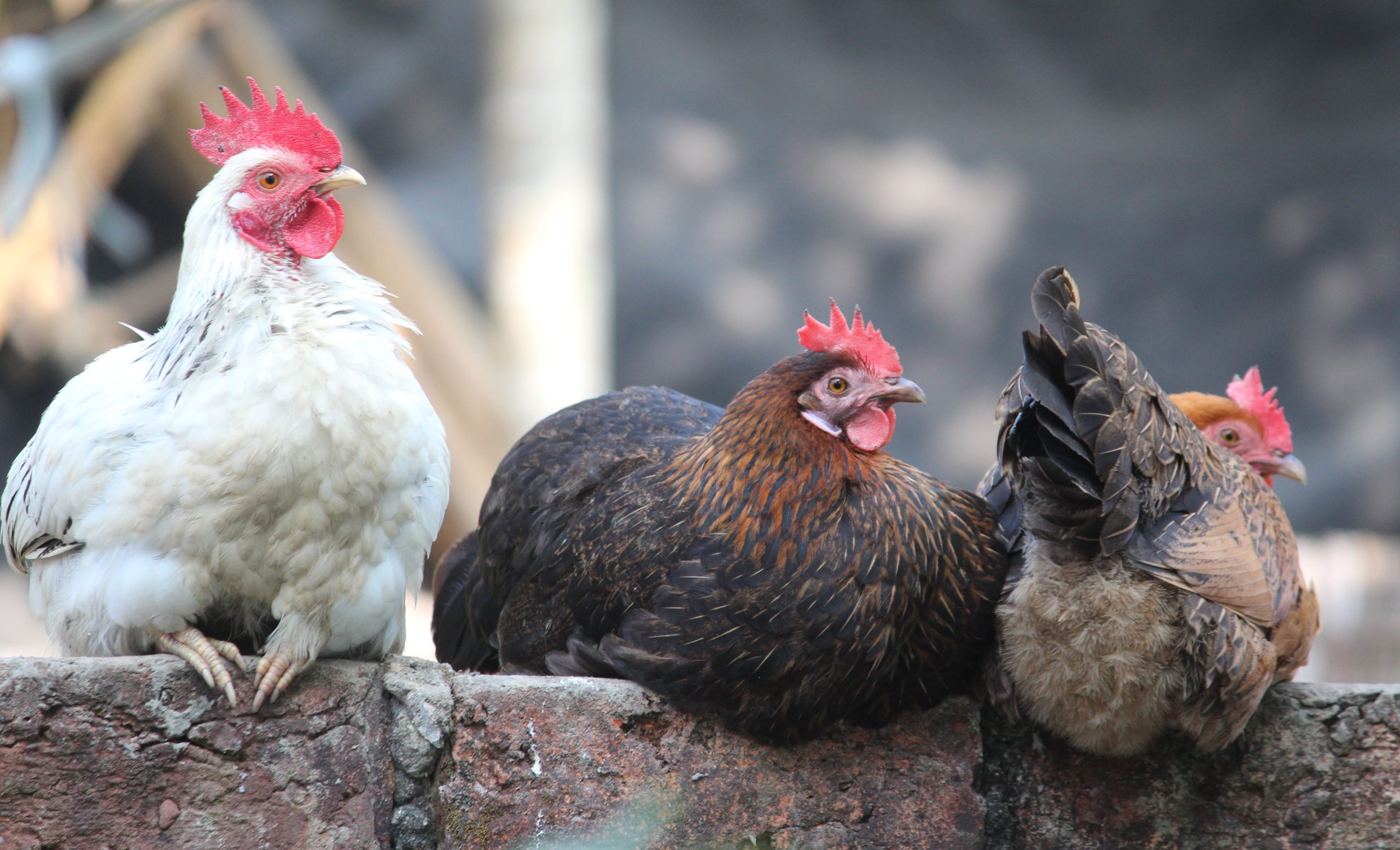
Chickens cannot sweat. Their primary cooling mechanism is panting and holding their wings slightly away from their bodies to increase air circulation. A flock that is panting with wings spread, moving slowly, and avoiding the sunny areas of the run is already experiencing heat stress.
Signs of heat stress:
- Panting with beak open and wings held away from the body
- Lethargy and reduced movement
- Pale combs (should be bright red in healthy adult hens)
- Dramatic drop in egg production
- Reduced feed consumption
Signs of heat stroke (emergency):
- Hen lying on its side unable to rise
- Head drooping, eyes glazed
- Floppy, unresponsive
For an emergency heat stroke case: move the hen immediately to the coolest available space. Apply cool (not cold) water to the feet and the comb. Offer water, but do not force. Contact a poultry-experienced veterinarian.
Tip 7: Feed in the Cool of Morning and Evening
The digestion of food generates metabolic heat — a helpful feature in winter, a burden in summer. Feeding the main ration in the early morning and again in the evening allows the heat generated by digestion to dissipate during the cooler parts of the day.
Reduce scratch grain during heat waves. Scratch grains — corn, wheat, and milo — generate significantly more metabolic heat during digestion than layer pellets. During the hottest weeks, eliminate scratching or reduce it to a small amount given in the late evening.
Tip 8: The Cold Water Foot Soak
For a hen showing significant heat stress—heavy panting, weakness, a pale comb, or reluctance to move—gentle cooling with cool, not icy, water on the lower body may help while veterinary advice is arranged. The feet and legs of chickens contain blood vessels close to the surface that, when cooled, return cooler blood to the core.
Do not force an unsteady bird to stand or leave it unattended in water, and always keep the head above water. Collapse, confusion, seizures, or persistent labored breathing is an emergency.
Tip 9: Collect Eggs More Frequently
Summer heat accelerates egg spoilage dramatically. Heat can reduce egg quality, and frequent collection also lowers the chance of breakage or heavy soiling. Follow local food-safety guidance for storage and discard cracked or questionable eggs. During heat waves, collect eggs in the morning and again in early afternoon rather than relying on a single daily collection.
Uncollected eggs also encourage broody behavior — a hen sitting on eggs in a hot nesting box is a hen at significantly elevated heat stress risk compared to one who has laid and left the box.
Tip 10: Provide Electrolytes During Heat Waves
During extended heat, a labeled poultry electrolyte product may be offered according to its directions, ideally alongside plain water. It is not a substitute for shade, ventilation, and abundant clean water; consult a veterinarian if a bird is already ill or not drinking.
Tip 11: Consider Temporary Housing Modifications
For very hot climates or unusually extreme heat events, temporary modifications can make a significant difference: reflective silver tarp material placed over the coop roof reflects radiant solar heat rather than absorbing it; misters positioned to spray a fine mist over the run perimeter cool the air through evaporation; a frozen water bottle hung at wing height in the run gives birds a cool surface to press against.
None of these are permanent modifications, and all can be deployed within hours when a heat wave is forecast.
Tip 12: Know Which Breeds Are Most Vulnerable
Heavy, densely feathered breeds — Buff Orpingtons, Cochins, Brahmas, and similar — carry significantly more insulating feather mass and struggle in heat far more than Mediterranean breeds like Leghorns, Andalusians, or Minorcas, which were developed in hot climates.
If your flock includes heavy heritage breeds, they need additional intervention during summer compared to lighter breeds. Extra shade, more water stations, and earlier recognition of heat stress signs are all warranted for these birds.
Prepare Before the Temperature Peaks
Heat stress can reduce activity, feed intake, welfare, and egg production, and severe cases can be fatal. Prepare shade, water capacity, ventilation, and an emergency cooling area before extreme temperatures arrive.
Check the flock repeatedly during extreme heat, refresh water before containers run low, and respond promptly when an individual bird behaves differently from the rest.
Sources and further reading
- Mississippi State University Extension: Protect backyard chickens from extreme heat
- University of Minnesota Extension: Raising chickens for eggs
Continue Exploring Your Backyard Flock
Use these closely related guides to plan your next steps:
One thought on “12 Ways to Keep Your Chickens Cool This Summer”
Comments are closed.