





Is Sand a Good Choice for Your Chicken Coop? Pros, Cons, and Setup
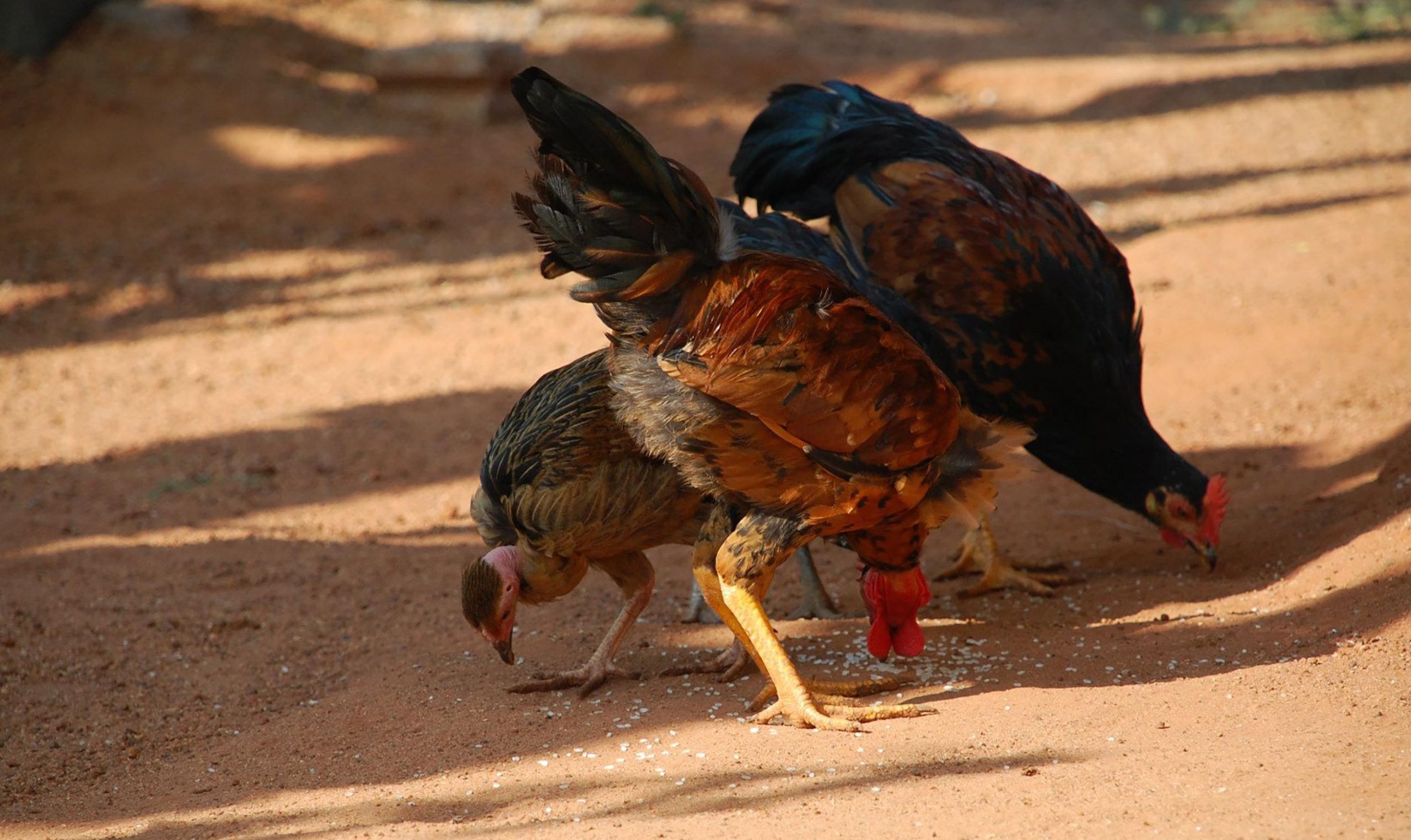
You have probably changed your coop bedding more times than you care to count. The straw gets wet, the shavings get dusty, the smell creeps in no matter how frequently you clean, and somewhere in the back of your mind, you suspect there must be a better way, like Chicken Coop sand.
There is. It has existed since 1919. It has been validated by university research. And the chicken keepers who discovered it almost universally say the same thing: they wish they had switched sooner.
Coarse, clean sand can be a practical flooring option for a chicken coop floor — and this guide explains exactly why, exactly which type to use, and exactly how to manage it so your flock thrives and your coop stays genuinely clean.

Free Backyard Flock Checklist
Planning the rest of your flock setup?
Turn your coop-size estimate into a complete setup plan with our free equipment and preparation checklist.
The Case for Sand: What Science Actually Says
Before getting into the practical benefits, it is worth knowing that this is not simply an opinion shared among backyard chicken enthusiasts. In scientific studies conducted by the Auburn University Department of Poultry Science — later confirmed through field testing — sand outperformed pine shavings with lower bacterial counts, lower fungal populations, and lower moisture levels throughout. The Auburn research states that sand, being inorganic, contains few nutrients that could be utilized by bacteria and thus tends to lead to lower bacterial numbers. Additionally, sand may lack binding sites for bacteria entirely.
This is not a discovery. Poultry visionary Charles Weeks wrote of the benefits of sand as chicken litter in his 1919 book “Egg Farming in California,” stating: “Sand is the only material to use on the floors of poultry houses. Clean, dry sand prevents any bacteria from starting.” Over a century later, science has caught up with what experienced farmers already knew.
Reason 1: Superior Drainage and Moisture Control
Moisture is the single greatest enemy inside a chicken coop. It breeds bacteria, encourages mold growth, produces ammonia, causes respiratory illness, and creates the conditions for frostbite in cold weather. Every bedding problem — smell, disease, dirty eggs, fly infestation — traces back to moisture at its root.
Sand addresses this problem at the structural level rather than managing it after the fact.
Sand provides fantastic drainage, helping to keep the coop dry and reducing the risk of bacteria and mold growth. Unlike conventional chicken bedding materials, sand rarely needs replacing in the coop and run.
Sand does not retain moisture in itself, unlike other bedding options. Decay or moisture retention in the litter can often lead to respiratory infections and bacterial growth. Organic bedding materials — straw, pine shavings, hay — absorb moisture and then hold it. Sand allows moisture to pass through and evaporate, leaving the surface dry even after it has been wet.
This drainage advantage becomes particularly significant under the roost bars, where droppings accumulate in the highest concentration overnight. In organic bedding, this area becomes saturated and odorous within days. In sand, the droppings dry quickly on the surface and can be scooped cleanly away.
Reason 2: Dramatically Easier Cleaning
Ask any chicken keeper who has switched from straw or shavings to sand what the most immediate difference was. The answer is almost always the same: cleaning time dropped dramatically.
Sand eliminates the need to remove and replace bedding every time the coop is cleaned. With a litter scoop or small shovel, chicken poop can be removed from the coop, leaving clean sand behind.
The mechanics of this are straightforward. Chicken droppings sit on the surface of sand rather than being absorbed into it. They dry quickly in the low-moisture environment that sand creates. And they can be removed with a cat litter scoop, a sifting shovel, or a fine-tined rake — quickly, cleanly, without disturbing the underlying sand layer.
Since switching to sand in 2013, many keepers report cleaner feet, less odor, and far less mud, stating they will never return to shavings or straw.
With organic bedding, cleaning involves removing the entire soiled layer and replacing it — a labor-intensive, physically demanding task that takes significant time and produces significant waste. With sand, the daily maintenance is a five to ten-minute scoop under the roost bars. Full refreshes are needed only every few months rather than every few weeks.
For chicken keepers managing multiple coops, or for anyone with physical limitations that make heavy bedding work difficult, this difference is not cosmetic. It is genuinely transformative.
Reason 3: Lower Bacterial and Ammonia Levels
Ammonia is one of the most damaging compounds that can build up in a chicken coop. It damages respiratory tissue, reduces immune function, causes eye irritation, and, in high concentrations, can cause serious long-term health problems in both chickens and the humans who tend them.
Ammonia is produced when bacteria break down the nitrogen compounds in chicken droppings. The more moisture and organic matter present, the faster bacteria proliferate and the faster ammonia accumulates.
As sand is inorganic, it doesn’t break down, and it releases moisture rapidly. This is important because damp bedding provides a sanctuary for mold to flourish. Before you know it, bacteria levels rise, and ammonia builds up. Opting for sand will help you keep your hens in rude health.
The Auburn University research referenced earlier found measurably lower bacterial counts in sand-bedded coops compared to pine shaving-bedded coops under the same management conditions. This is not a marginal difference — it is a structural advantage produced by sand’s inorganic nature.
The practical result: a sand-bedded coop that is maintained with regular scooping should not smell. If it does smell, the sand is telling you something specific — it is either too shallow, not draining properly, or not being scooped frequently enough. The fix in every case is straightforward. With organic bedding, smell is largely inevitable regardless of management quality.
Reason 4: Natural Dust Bathing Opportunity
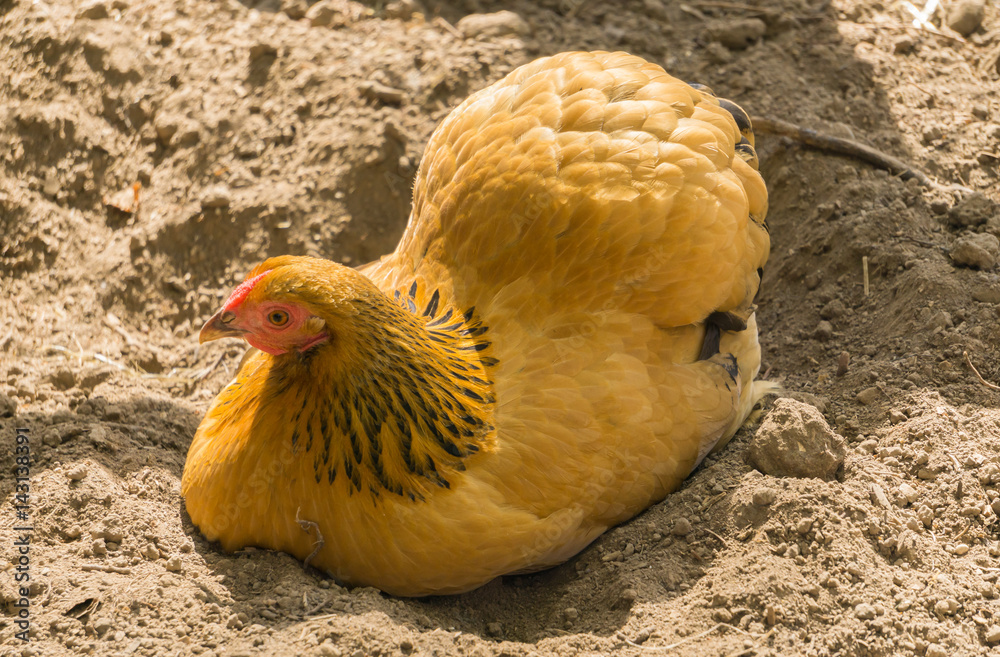
Dust bathing is not a preference for chickens. It is a biological need. Chickens use dust baths to control external parasites — mites, lice — that live in feather shafts and on skin. A chicken that cannot dust bathe develops significantly higher parasite loads over time, which directly affects health, feather condition, egg production, and well-being.
In conventional coops with organic bedding, dust bathing typically requires access to an outdoor run — which means chickens cannot dust bathe effectively during wet weather, extreme cold, or any period of restricted outdoor access.
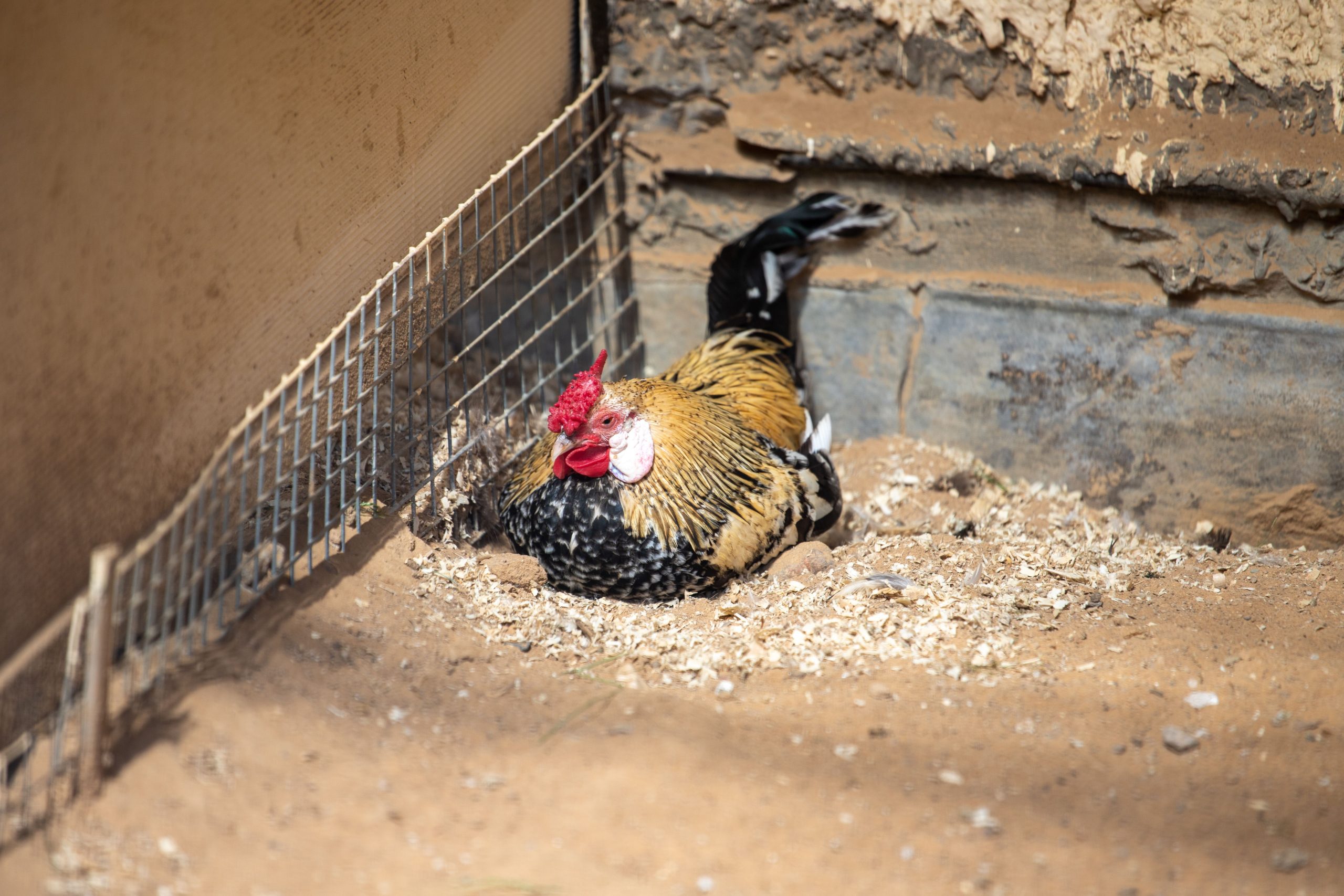
Using sand as a bedding material in your chicken coop encourages regular bathing. Your hens will be able to dust bathe whenever they wish without leaving the comfort of the coop.
One of the benefits of sand in a covered run is that chickens can dust bathe all year long. Dry sand stays loose even in the coldest temperatures.
This year-round dust bathing access is one of the most significant welfare advantages of sand bedding — particularly for keepers in climates with extended cold or wet seasons where outdoor run access is limited for months at a time.
Reason 5: Built-In Grit Supply
Chickens do not have teeth. They grind food in their gizzards using small stones and grit, and without adequate grit, they cannot properly digest anything beyond processed feed. Free-ranging chickens pick up natural grit from the ground. Confined chickens need it provided.
Grit is essential for chickens — it plays an integral role in enabling hens to break down and digest food. By choosing sand for your coop, you can ensure that your chickens have easy access to grit all year round.
Coarse construction sand — the recommended type for chicken coops — naturally contains particles of varying sizes, including small stones that serve the grit function. Chickens self-regulate their grit intake by pecking at the sand as needed. This does not replace offering commercial insoluble grit free-choice for birds on a primarily processed feed diet, but it significantly reduces the need for grit supplementation compared to organic bedding options.
Reason 6: Temperature Regulation Throughout the Year
One of the less-discussed advantages of sand in a chicken coop is its thermal mass — its ability to absorb heat and release it slowly.
Sand absorbs heat through the day and slowly releases it at night, helping to stabilize temperatures in the chicken coop. This thermal regulation effect means that a sand-floored coop experiences less dramatic temperature swings between day and night than a coop with organic bedding over a concrete or wood floor.
In summer, sand has great insulating qualities and is ideal for coops during the summertime as long as your coop is enclosed with four walls and a roof, as direct sun on sand will heat the surroundings.
In winter, sand itself cannot freeze unless it is saturated in water. So, if your coop floor is clean and dry, the sand will not freeze. This is an important clarification for keepers in cold climates who assume sand will become a frozen hazard — properly maintained dry sand does not freeze solid.
Reason 7: Long-Term Cost Effectiveness
The initial cost of sanding a chicken coop is higher than purchasing a bag of pine shavings. This is the comparison that most often causes new chicken keepers to hesitate. It is also a comparison that does not account for time.
A one-time sand purchase saves money over regular new bags of shavings or straw. While buying sand takes some legwork upfront, sand bedding saves significant money long-term over repeatedly purchasing straw or shavings.
Organic bedding needs full replacement every two to four weeks. Sand needs topping up periodically and full replacement roughly once per year — and in many cases, less frequently than that with good scooping maintenance. Over a two or three-year period, the sand option is dramatically less expensive than any organic bedding on a cost-per-week basis.
Sand is quite affordable — a huge bag can be found for less than ten dollars. Furthermore, it is more low-maintenance than some of the other options, and you don’t need to clear out the entire coop for a fresh batch. Instead, you just clear out the dirty sections.
For keepers managing this calculation honestly, sand wins on cost within the first season.
The Critical Part: Which Sand to Use
This section is where the conversation gets specific — and where mistakes get made. Not all sand is appropriate for a chicken coop, and using the wrong type can cause genuine harm to your flock.
Use: Construction Sand (also called Builder’s Sand or Coarse Sand)
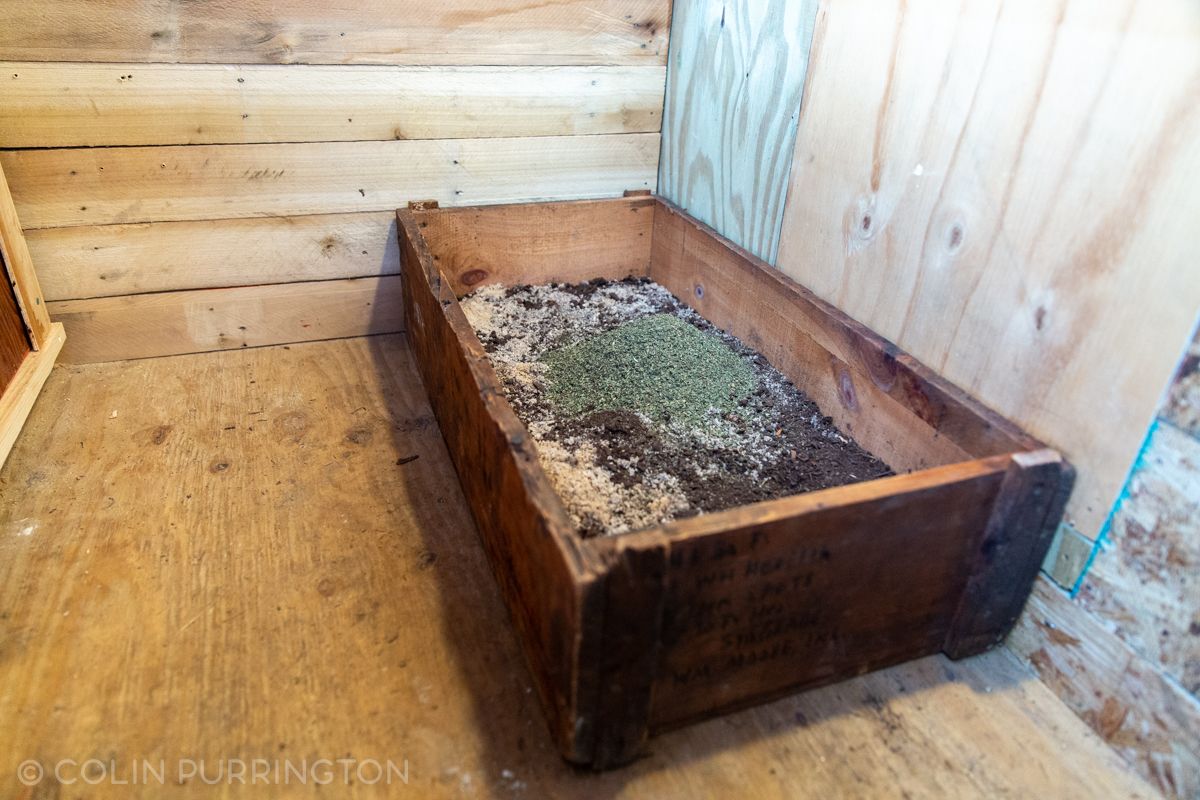
For coops where sand is suitable, choose a washed, coarse, low-dust product and confirm its composition with the supplier. This will have minimal dust and be made up of a variety of particle sizes, including small stones.
Construction sand is chunkier than the fine, dusty sand you often find in play areas. It contains particles of different sizes and has a gritty texture. This variation in particle size is important — it creates a surface that drains well, does not compact easily, and is safe for chickens to ingest in small quantities as functional grit.
River sand and concrete sand are also appropriate options. Construction sand, riverbank sand, and bank run sand are all ideal for making chicken bedding material because they are all-purpose sand.
Avoid very fine or dusty sand
Do not use play sand in your coop as it is very dangerous for your chickens. Play sand may cause crop impaction in the short term, and it may cause serious respiratory illness in the long term.
When your chickens inevitably eat some of the sand — and they will eat some of their bedding no matter what you are using — the play sand can cause crop impaction. Chickens have a crop located above their chest near the bottom of their neck, which acts as a storage pouch, and fine sand can obstruct this organ.
Beyond crop impaction, fine play sand contains silica dust that causes progressive respiratory damage in chickens over time. It is not a minor risk. It is a documented health hazard. The rule is simple: if the sand is fine enough to be sold for sandboxes, it is too fine for your coop.
Where to Buy the Right Sand
For co-ops, visit local quarries and gravel companies. Tell them you need medium construction-grade sand. If unsure what you need, show a photo of the desired sand. Buying sand from gravel companies rather than hardware store bags is the most cost-effective approach.
Buying in bulk from a gravel supplier is significantly more economical than purchasing bagged sand from a garden center, and local quarries are accustomed to questions about grain size and composition. Buy a small sample if possible before committing to a large order.
How Deep Should the Sand Be?
Depth matters significantly for sand to perform as described. Sand that is too shallow compacts quickly, doesn’t drain effectively, and allows droppings to work down to the floor below rather than remaining on the surface for easy removal.
The minimum recommended depth is four inches. Six inches is better and produces noticeably improved drainage and easier scooping. For a 10×10-foot coop with 4–5 inches of sand, you’ll need about 3–4 cubic yards. And For an 8×12-foot coop with 6 inches of sand, plan on 2–3 cubic yards.
For raised wooden floor coops, the weight of sand requires careful consideration. If your coop sits right on the ground or concrete, no problem. But if it’s a raised wooden floor, you’ll want to make sure the structure can safely handle the weight of the sand before proceeding.
Daily and Weekly Maintenance: The Simple System
The maintenance routine for a sand-bedded coop is genuinely simple once established. Here is exactly what it looks like:
Daily (5 to 10 minutes): Scoop droppings from the area directly beneath roost bars. This is where the majority of overnight droppings accumulate and where odor develops fastest if left. A cat litter scoop, a sifting shovel, or a small rake all work effectively. Remove visible droppings from the nesting box access area.
Weekly (10 to 15 minutes): Rake the entire sand surface to redistribute material, break up any developing compact areas, and bring buried droppings to the surface for scooping. Check for any damp areas that suggest drainage issues and address them before moisture has time to create a bacterial problem.
Monthly: Deeper rake and sift, particularly in high-traffic areas. Top up with fresh sand in any areas where depth has dropped below four inches due to material removal during scooping.
Annually (or as needed): Full sand replacement. Remove all sand, clean and dry the floor below, and replace it with fresh sand. In a well-maintained coop with regular scooping, annual replacement is sufficient for most flocks.
Sand only works if you keep up with it. Neglect it, and it will smell just like any other bedding. If odor creeps in, it usually means the sand is too shallow or not draining. Adding depth — or refreshing under the roosts more often — solves it.
How Sand Compares to Other Common Bedding Options
Sand vs. Straw
Straw is a poor choice for litter due to its notorious lack of absorbency, tendency to cause crop impaction, propensity to form manure mats, and inability to control moisture, insects, bacteria levels, and ammonia. Straw looks beautiful and photographs beautifully — but in practice it mats quickly, retains moisture, and creates the warm, damp, organic environment that bacteria and mites actively seek out.
Sand is more expensive initially and heavier to manage. On every health and hygiene metric, it outperforms straw significantly.
Sand vs. Pine Shavings
Pine shavings are the most widely used coop bedding and perform better than straw on most measures. They absorb moisture reasonably well, dry quickly, and are easy to source. However, in the Auburn University research, sand performed better than pine shavings with lower bacterial counts, lower fungal populations, and lower moisture levels.
Additionally, pine shavings have been identified as potentially toxic for chickens due to the aromatic compounds they release — a risk that many chicken keepers are not aware of. The science here is still developing, but the documented lower bacterial and fungal counts in sand-bedded coops represent a meaningful health advantage.
Sand vs. Deep Litter Method
The deep litter method — building up organic bedding over time and managing it through regular turning rather than full removal — has real advantages: it produces excellent compost, generates a small amount of supplemental heat through decomposition, and requires less frequent full cleanings.
The tradeoff is that the deep litter method requires more active management to prevent the decomposition process from producing harmful ammonia levels, and it is less effective in wet climates where the organic material can become saturated rather than decomposing cleanly.
Sand and the deep litter method represent two fundamentally different management philosophies. Both can produce healthy coops. For keepers who prioritize simplicity, low bacterial counts, and minimal odor, sand is the stronger choice.
Common Concerns About Sand — Addressed Directly
“Won’t sand freeze in winter?”
Sand itself cannot freeze unless it is saturated with water. So, if your coop floor is clean and dry, the sand will not freeze. The concern about frozen sand is based on a misunderstanding of how sand behaves. Dry, well-drained coarse sand does not freeze to a solid block. Wet, fine-grained sand can — which is another reason coarse construction sand is the only appropriate choice.
“Is sand too cold for the birds?”
Chickens roost on bars elevated above the floor — they do not sleep on the bedding. The thermal contact between your flock and the coop floor is minimal. The thermal mass benefit of sand — its ability to absorb daytime heat and release it overnight — actually works in the birds’ favor rather than against them.
“Won’t it be heavy to work with?”
The one genuine disadvantage to sand is its weight. Sand is heavy and may not be a feasible option for physically limited chicken keepers or in large chicken tractors. This is a real consideration. If lifting heavy material is not physically possible, the daily scooping is light enough, but the initial installation and eventual replacement require handling significant weight. Plan for help if needed.
“Is sand suitable for chicks and brooding?”
Esteemed poultry author Gail Damerow discusses sand as brooder bedding, noting that it is not as absorbent as other types of bedding but absorbs heat more readily, evaporates moisture more rapidly, and therefore stays drier. Sand is more resistant to microbes than other types of bedding, keeping baby birds healthier. Soiled sand doesn’t stick to feet like other types of bedding can.
For very young chicks — under two weeks — paper towels are the safest initial surface as very young birds may mistake any substrate for food. From two weeks onward, coarse sand is appropriate and offers the health advantages described above.
The One-Time Setup That Changes Everything
Setting up a sand-floored coop requires one afternoon of work and a trip to a gravel supplier. After that, the management system is genuinely simpler than any organic bedding alternative — and the benefits to flock health, coop cleanliness, and your own daily time investment accumulate from day one.
Here is the complete setup process:
Clean the existing coop floor thoroughly and allow it to dry completely. Any organic material left beneath the sand will create a decomposition layer that undermines the drainage and antibacterial advantages you are installing the sand to achieve.
For coops with drainage concerns — any coop where water pooling has been a problem — lay a thin layer of gravel or crushed stone as a base layer before adding sand. This creates a drainage channel that prevents saturation even in very wet conditions.
Add coarse construction sand to a depth of at least four inches to six inches for optimal performance. Rake level and ensure consistent depth across the entire floor area, paying particular attention to the areas directly beneath roost bars where the highest concentration of droppings will accumulate.
That is the complete setup. From here, the daily five-minute scoop maintains everything.
Is sand right for your coop?
Sand is not automatically superior to every bedding system. It is heavy, can hold moisture over a poorly drained base, may freeze when wet, and can create respiratory dust if the product is too fine. Deep-litter systems or absorbent bedding may be more practical in some climates and coop designs.
Before converting the entire floor, test a small amount, check drainage after rain, watch for dust at bird height, and confirm that the floor can support the weight. Whatever material you choose, remove wet manure, keep waterers from leaking, and maintain strong ventilation. Our guide to common coop mistakes explains why moisture and airflow matter more than any single flooring material.
Sources and further reading
- Utah State University Extension: Poultry resources
- University of Minnesota Extension: Raising chickens for eggs
Continue Exploring Your Backyard Flock
Use these closely related guides to plan your next steps:
2 thoughts on “Is Sand a Good Choice for Your Chicken Coop? Pros, Cons, and Setup”
Comments are closed.